
Highlights
- Prashant Kishor has won his first election and will enter the Bihar Legislative Assembly.
- Jan Suraaj chief defeated the Bharatiya Janata Party's Neeraj Kumar in the Bankipur by-election.
- Victory ends the Bharatiya Janata Party's hold over the constituency since 1995.
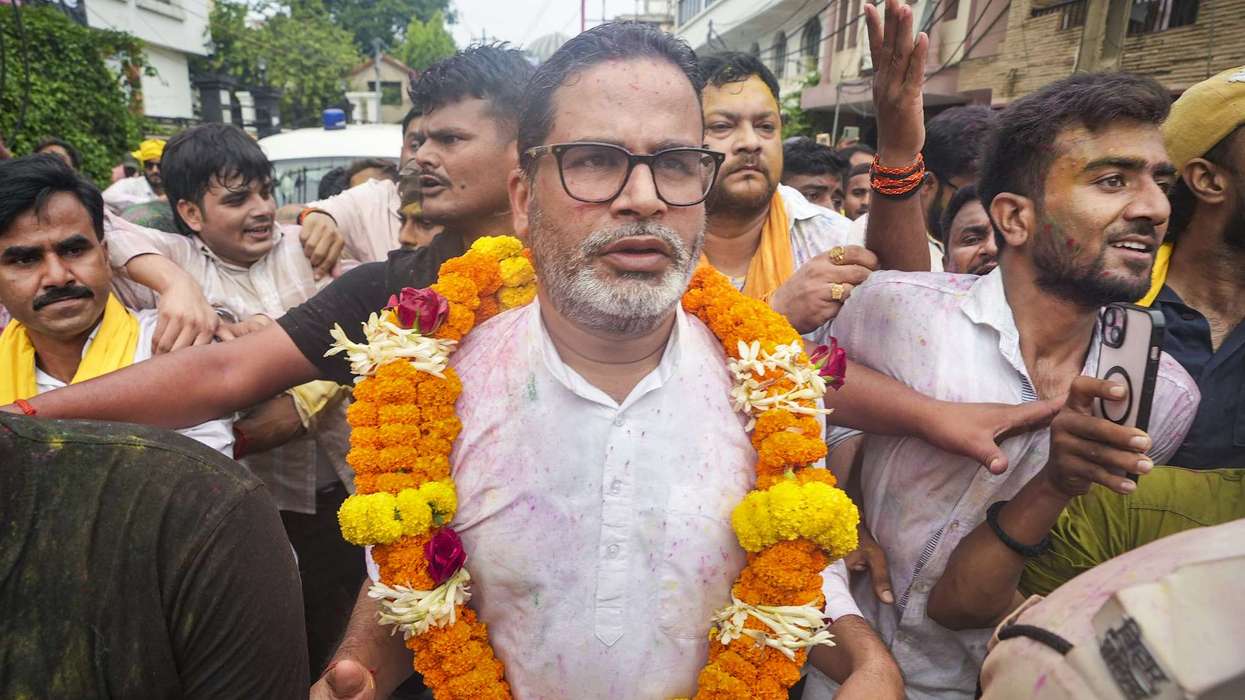
PRASHANT KISHOR, one of India's best-known election strategists, this week won his first election and is set to enter the Bihar Legislative Assembly after securing victory in the Bankipur by-election.
Kishor, founder of the Jan Suraaj Party, defeated Bharatiya Janata Party candidate Neeraj Kumar in the Patna constituency, ending the party's hold on the seat that stretched back to 1995.
Former legislator Nitin Nabin had represented Bankipur for five consecutive terms before vacating the seat after being elected to the Rajya Sabha, the upper house of Parliament.
Victory marks a turnaround for the 49-year-old, whose Jan Suraaj Party failed to win a single seat in the 2025 Bihar assembly election. Many political observers had questioned his political future after that result, but the by-election win has renewed discussion over whether his party can become a stronger force in the state.
"My becoming an MLA won't turn Bankipur into Bengaluru, but you will see some improvements happening here over the next two to three months. My first task will be to improve Bankipur with the blessings the people have given me. I don't want to make grand boasts," Kishor said after the victory.
"Bihar cannot be treated as a factory that produces cheap labour... When Gujarat is looking forward to having a bullet train, the people of Bihar certainly have a right to expect something better than passenger trains."
Experts caution against reading too much
Analysts have, however, cautioned against reading too much into a single by-election, saying it is too early to draw wider conclusions about Jan Suraaj's electoral prospects.
Before entering politics, Kishor built a reputation as one of India's leading election strategists. He played a key role in prime minister Narendra Modi's successful 2014 general election campaign, introducing campaign methods such as hologram rallies that were uncommon in Indian politics at the time.
He later parted ways with the Bharatiya Janata Party and helped bring together the Janata Dal (United) and Rashtriya Janata Dal alliance that defeated the party in the 2015 Bihar Assembly election. Kishor then joined the Janata Dal (United) as its vice-president under then chief minister Nitish Kumar.
He left the party in 2020 after opposing its support for the Citizenship Amendment Act introduced by the Bharatiya Janata Party-led central government. A year later, he was widely credited with helping Mamata Banerjee retain power in West Bengal, after which he said he would end his career as a political consultant.
Kishor launched a statewide foot march across Bihar in 2022 before forming the Jan Suraaj Party in 2024, campaigning on issues including unemployment, migration, education and governance.
Those themes remained central to his Bankipur campaign. He repeatedly argued that Bihar needed better governance and made youth unemployment and the migration of workers from the state key election issues.
Bankipur has a large student population, with many colleges and coaching centres, and around one-third of its voters are under the age of 30. Observers say his campaign appears to have connected with younger voters concerned about jobs and employment opportunities.