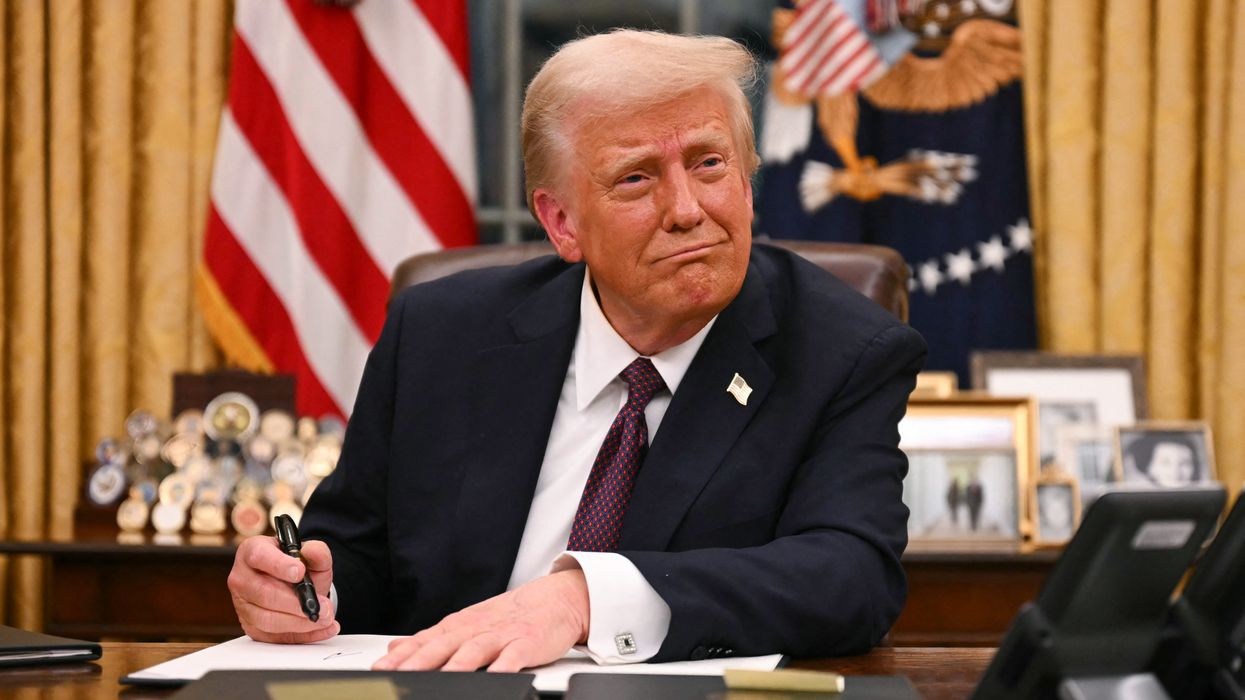

ON HIS first day back in office, US president Donald Trump signed a series of executive orders addressing immigration, climate policies, and other key issues.
The orders included measures he had campaigned on, as well as unexpected actions like withdrawing the United States from the World Health Organization (WHO).
The president also granted pardons to many individuals involved in the January 6, 2021, Capitol attack.
These actions, along with others, were signed at a Washington arena in front of supporters and later at the White House after his swearing-in ceremony.
Here’s a breakdown of the orders:
Immigration
Trump signed multiple orders to reshape the country’s immigration and citizenship policies. One order declared a national emergency at the southern border.
He also announced a mass deportation operation involving the military, targeting what he referred to as "criminal aliens."
In a significant move, Trump signed an order in the Oval Office to revoke birthright citizenship.
However, automatic citizenship for individuals born in the US is protected under the Constitution, and this order is likely to face legal challenges.
January 6 pardons
Trump granted pardons to some of the 1,500 individuals involved in the January 6 Capitol attack.
Referring to them as "hostages," Trump reiterated his defence of those convicted or who pleaded guilty over the riots.
Diversity, equity, and inclusion
Trump repealed executive orders promoting diversity, equity, and LGBTQ rights. These changes align with his campaign’s criticism of "woke" culture.
Among other actions, Trump revoked policies promoting diversity and equality in government, businesses, and healthcare.
He stated that going forward, the government will officially recognise "two genders, male and female."
Paris Climate Accord
Trump announced the US withdrawal from the Paris climate agreement, mirroring a decision from his first term.
This action initiates a formal process that would take a year to complete under United Nations guidelines.
Oil drilling
An order declaring a "national energy emergency" aims to expand oil and gas drilling. During his inaugural address, Trump said, "We will drill, baby, drill."
Work from home
Trump signed an order requiring federal employees to return to full-time office work, rolling back remote work policies that had expanded during the Covid-19 pandemic.
World Health Organization exit
Another order directed the US to exit the World Health Organization.
Trump justified the move by claiming the US was unfairly paying more into the organisation than China.
TikTok
Trump paused the enforcement of a law banning TikTok for 75 days, delaying the implementation of measures that would prohibit updates and distribution of the app in the US.
He insisted that the app’s Chinese parent company must sell a 50 per cent stake to US entities.
West Bank settlers
Trump revoked sanctions imposed by the Biden administration on Israeli settlers in the West Bank accused of abuses against Palestinians.
Cuba
Reversing another Biden-era policy, Trump removed Cuba from the list of state sponsors of terrorism.
This undid Biden’s recent decision to take Cuba off the blacklist as part of a prisoner exchange deal.
(With inputs from AFP)