By Amit Roy
INDIANS have reservations about Winston Churchill because of his hostility to the whole idea of Indian independence, his irrational hatred for Mahatma Gandhi and his alleged complicity in aggravating the effects of the Bengal famine of 1943-44, in which an estimated three million people died.
Churchill’s Secret War: The British Empire and the Ravaging of India during World War II by Madhusree Mukerjee is definitely worth reading.
But it also important for Indians living in this country to understand why Churchill, considered by many to be the greatest Briton of all time, occupies a unique place in British history.
That he was a flawed hero is made clear in The Darkest Hour, which was shown by the BBC last week, with Gary Oldman as Churchill turning in a performance which justly won him an Oscar in 2018.
The 2017 film, directed by Joe Wright, who was married to sitar maestro Pandit Ravi Shankar’s daughter Anoushka Shankar from 2010-2018, does refer fleetingly to Churchill’s warped view of India.
When he succeeds Neville Chamberlain as prime minister on May 10, 1940, as Hitler’s forces are sweeping across Europe, King George VI makes it clear Churchill is not his choice: “Why have I been forced to send for Churchill?”
The monarch protests: “His record is a litany of catastrophe: Gallipoli, 25,00 dead; the Indian policy; the Russian civil war; the Gold standard; the abdication; and now this Norway adventure, 1,800 men….Winston lacks judgement.”
The film depicts how, against all the odds, Churchill heroically manages to turn it round. Had Britain not won the war against Hitler, Indians probably would not have emigrated to these shores seeking a better life.

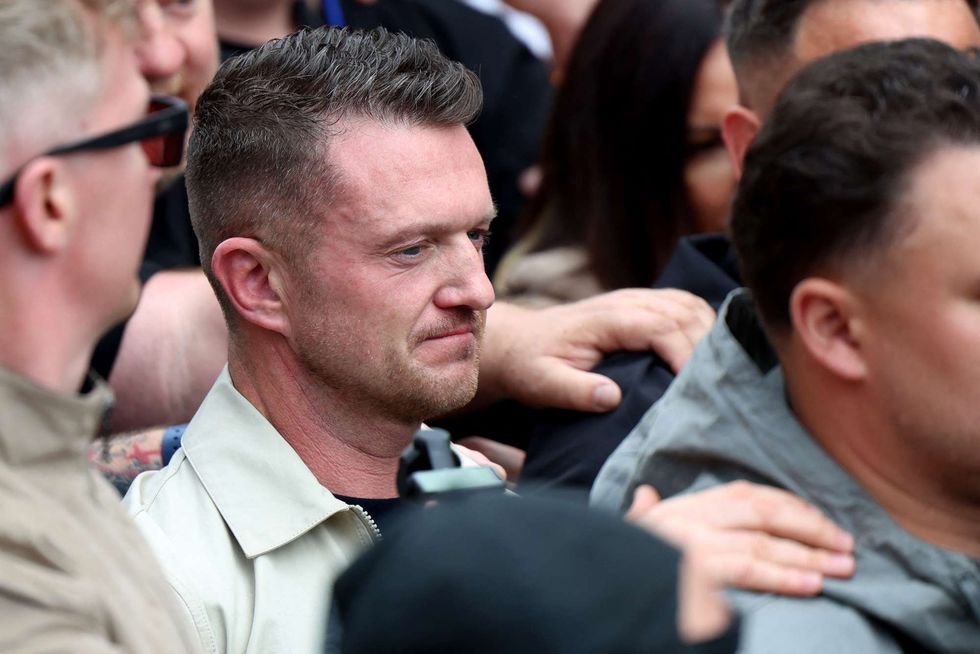 Tommy Robinson, real name Stephen Yaxley-Lennon, looks on during a rally organised by Unite The Kingdom, in central London on May 16, 2026.Getty Images