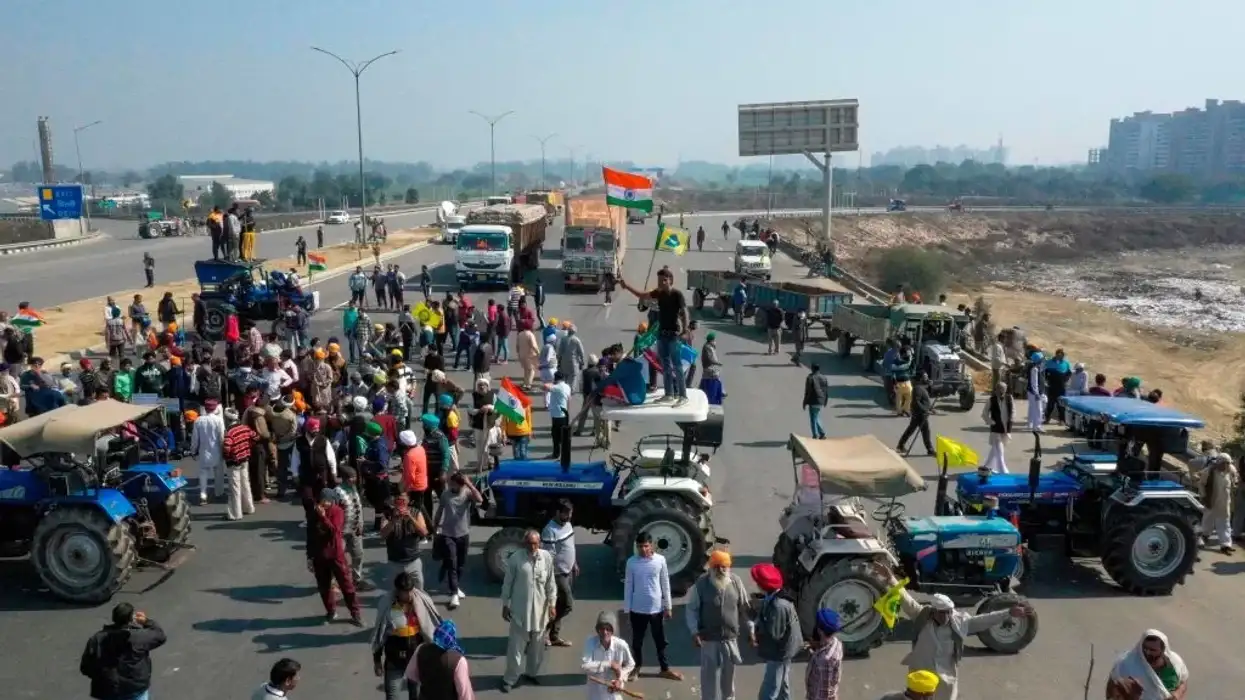

THE United Nations human rights office called on Indian authorities and protesting farmers to exercise "maximum restraint" hours before the growers impose a nationwide road blockade on Saturday(6) seeking a repeal of new agricultural laws.
Tens of thousands of farmers have camped out on the outskirts of New Delhi for more than two months, blocking key roads and demonstrating against the laws they say will benefit large private buyers at their expense.
The protests have mostly been peaceful but a tractor rally organised on January 26 flared into turmoil as some farmers clashed with police in New Delhi.
Since then, authorities have shut down the mobile internet in parts of the national capital and heavily barricaded border roads to prevent them from coming into the city again.
"The rights to peaceful assembly & expression should be protected both offline & online," the Office of the United Nations High Commissioner for Human Rights said on Twitter late on Friday(5).
"It's crucial to find equitable solutions with due respect to #HumanRights for all."
The farmers will hold a three-hour "chakka jam", or road blockade, starting around noon local time across the country except in New Delhi and a couple of neighbouring states.