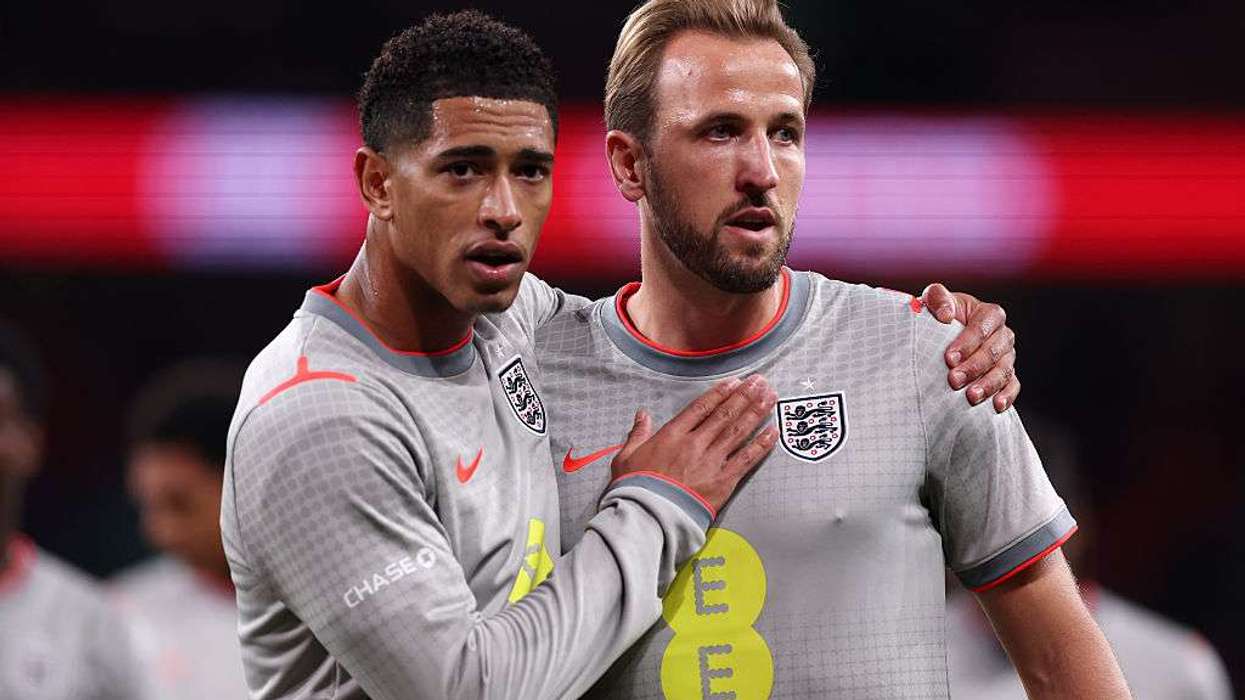

THE UK appears set to host the 2035 Women's World Cup after FIFA president Gianni Infantino on Thursday (3) described its interest as the "one valid bid" for the tournament.
England, Northern Ireland, Scotland and Wales announced last month that they would submit a joint bid to host the finals.
England's men won the World Cup for the first and so far only time when the country hosted the finals in 1966. It has never staged the women's tournament.
"We are honoured to be the sole bidder for the FIFA women's World Cup 2035," FA CEO Mark Bullingham said in a statement.
"Hosting the first FIFA World Cup since 1966 with our home nations partners will be very special. The hard work starts now, to put together the best possible bid by the end of the year."
The US, with the possibility of other countries in the CONCACAF region joining the US, is also poised to be named host of the 2031 Women's World Cup as the only bid.
Infantino said the tournament will increase from 32 teams to 48 in time for the 2031 World Cup to match the men's event.
"We received one bid for 2031 and one bid -- one valid bid I should add -- for 2035," he added at the UEFA Congress in Belgrade. "The 2035 bid is from Europe, from the home nations."
The US hosted the 1999 and 2003 Women's World Cup. Brazil will host the 2027 event featuring 32 teams.
Member associations must formally submit bids to FIFA in the final quarter of this year. The world governing body currently plans to confirm the Women's World Cup hosts for 2031 and 2035 at the 76th FIFA Congress in the second quarter of next year.
"So, the path is there for the Women's World Cup to be taking place in '31 and '35 in some great countries, in some great nations, to boost even more the women’s football movement," Infantino said.
FIFA said last month that members associated with the Confederation of African Football and CONCACAF were eligible to bid for the 2031 World Cup, while CAF and UEFA member associations could bid for the 2035 tournament.
Reports had suggested Spain, Portugal and Morocco, who are jointly hosting the 2030 men's World Cup, planned to launch a rival bid for 2035 before Infantino's comment on Thursday that the UK had the only valid bid.
England's women's manager Sarina Wiegman said hosting the tournament will be a big boost to the women's game.
"It's the biggest female event we have in the world, that's so exciting," she told a press conference on Thursday. "We know with the experience of the Euros (the women's European Championships in 2022, which England won) how big the game is already here, and what that momentum did here in the country, but also worldwide.
"So another tournament, even on an even bigger stage, would be incredible, and that will give another boost to the game."
Expanding to 48 teams will help, the Dutchwoman added on the eve of England's Nations League game against Belgium.
"It will grow the game again in different countries, because different countries have opportunities to come, because countries are at different stages of their development," she said. "So it will help empower women in football, women in sport and women in society."
(Reuters)