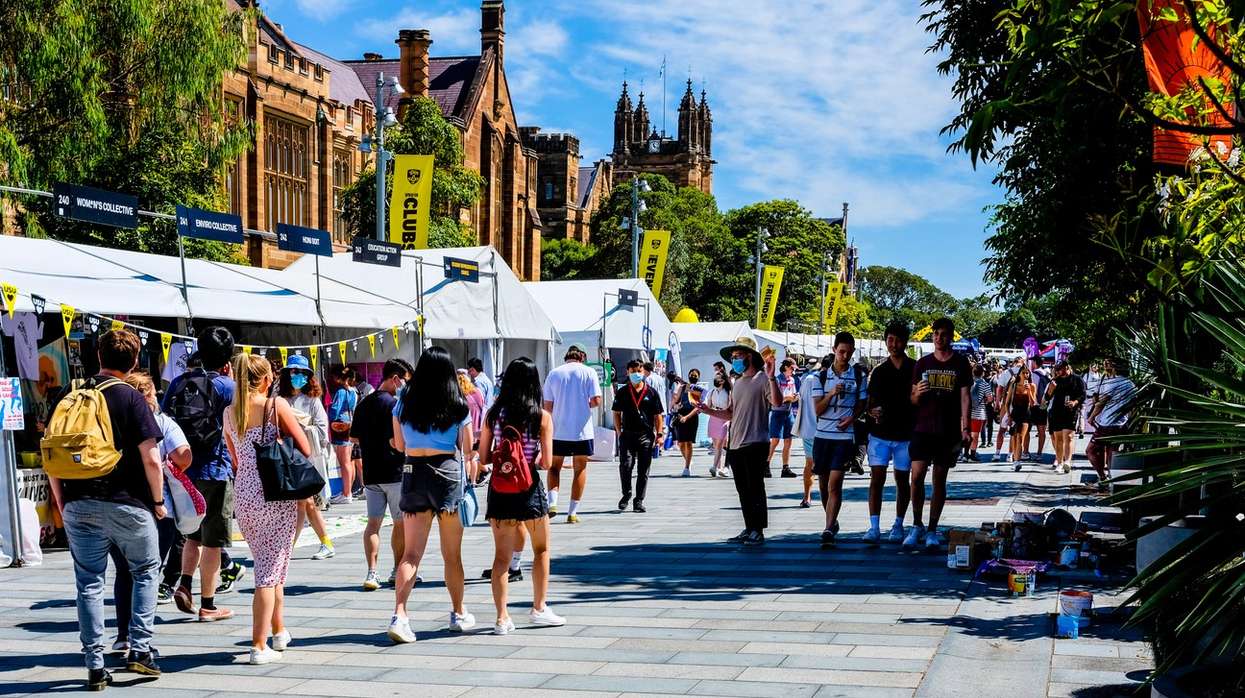

- UK study visa withdrawals rose to 10.5 per cent of applications in the first half of 2026, according to reports.
- The withdrawal rate for Pakistani applicants reached 40.9 per cent, compared with 3 per cent a year earlier.
- Universities now face a visa refusal threshold of less than 5 per cent under stricter Home Office compliance rules.
International students hoping to study in the UK are facing a growing dilemma as universities withdraw admission offers amid a rise in visa refusals and tougher government rules governing overseas recruitment.
According to Financial Times analysis of Home Office data, 10.5 per cent of UK study visa applications were withdrawn in the first half of 2026, up from 2.3 per cent during the same period last year and 0.4 per cent in 2023.
The increase has been particularly pronounced among applicants from Pakistan. The analysis found that 40.9 per cent of prospective Pakistani students had their visa applications withdrawn in the first six months of 2026, compared with 3 per cent a year earlier.
Universities have told the Financial Times that the main driver of the increase is a rise in institutions withdrawing offers after visa refusals increased. They say they are trying to avoid breaching new compliance thresholds that could restrict their ability to recruit international students.
The figures also reveal a distinction that has received less attention: a visa application can be withdrawn before the Home Office makes a decision, meaning it does not necessarily appear in the official refusal rate used to assess a university's compliance.
That distinction matters because the way an application is withdrawn can affect both a university's recruitment position and a student's immigration history.
Why are UK universities withdrawing international student offers?
The pressure stems from stricter rules introduced by the Home Office to assess institutions sponsoring international students.
From June 1, 2026, universities and other student sponsors have had to keep their visa refusal rate below 5 per cent, down from the previous threshold of 10 per cent. The rules also tightened requirements for student enrolment and course completion.
Institutions that fail the annual Basic Compliance Assessment do not automatically lose their sponsor licences at the first breach. According to the published rules, they can face an action plan, a reduction of at least 10 per cent in their allocation of Confirmation of Acceptance for Studies (CAS) certificates and a final warning, with further enforcement possible.
A CAS is the reference issued by a licensed education provider that an international student needs to apply for a sponsored UK study visa.
However, the lower refusal threshold has increased the pressure on universities to scrutinise applicants and monitor the outcome of their visa applications.
Sir David Bell, vice-chancellor of the University of Sunderland, told the Financial Times: “The recent and unexpected spike in visa refusals has prompted pre-emptive action in several universities. This has involved pulling back from international markets where a tougher approach is being taken to visa applications.”
Jamie Arrowsmith, director of Universities UK International, which represents institutions recruiting overseas, acknowledged the need to maintain confidence in the immigration system but warned that “visa processing has become markedly less predictable”.
“Many refusals appear to rest on flawed, inconsistent and highly subjective reasoning, forcing universities to withdraw offers at scale to avoid breaching compliance thresholds,” he said.
The Home Office has defended the wider crackdown as part of efforts to prevent the student route being used for purposes other than education. In June, the government said the strengthened sponsorship rules were intended to address visa abuse while preserving access for genuine international students.
Universities, however, say that the growing uncertainty over decisions is making recruitment more difficult, particularly in countries where refusal rates have risen sharply.
According to figures cited in higher education sector reporting, around 15 UK universities are thought to have suspended recruitment from Pakistan entirely this year.
Data from Enroly, a company that processes student visa applications, also suggests that almost half of universities have refusal rates above the new 5 per cent threshold, potentially putting their ability to recruit overseas students at risk.
Which international students are being affected most?
Pakistan has experienced the sharpest increase among the nationalities highlighted in the Financial Times analysis.
The proportion of Pakistani applicants whose study visa applications were withdrawn reached 40.9 per cent in the first half of 2026, compared with 3 per cent in the same period last year.
The reported rate for Nigerian applicants rose to 22.7 per cent, from 4.5 per cent. Bangladesh's rate increased to 23.5 per cent, compared with 7.1 per cent a year earlier, while India's rose to 5.2 per cent from 1.2 per cent.
These figures refer to withdrawn applications, not visa refusals. They should not be read as the percentage of applicants from each country who were rejected by the Home Office.
The distinction becomes clearer in the wider figures. According to The PIE News, 11,500 UK student visa applications were withdrawn in the year to June 2026, twice the number recorded in the previous year and the highest annual total since 2010.
The published visa refusal rate for the year to June was 4.9 per cent. The PIE's analysis suggests that including withdrawn applications in the calculation would raise the figure to 7.5 per cent.
The same analysis found that, between January and March 2026, more Pakistani student visa applications were withdrawn than granted. Home Office figures recorded 2,362 grants, 1,531 refusals and 2,920 withdrawals for Pakistani applicants during that period.
Across all nationalities, withdrawals also exceeded refusals in the first quarter of 2026, according to The PIE's analysis of Home Office data.
The figures do not establish that every withdrawal was caused by a university revoking an offer. Applications can be withdrawn for different reasons. However, universities have told the Financial Times that the increase in institutions pulling back offers has been a major factor in the recent trend.
How can withdrawing a visa application affect a student?
The distinction between a student withdrawing an application and a university withdrawing its sponsorship is particularly important.
According to The PIE's analysis of the rules, an application withdrawn by the applicant before a decision is made does not count towards the university's visa refusal rate. The same applies to a CAS withdrawn by the sponsoring institution before a decision, under the relevant sponsor guidance.
However, the consequences for the student can differ.
As per available reports, when a university withdraws its sponsorship while a visa application is pending, the application will normally be refused because the application no longer meets the sponsorship requirements. By contrast, when the student withdraws the application themselves before a decision, it is recorded as withdrawn rather than refused.
This creates a difficult situation for applicants who have already received an offer, paid fees and completed the necessary application steps. They may be asked to withdraw an application while trying to understand what that means for their future study plans and immigration record.
The figures alone do not establish how many students have been asked to withdraw applications by universities or how many have done so independently. But the reported rise in withdrawals, alongside universities' concerns about the stricter compliance threshold, has raised questions about whether the current system is creating unintended consequences for applicants.
The financial consequences for universities could also be significant. International student fees are an important source of revenue for many institutions, particularly as they face falling overseas recruitment and stronger competition from other study destinations.
Vanessa Wilson, chief executive of University Alliance, told the Financial Times that the financial pressure could lead to substantial changes across the sector.
“This is going to result in restructures, which inevitably results in job losses, course closures, campus closures,” she reportedly said.
Universities are therefore trying to balance two competing pressures: complying with stricter immigration rules while retaining the international students who help sustain their courses and finances.
For applicants, the immediate concern is whether an offer will remain in place long enough for a visa decision to be made. For universities, the challenge is maintaining their right to recruit overseas students without exposing themselves to penalties.
Until visa processing becomes more predictable and the effects of the new compliance rules become clearer, international applicants and their prospective universities are likely to remain caught between the requirements of the immigration system and the practical realities of recruiting students.



 Andy Burnham attends the opening speeches on the first day of the Labour Party Conference at Liverpool Experience Campus on September 27, 2026 in Liverpool, England. (Photo by Ian Forsyth/Getty Images)