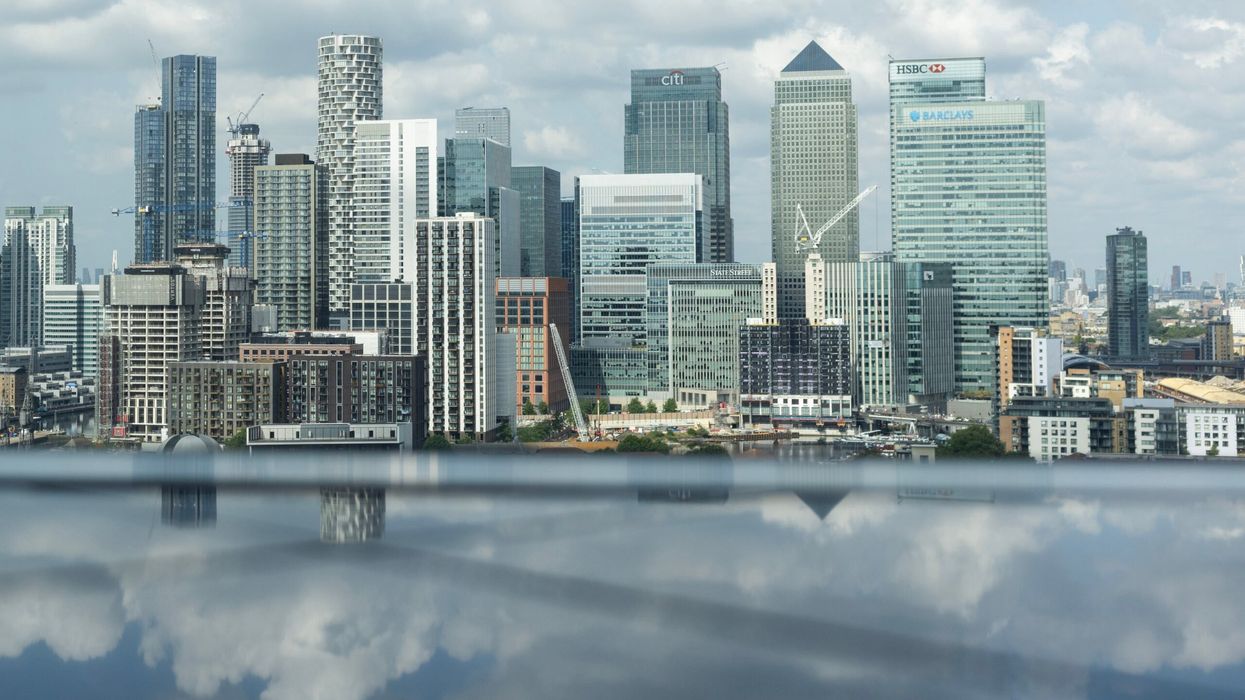

THE UK's economy contracted in September, with growth slowing significantly over the third quarter, posing an early challenge to Rachel Reeves' plans to boost economic performance.
Data from the Office for National Statistics (ONS) on Friday showed a 0.1 per cent decline in GDP for September, driven by flatlining services and drops in manufacturing and construction.
Over the July-September period, GDP grew by just 0.1 per cent, down from 0.5 per cent in the second quarter. This fell short of the 0.2 per cent growth predicted by both the Bank of England and economists polled by Reuters, as the economy lost momentum following a strong first half of the year.
Chancellor Reeves responded to the figures, saying: "Improving economic growth is at the heart of everything I am seeking to achieve, which is why I am not satisfied with these numbers. Now we are going to deliver growth through investment and reform."
On Thursday, Reeves outlined plans to overhaul regulations in the financial sector, which she described as essential for economic growth.
Friday’s data showed a 1.2 per cent rise in business investment for the quarter, marking growth in this area for four consecutive quarters. Sterling and British government bonds showed little reaction to the figures.
The opposition Conservative Party criticised Reeves, arguing that her economic policies and rhetoric have hindered growth. Labour came to power in July after a landslide victory.
Last week, the Bank of England revised its 2024 growth forecast downward to 1 per cent from 1.25 per cent, though it predicted stronger growth in 2025, citing potential benefits from Reeves' high-spending budget plans.
Britain’s economic growth has been slow since the Covid-19 pandemic, with output increasing by only 3 per cent since late 2019. Among advanced economies, only Germany has performed worse, affected by higher energy costs after Russia’s invasion of Ukraine.
Sanjay Raja, chief UK economist at Deutsche Bank, warned of risks ahead, saying: "Higher taxes on business announced in the budget could hit private sector investment and hiring early next year. We still see positive momentum into 2025, but downside risks are brewing."
Keir Starmer campaigned on a target of 2.5 per cent annual growth, a level not consistently achieved since before the 2008 financial crisis. Reeves has set an ambitious goal for the UK to lead the G7 in GDP per capita growth for two consecutive years, though Friday’s data shows that GDP per head fell by 0.1 per cent in the third quarter and has not grown annually since 2022.
(With inputs from Reuters)