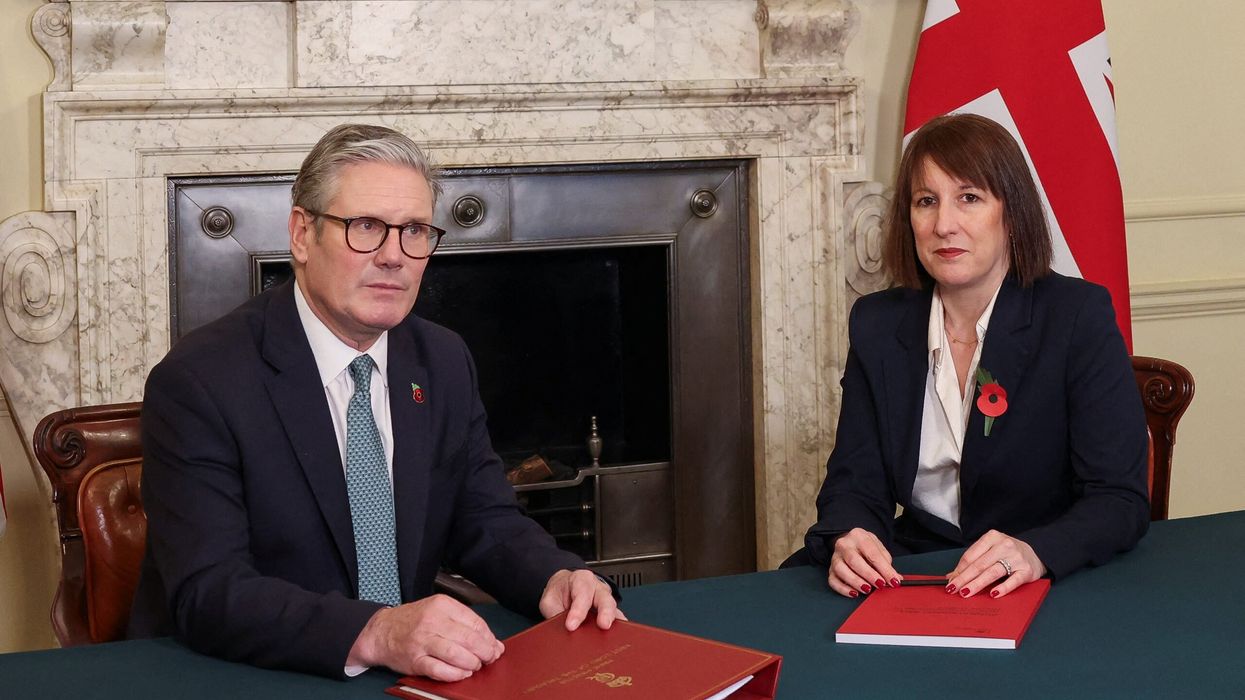

PRIME MINISTER Sir Keir Starmer vowed reforms to speed up the economy and overhaul the public sector after the Labour government unveiled its first budget last Wednesday (30).
Chancellor Rachel Reeves announced big increases in tax, borrowing and spending, but the country’s budget watchdog judged that economic growth beyond next year would be weaker than it previously thought.
British government bond prices fell in the hours after the chancellor’s speech and again last Thursday (31), sending borrowing costs up sharply, before stabilising last Friday (1).
Writing in the Financial Times last Saturday (2), Starmer said the budget was a “first step on our mission for growth” but also opened the way for reform of “our creaking central state” and its public services as well as more private sector investment.
“Just as we cannot tax and spend our way to prosperity, nor can we simply spend our way to better public services,” he wrote, addressing concerns that the NHS and other public services needed more than just extra cash to improve.
Some analysts said without reform the government may need to raise taxes again in future to fix the public sector, despite Reeves’ pledge that her budget was intended to “wipe the slate clean”.
Starmer listed plans to meet his promise to voters in July’s general election to double Britain’s economic growth pace such as housing targets, planning system reforms, quicker approval of clean energy projects and a review of how regulators operate.
“This process involves detailed, often painstaking work. For that reason, it is not yet ready to be included in the OBR’s forecast for growth,” he said, referring to the Office for Budget Responsibility (OBR) whose forecasts underpin the budget.
“However, we should be optimistic about the potential,” the prime minister wrote, focusing on the importance of private sector investment alongside a big increase in public infrastructure spending.
The OBR, whose projections underpin government budgets, said the economy was set to expand by two per cent in 2025. That is up only slightly from a forecast of 1.9 per cent it had made in March, at the time of the previous Conservative government’s last budget, and it trimmed its growth forecasts further out.
Reeves said the weak economic growth forecasts by the OBR “are not the summit of my ambition” and “there are more plans that we’re bringing forward to lift that growth rate”.
She changed the government’s fiscal rules to allow her to increase borrowing for long-term investment, which she hopes will speed up the economy.
However, the OBR thinks it will be the 2030s before the higher public investment delivers its main boost to the economy. It means Reeves and Starmer could struggle to impress voters before the next election expected in 2029.
The OBR estimates that Reeves has only £10 billion of headroom against a goal to balance day-to-day spending against tax revenue in five years’ time.
A second goal to reduce public sector net financial liabilities as a share of gross domestic product only had £16bn of headroom, it added.
The budget was welcomed by the International Monetary Fund (IMF), and last Saturday, it also won applause from Mario Draghi, the former European Central Bank president who recently advised the EU on how to boost competitiveness.
“The UK government has chosen to significantly raise public investment over the next five years and has adopted precise rules to ensure that borrowing is used only to fund this investment,” he wrote, also in the FT.
“Moreover, to ensure the quality of spending, transactions will be validated by independent authorities. This increases the likelihood that public investment has a positive net present value and so supports fiscal sustainability.” (Reuters)