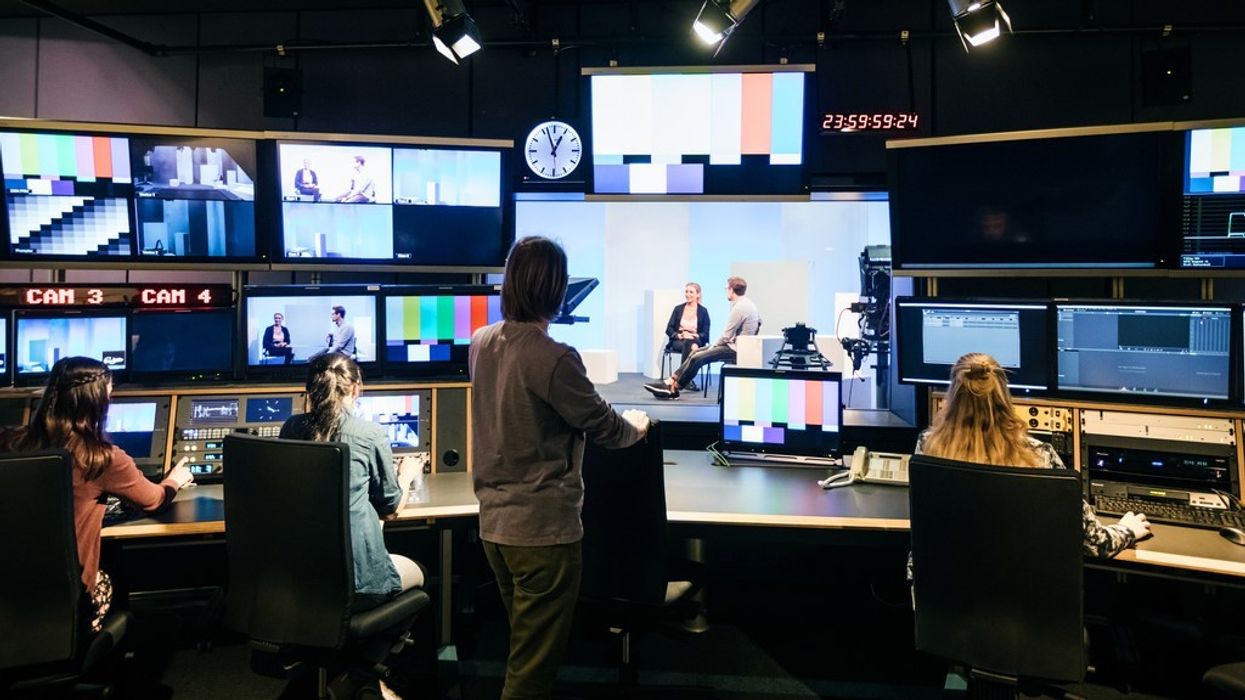
A LONDON-BASED television station critical of the Iranian government said on Saturday (18) it was moving its live broadcasting studios to the United States following threats it faced in Britain.
Iran has accused regional rival Saudi Arabia of funding the Persian-language Iran International channel, which has covered anti-government protests in the Islamic Republic extensively.
Saudi Arabia has not commented on Tehran's allegations.
"After a significant escalation in state-backed threats from Iran and advice from the Metropolitan Police, Iran International TV says it has reluctantly closed its London studios and moved broadcasting to Washington DC," the channel said in a statement.
The decision came days after London police said an Austrian national, Magomed-Husejn Dovtaev, had been charged with a terrorism offence after being detained in Chiswick Business Park, where Iran International's headquarters is located.
"We still have serious concerns for the safety of people working at this company. This has led to us giving further advice and the company is now relocating," police counter-terrorism head Matt Jukes said in a statement.
"A foreign state has caused such a significant threat to the British public on British soil that we have to move. Let’s be clear this is not just a threat to our TV station but the British public at large," Iran International TV General Manager Mahmood Enayat said in the statement.
The broadcaster, which did not say whether the move to Washington was temporary or permanent, added that threats had grown to the point where it felt it was no longer possible to protect its staff, and the general public.
There was no immediate comment by Iranian officials on the channel's move and allegations of threats against it.
Protests rocked Iran again on Thursday (16) and Friday (17) after seeming to have dwindled in recent weeks, reviving five months of unrest which has posed one of the strongest challenges to the Islamic Republic since the 1979 revolution.
Iran International TV employs around 100 journalists in London, who will all continue working from home in reporting and production, company spokesman Adam Baillie said.
A similar number work for the station in Washington, serving a global audience of 30-40 million Farsi speakers, Baillie said, denying regime claims that it is in league with exiled Iranian opposition groups.
The TV station had no complaints about the police response in London, Baillie added.
"They took the whole thing extremely seriously, with seven armed response teams on site at one point," he said.
"But the Met clearly have to be concerned about thousands of other people working in the area."
The TV station's relocation is likely to stoke calls in the UK parliament for the government to get tougher with Iran, even as London and its Western allies try to coax Tehran back to an agreement on limiting its nuclear programme, which was scuppered in 2018 by former US president Donald Trump.
British MPs voted last month in favour of adding Iran's Islamic Revolutionary Guard Corps (IRGC) to a list of banned terrorist organisations.
Then, perennially tense ties between London and Tehran came under new strain when the regime executed dual British national Alireza Akbari, accusing him of spying for the UK.
"We will not tolerate any threat to media organisations or journalists," a government spokesperson said Saturday.
"We know the Iranian regime has established a pattern of this type of behaviour which is completely unacceptable, yet sadly typical of the regime and its lack of respect for basic rights," the spokesperson said.
(Agencies)
TV critical of Iran moving studios from London to US after threats
Iran has accused Saudi Arabia of funding the Persian-language Iran International channel