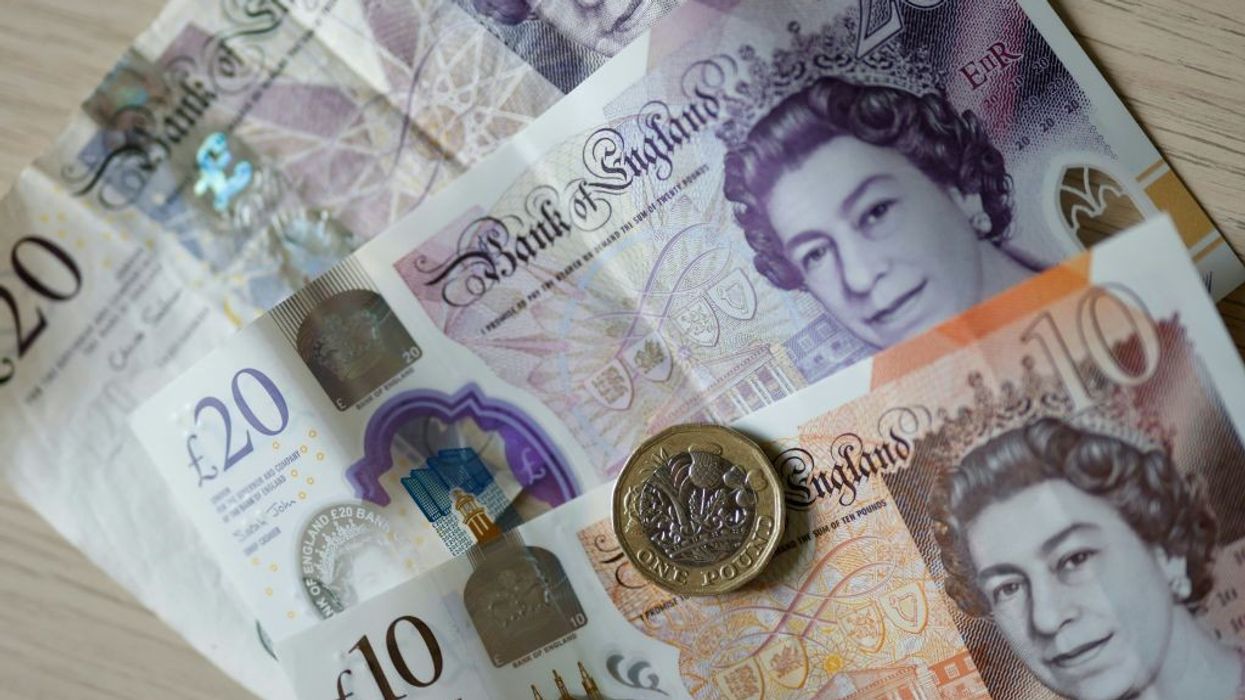

A toxic cocktail of sluggish growth and high inflation, plus Brexit and fallout from the coronavirus pandemic, is set to weigh on the pound in the coming months, economists warned.
Since the start of the year, the sterling has fallen by more than seven per cent against the dollar, which is benefiting from rises in US interest rates.
The pound has also fallen by 1.7 per cent against the euro since the beginning of 2022.
This comes despite the Bank of England having raised UK borrowing costs four times this year to fight inflation.
By contrast, the European Central Bank is waiting until July to raise its key interest rates for the first time in more than a decade.
BoE rate rises have "been insufficient to offset the headwinds weighing on the pound", said Rabobank analyst Jane Foley.
"Concerns about growth have been central to the poor performance of the pound," she said.
Fears of recession in the UK and elsewhere are gaining momentum as soaring inflation -- fuelled by rocketing energy prices -- hits investment and consumer spending.
Oil and gas demand has surged as economies emerge from pandemic lockdowns, while supplies have been hit by the invasion of Ukraine by major producer Russia.
Britain's annual inflation rate stands at nine per cent, a 40-year high, while the Bank of England is forecasting the UK economy to contract at the end of the year.
The Bank of England's next rate decision is due June 16 when it is expected to take its main borrowing cost above one per cent.
"Hiking rates against a sharply slowing economy is never a good look for any currency," said Bank of America currency strategist, Kamal Sharma.
Brexit cost
The pound has dropped to around $1.25 compared with $1.40 before the 2016 vote in favour of Brexit, or Britain's departure from the European Union.
After the UK entered its first pandemic lockdown in March 2020, sterling sank to $1.14, the lowest level since 1985.
And the pound took a knock this week after embattled British Prime Minister Boris Johnson faced a vote of no confidence from his own Conservative MPs.
Although Johnson survived, 41 per cent of those who voted failed to back him as their leader.
Another big factor affecting the pound is that the BoE "remains wholly unwilling to discuss" the full consequences of Brexit on the UK economy, according to Sharma.
This could partly be due to the fact that it is difficult to pin down the exact financial fallout, with Britain's departure from the European Union formalised only during the economic shock caused by the Covid-19 pandemic.
Meanwhile, political paralysis in Northern Ireland, a direct consequence of Brexit, poses further problems for the pound, according to economists.
"The added risk is that there is another Brexit bust-up, perhaps over the Northern Ireland Protocol," said Capital Economics analyst Paul Dales.
"The latter could result in the pound weakening below $1.22."
The protocol was agreed upon as part of Britain's Brexit divorce deal with Brussels, recognising Northern Ireland's status as a fragile, post-conflict territory that shares the UK's new land border with the EU.
But Britain is readying new legislation to rewrite its Brexit commitments to fix trade distortions in the province.
Sharma expressed concern "that the increasing politicisation of UK policy undermines the pound".
Whatever the financial cost of Brexit, "underpinning the market's concerns about growth was the recent IMF (International Monetary Fund) projection that the UK is set to have the slowest pace of growth in the G7" group of rich nations next year, said Foley.
Other global financial bodies, such as the Paris-based Organisation for Economic Co-operation and Development (OECD), have also slashed their growth outlooks for Britain, as well as for other major economies.
(AFP)