
Highlights
- British Indian surgeon professor Chandra Cheruvu led the initiative to honour the “Father of Surgery”
- The 90-kg statue was made in Swamimalai, Tamil Nadu state, using traditional lost-wax casting methods
- Sushruta’s ancient text Sushruta Samhita is considered one of the earliest known surgical treatises
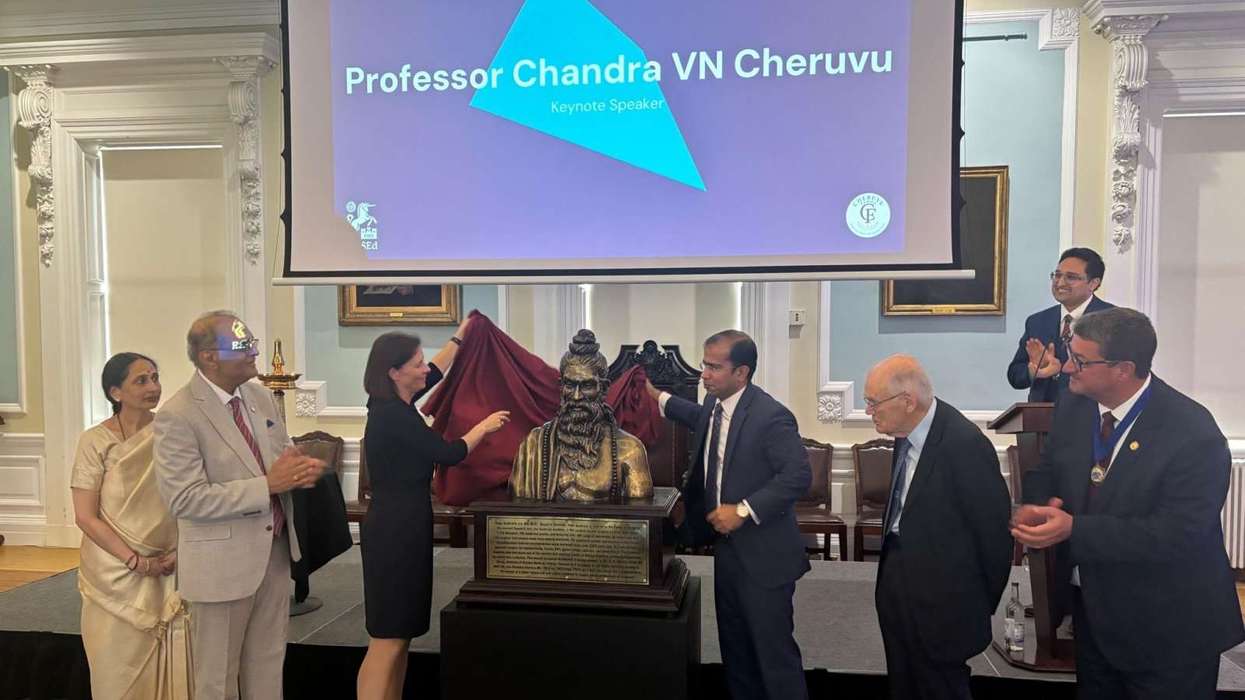
A BRONZE statue of Sage Sushruta, widely regarded as one of the pioneers of surgery, has been unveiled at the Royal College of Surgeons of Edinburgh in Scotland, recognising India’s contribution to medical history.
The statue now stands permanently at the historic surgical institution, creating a link between ancient Indian medical knowledge and modern surgical education.
Led by professor Chandra Cheruvu, a UK-based Indian surgeon, the initiative saw the statue donated by the Cheruvu Family Foundation and crafted at Swamimalai near Kumbakonam in Tamil Nadu state, southern India.
Created using the traditional lost-wax method, a centuries-old technique associated with Swamimalai artisans, the 90-kg bronze sculpture was later transported to Edinburgh after completing customs procedures in India and the UK.
India’s consul general to Scotland Siddharth Malik, Royal College of Surgeons of Edinburgh president professor Clare McNaught, former president professor Rowan Parks, surgeons and medical professionals attended the unveiling event this week.
In a message on social media, the Consulate General of India thanked professor Cheruvu and the Royal College of Surgeons for supporting the initiative.
“The ceremony celebrated India’s ancient medical heritage, the historical India-Scotland links in medicine and surgery, and the important role played by the Royal College in advancing surgical education worldwide,” the Consulate said.
Dr K Govindaraj, national president of the Indian Association of Gastrointestinal EndoSurgeons, described the moment as “a matter of immense pride for Indians worldwide”.
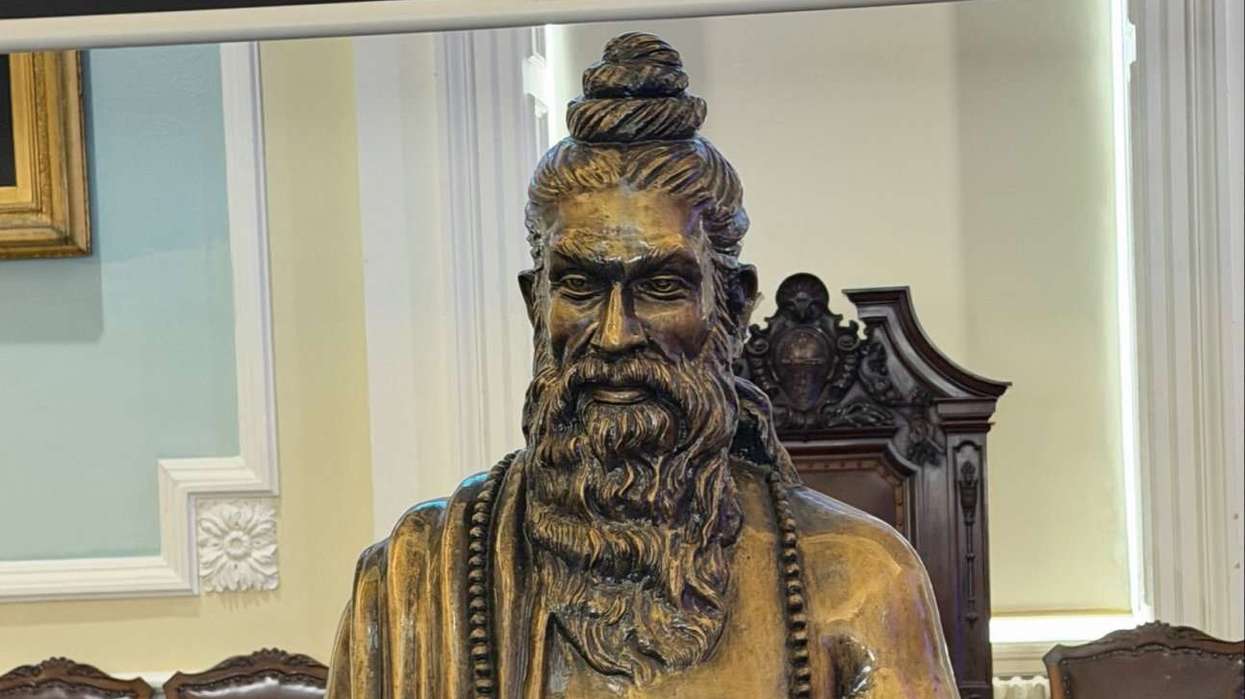 Sushruta is known for the Sushruta Samhita, an ancient Sanskrit medical text describing surgical procedures, instruments and techniques.Consulate General of India, Edinburgh
The statue will stand near the staircase leading to the college’s Playfair Hall, where surgical fellows receiving their degrees will pass it, creating a symbolic connection between Sushruta’s work and modern surgical practice.
Sushruta, believed to have lived around 600 BCE in the ancient city of Varanasi, is best known for the Sushruta Samhita, an ancient Sanskrit medical text describing surgical procedures, instruments and techniques.
His work includes descriptions of reconstructive surgery, including early methods of nose reconstruction, which are considered among the earliest recorded examples of plastic surgery.
The Royal College of Surgeons of Edinburgh, founded in 1505, is one of the world’s oldest surgical institutions and has played a major role in surgical education and training globally.