
For over 100 years, UK-based charity ‘Lepra’ has played a significant role in the global effort to research and develop new treatments and services for complex neglected tropical diseases, such as leprosy.
Throughout the 20th century, Lepra’s research was instrumental in the development of ‘multidrug therapy’ (MDT), which is still used today as a proven and effective cure for the disease. Since the introduction of MDT in 1981-1982, the global prevalence of leprosy has been dramatically reduced, from over 5 million new cases annually, to under 200,000 in recent years.
Despite the availability of MDT treatment, which is available for free through ‘National Leprosy Programmes’, transmission of the disease remains persistent, due to its complex nature and a wide range of societal factors which can serve as barriers to early detection and treatment – vital measures which can prevent the development of life-changing disabilities and halt community transmission.
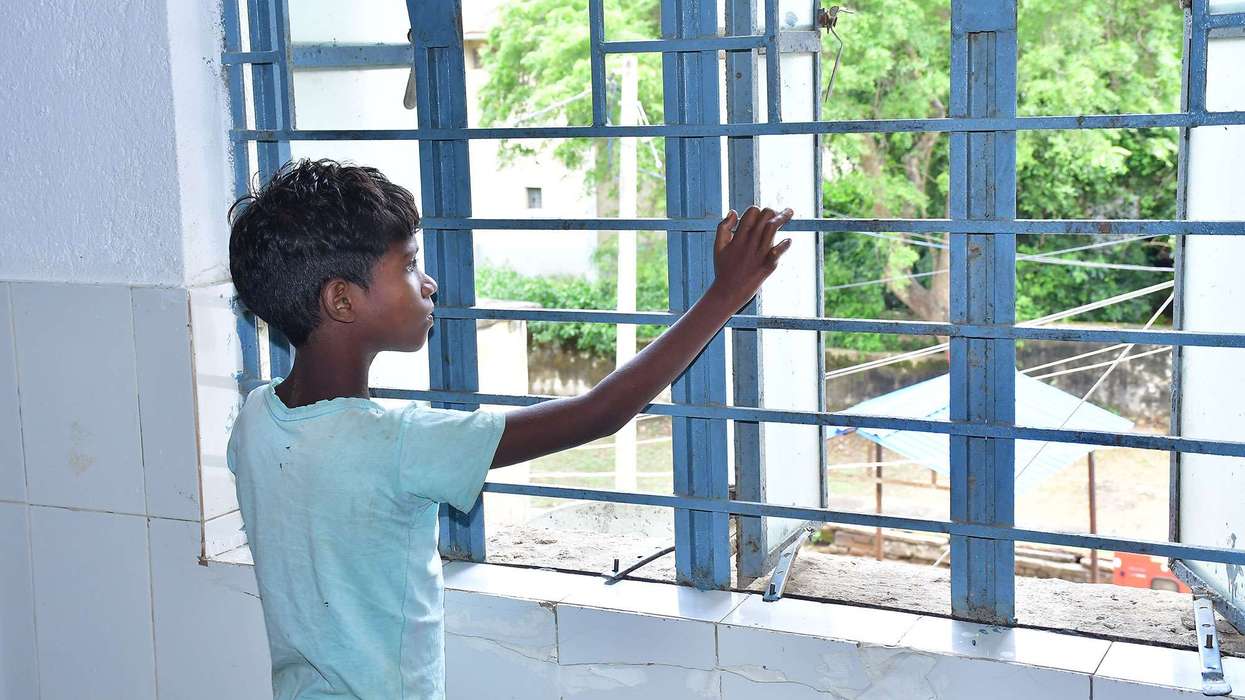
A ‘first-of-its-kind’ study titled ‘Stigma and discrimination among children affected by leprosy: a systematic review of a skin-related neglected tropical disease’ has recently been conducted by Lepra and a range of research partners. The study assessed the impact of stigma and discrimination on children affected by leprosy. The review provides a strong evidence base which will help to shape the future of programme design and public health interventions, which aim to remove the barriers to treatment for children, young people, and in turn, the wider community.
The study undertook an extensive analysis of existing research into the topic by academics and NGOs working in this field. The findings highlighted that children affected by leprosy are subject to stigma and discrimination across multiple settings, which adversely affects their mental health.
The review also found that social characteristics, community integration, local viewpoints and an individual’s physiological challenges significantly affect the stigma experience. As a result, the study recommends multi-sectoral and holistic interventions that both focus on the sphere that stigma operates in, such as at school, and identify how contextual factors
such as access to healthcare, disease awareness, family support and social integration, can be shaped to reduce stigma and its impact. This includes a range of interventions such as; targeted education, healthcare provision, psychosocial support and community engagement.
Importantly, the study identified that poor disease knowledge remains one of the greatest drivers of leprosy-related stigma. As such, behavioural change campaigns are seen as an important area of focus, instead of exclusively concentrating on information and education. Additionally, the study highlights that awareness campaigns should employ positive messaging, instead of a more traditional ‘fear-based’ approach, which may inadvertently reinforce stigma surrounding the disease.
Additionally, a whole-family approach to stigma interventions has been recommended, to tackle discrimination within the household, improve family support and to mitigate the impact of stigma directed at family members. A series of future research recommendations have also been identified, including more primary research with children, co-creation, participatory methods, and anthropological work that further investigates the social process of stigma.
“Leprosy-related stigma and discrimination are not isolated psychosocial experiences in the study population. Rather, they are processes that operate simultaneously in various life domains and present complex public health challenges requiring multisectoral responses.”
– Dr Madleina Daehnhardt
The study has been published in Transactions of the Royal Society of Tropical Medicine and Hygiene
To read more about this new study and Lepra’s work in India and Bangladesh please visit www.lepra.org.uk
Authors & Affiliations:
Madleina Daehnhardt (PhD) a, Chris Cecil (MPhil) a, Srushti Bhorkar (MPH) a, Ayoposi Ogboye (MSc) a, Hugo Paula (MPH) a, b, Saba Lambert (PhD) c, d, Hugo Pessotti Aborghetti (MD) e, Veronica Phillips (PhD) f, Becks Hill (MPH) a, Patricia Duarte Deps (PhD) e
a Lepra, 28 Middleborough, Colchester CO1 1TG, UK
b Department of Clinical Neurosciences, University of Cambridge, Biomedical Campus, Cambridge CB2 0QQ, UK
c London School of Hygiene and Tropical Medicine (LSHTM), Department of Clinical Research, Faculty of Infectious and Tropical Diseases, Keppel St, London WC1E 7HT, UK
d ALERT Hospital, P.O. Box 2511, Addis Ababa XPP6562, Ethiopia
e Department of Public Health (Collective Health, formerly known as Department of Social Medicine), Federal University of Espírito Santo (UFES), Vitória, Brazil
f Medical Library, School of Clinical Medicine, University of Cambridge, Cambridge, UK
About Lepra
Patron: His Majesty King Charles III
Vice President: His Royal Highness The Duke of Gloucester KG GCVO
Lepra is a UK-based charity working in India and Bangladesh to change the lives of people affected by leprosy. Established in 1924, the British Empire Leprosy Relief Association (BELRA) was inaugurated by H.R.H The Prince of Wales at Mansion House in the City of London. We’ve been known simply as Lepra since 2008. Working in India and Bangladesh, we find, diagnose, treat, and rehabilitate people affected with leprosy with specialists diagnosing leprosy by using skin test patch anaesthesia, skin smears and non-invasive sensory investigation. We also work tirelessly to address the prejudice and discrimination they face in their daily lives.
To find out more about our work, please visit our website www.lepra.org.uk or our social media channels