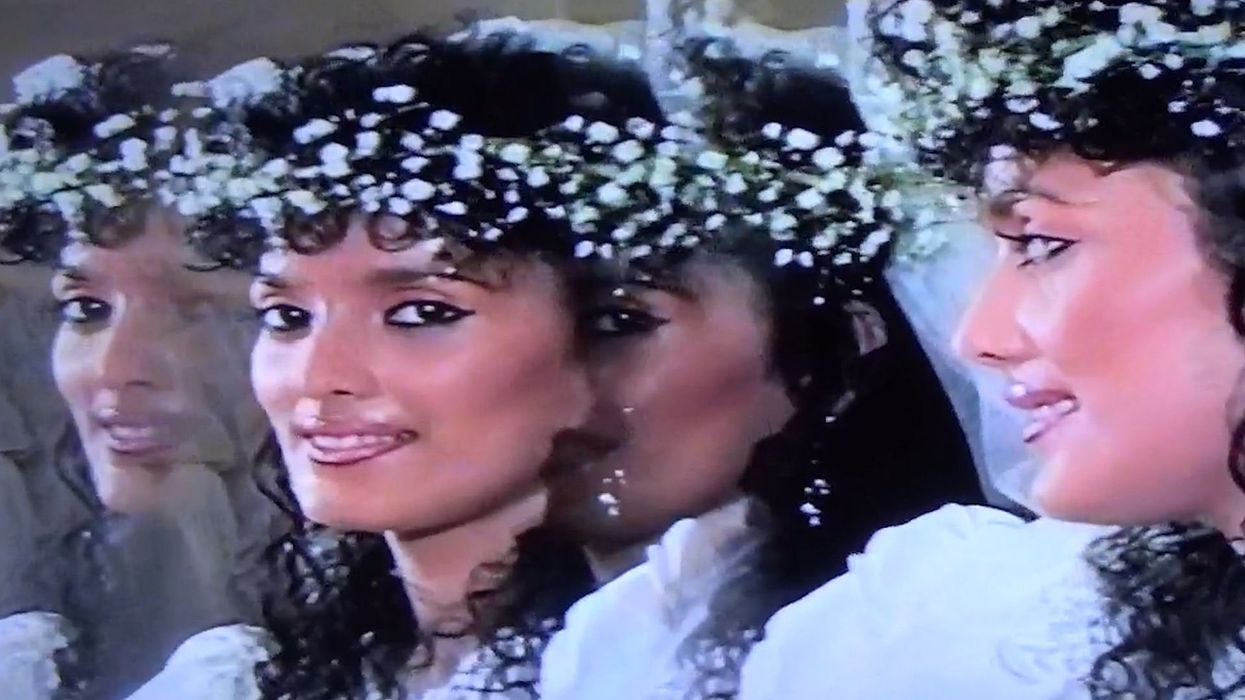
Ever since the tragic news about Sridevi’s demise started making rounds, many have expressed their condolences on social media. Many have also been sharing their fond memories of their time with Sridevi.
During one of her interviews with a leading Indian daily, Sridevi was asked if she had the chance to do anything differently in her career. To this she said, "Not at all! I wouldn’t want to change anything about my career. I hadn’t planned all this, it all fell into my lap and I am grateful to God for it. I just want it to remain like this. My mom and I never thought that I would make my way into Bollywood. I was happy doing films down south. When my first Hindi film Solva Savan (remake of a Tamil film) was being made, I thought that yeh picture toh south main hit ho gaya, hence, they are making it in a different language. That’s all. Then, I came to know the film didn’t do well and I went back to doing my other southern language films. It was as simple as that. Before Himmatwala happened, the producers had taken dates for a different film in Telugu, and all of a sudden they turned around and said that they weren’t doing that film anymore, instead, they were doing a Hindi film with Jeetendra. My first reaction was that if my Hindi debut was a flop, why do they want me to do another film? They didn’t bother to hear me out, they went ahead with it and I kept thinking that these people are mad to be doing this (laughs). I am glad that I did it and then one film lead to the other."
Sridevi is considered as the first female superstar. Speaking about the same, she had said, "All these labels and praises scare me, I am very simple and I feel like a newcomer because I never stopped learning. I feel there is so much more to learn about the craft, in fact, it is just the beginning. The times have changed. In the earlier days, on the set, we would ask the director… Sir, dialogues de do. Meanwhile, the writer would be sitting somewhere on the same set and writing the dialogues. The team would tell us, “Garam garam aa raha hai scene.” Now, we can’t function like that. We have the bound script in our hand, and we are well aware of the mood of the scene, the look of the character, the clothes and everything else. But I guess, back then that was the style, people still did a great job and it worked in that era. Today, films are made differently and so many heroine-oriented films are being made. The filmmakers are willing to take chances and explore these subjects. It is the best time to be in this industry and there is so much more I want to learn as an actress. I never went through the phase in my career where I said… This is enough; I don’t want to do this anymore. Acting has always been my passion."