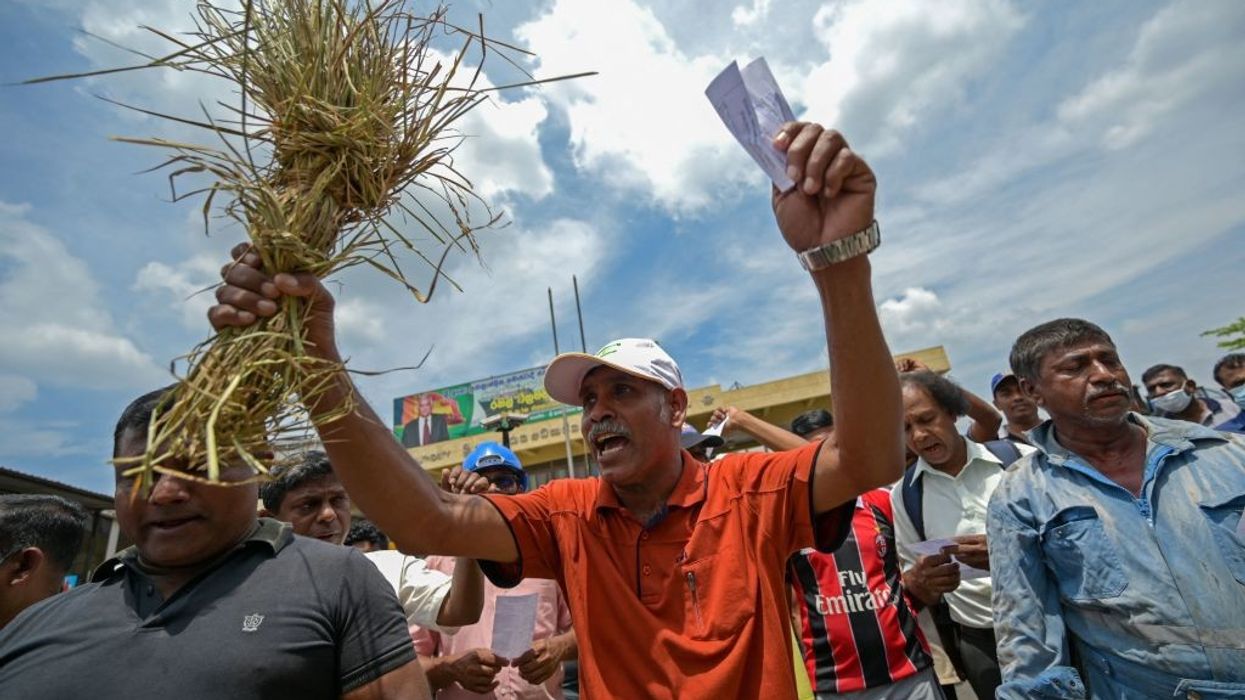

SRI LANKAN workers went on strike Wednesday (1) in defiance of a government ban to protest a rescue plan for the bankrupt island nation, forcing the closure of hospitals, banks and ports.
President Ranil Wickremesinghe is facing a public backlash over steep tax hikes and spending cuts imposed to secure a sorely needed International Monetary Fund bailout.
Around 40 trade unions, including government hospital staff and bank employees, called work stoppages.
Doctors at the National Hospital of Sri Lanka in Colombo said only emergency cases were being treated, while appointments were cancelled at private clinics and hospitals.
Electricity workers and bank tellers were also on strike while dock workers staged lunchtime protests at the capital's port.
Wickremesinghe used his executive powers on Tuesday (28) to effectively outlaw strikes by compelling "essential services" to remain at work, and government workers defying the order risk losing their jobs.
Union leaders said they were told by Wickremesinghe last week that he cannot reduce income taxes as it was a condition of the IMF to release a bailout package.
Haritha Aluthge of the Government Medical Officers' Association told reporters in Colombo that his union planned to continue its industrial action.
"A token one-day protest is not going to sway the authorities," he said. "We will have to take stronger action."
Sri Lanka sought IMF help after defaulting on its $46 billion foreign government debt last April but is waiting for financial assurances from China, its largest single bilateral creditor, that it is willing to take a haircut on loans to the South Asian nation.
Sri Lanka's unprecedented economic crisis since late 2021 has caused severe shortages of food, fuel and medicines and led to months of protests that toppled president Gotabaya Rajapaksa in July.
Wickremesinghe, who was elected by parliament to replace Rajapaksa, says the economy contracted by 11 percent last year and the island will remain bankrupt until at least 2026.
He has also announced that the country did not have money to finance a local government election which was scheduled for March 9, prompting accusations that he was using the economic crisis to stifle democracy.
(AFP)