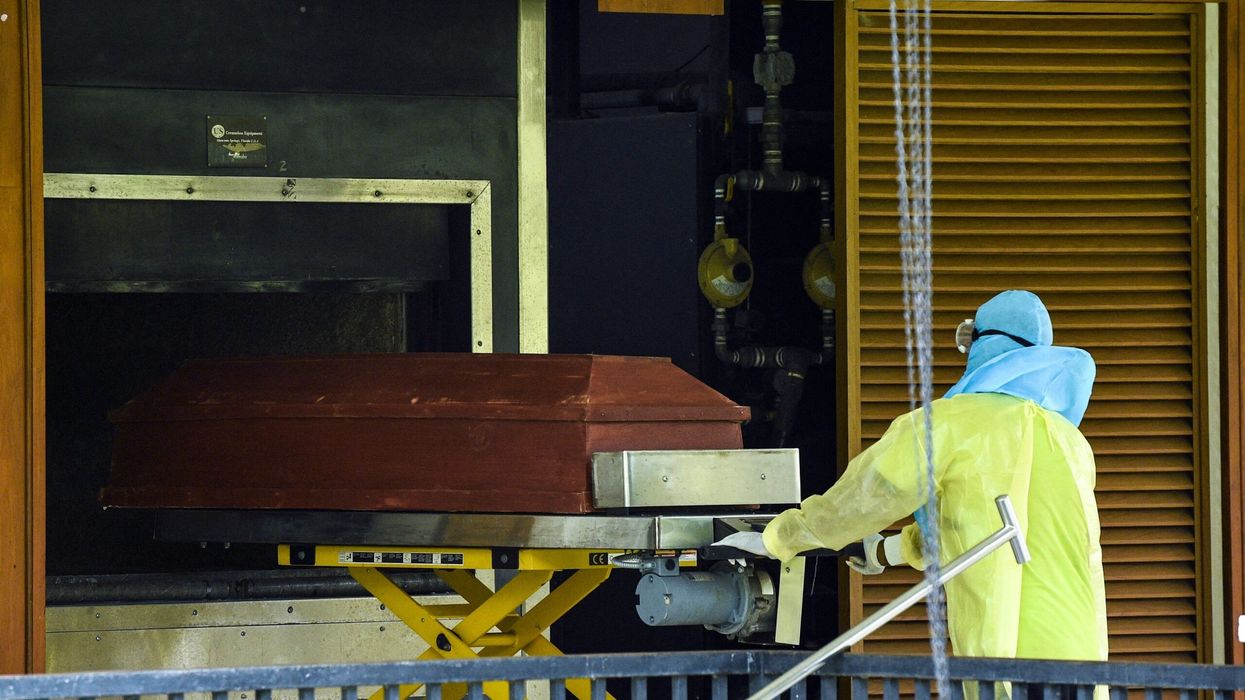

THE Sri Lankan government on Tuesday (23) said it would formally apologise to the island nation's Muslim minority community for its controversial cremation policy adopted during the outbreak of the coronavirus pandemic.
The mandatory order taken in 2020 to cremate the bodies of Covid-19 victims, which denied minority communities, including Muslims, their religious rights, was later revoked in February 2021 amidst mounting international criticism.
The Sri Lankan cabinet in a meeting on Monday (22) approved the proposal to tender an apology to the Muslim community for the enforced decision made in March 2020, according to a cabinet note.
The cabinet has decided “to plead the apology on behalf of the government, from all the communities”, it said.
The cabinet also decided to introduce legislation to prevent a repetition of such controversial moves.
The note said the Cabinet also gave nod to a proposed legislation on the burial or cremation of dead bodies based on religious discretion. Attention has been drawn to introducing a law, which allows a certain person or relations to select the burial or cremation of the dead person at their discretion.
The Muslim community had opposed the policy of forced cremation, and some even left the bodies of their loved ones in hospital mortuaries. The community members had said that either they were coerced into allowing cremations or that occurred without their knowledge. The cremation of bodies is forbidden in Islam.
Accordingly, 276 corpses of Muslim persons were cremated, until the order was revoked in February 2021.
The Sri Lankan government was resisting calls to allow burials citing health concerns. It cited the opinion of some experts who claimed that the burial of Covid-19 victims would contaminate the water table thereby spreading the pandemic further.
The country had also come under intense criticism from rights groups, including the UN Human Rights Council, over the cremation order. The rights groups said it failed to respect the religious feelings of the victims and their family members, especially the Muslims, Catholics and some Buddhists.
The Organisation of Islamic Countries (OIC) nations had also appealed in Geneva to reverse the forced cremation decision. (PTI)