
Sonia Gandhi’s much anticipated book, Belonging: A Journey of Love, published in the UK by William Collins, is a must read for British Asians – and the wider diaspora across the world.
Sonia has been president of the Congress party, and nominated Manmohan Singh to be prime minister of India in 2004 when the opposition made it clear they simply would not accept an Italian origin woman in the top job. The irony is she didn’t want to go into politics in the first place.
“In the end I chose to write a personal memoir, one for which politics is the background, a kind of framework,” she has explained in the prologue.
Sonia’s story is heart-rending because she had to witness the death of her brother-in-law, Sanjay Gandhi, in a flying stunt that went wrong in 1980 when he was only 33; the killing of her mother-in-law, Indira Gandhi, prime minister of India, by her own Sikh bodyguards following “Operation Blue Star” at the Golden Temple in Amritsar in 1984; and the assassination of her beloved husband, Rajiv Gandhi, in 1991 by a female suicide member.
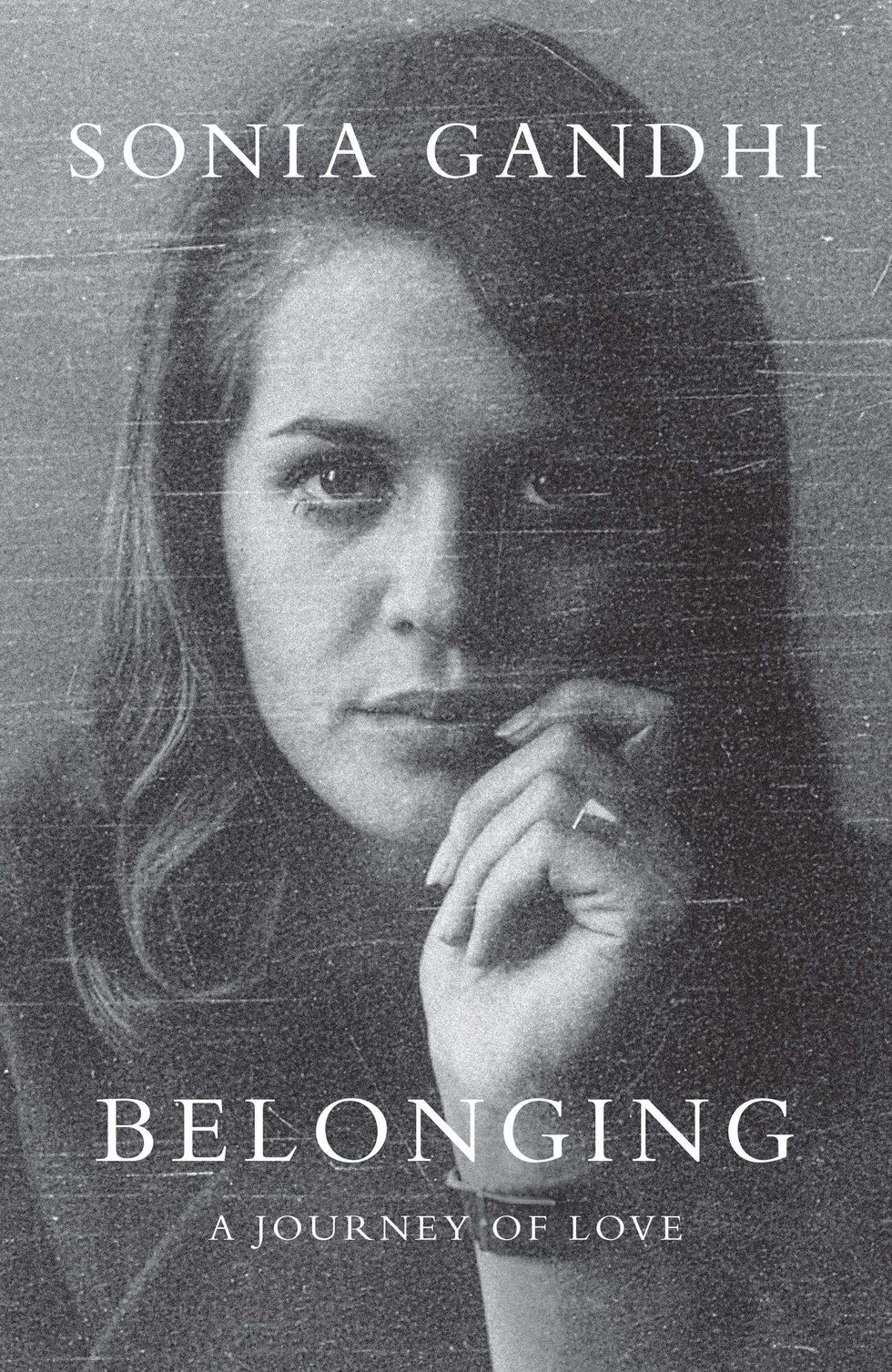 Belonging: A Journey of LoveEastern Eye
She has been frank about being treated for breast cancer. What was not previously known was she also lost her first baby, though later she had her son, Rahul, and daughter, Priyanka.
“On January 18, 1969, I gave birth to our first child,” she revealed. “It was a normal delivery and I heard the baby’s first cry as he was placed in the incubator. Later Rajiv took me to see him, a tiny, perfectly formed boy, with thick, black hair and long, slim fingers. We gazed at him together, Rajiv’s arm around my shoulder. We fell in love with him immediately, but Rajiv had been told already that there were doubts about his survival.”
Rajiv “broke it gently to me when at 6:30 in the morning the end came….I cried my heart out, and Rajiv, in spite of his ‘stiff upper lip’ upbringing, also wept copiously.”
“Another numbing blow came soon after, when a question was put to me about the baby’s remains…..He couldn’t be cremated because, according to tradition, a newborn was simply released into the river.”
Her reaction was instinctive: “No matter what I’m not going to allow our baby to be thrown into the river.”
Rajiv and Sanjay “felt that at that stage the only option was to bury the baby on their father’s farm in Mehrauli…. Rajiv came back to the hospital and told me that he and Sanjay had buried the little one deep under a beautiful pink bougainvillea bush, then in full bloom.”
Sonia recalled Mrs Gandhi’s reaction: “My mother-in-law, on learning the news, flew back directly, interrupting her tour, reaching us at eleven thirty that night. She embraced us, her eyes red and swollen, and sat with us for a long time. She wanted to remain with us, she said, but had to complete her tour engagement. She left early the next morning, full of sorrow: She, too, had so looked forward to the happy event. How I longed to have my mother near me as well. Sanjay rushed to the hospital to be by his brother’s side. To those who didn’t know him, his manner could convey an impression of abruptness, even arrogance, but it hid a warm and empathetic side of his nature. His way of showing concern was different. He’d drop in and try to cheer us up with funny stories or riddles.”
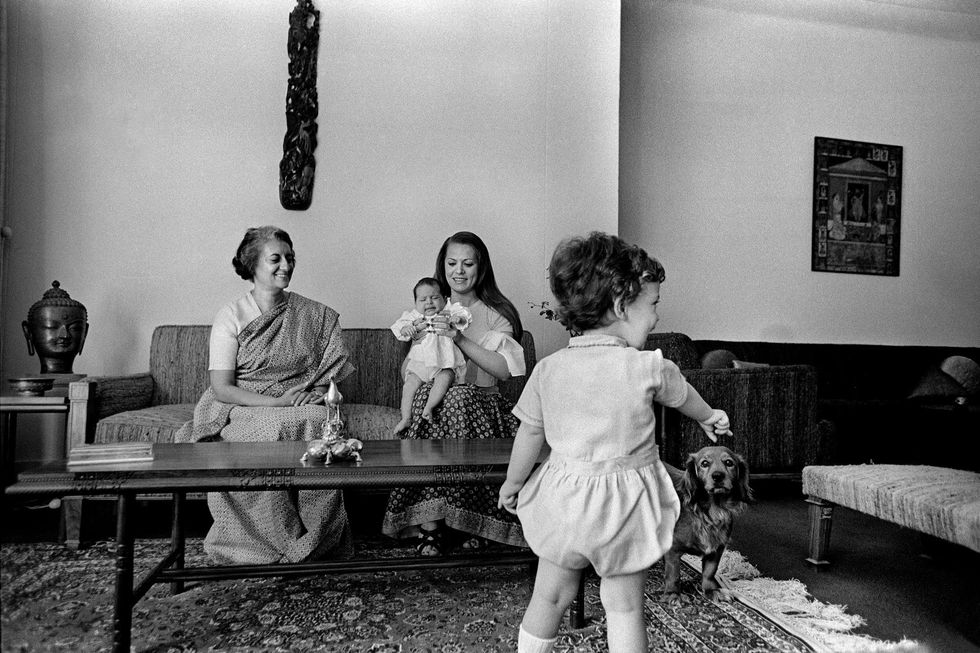 Family time Eastern Eye
There was a further cruel twist.
Sonia said: “Nasty stories were also doing the rounds. In one of the right-wing opposition papers, an item appeared: ‘Indira Gandhi failed in her attempt to become the grandmother of a bastard child.’ The venom of those words seared my heart. How could people be so cruel? What had I done to deserve such malice? The hurt caused by that spiteful comment added to the heartbreak of my loss and to my feeling of inadequacy.”
Such racist abuse has been her lot all the years she has been in India because of her Italian origins.
She was on holiday with Rajiv in Italy in when a phone call from India delivered the news that Sanjay had been killed while trying to pull off some reckless aerobatic stunts in a new aircraft.
This is Sonia’s account: “In June 1980, Rajiv and I decided to go on a vacation to Italy. We left Rahul and Priyanka with my parents in Orbassano and set off on a trip to Florence, just the two of us, looking forward to being alone together. On
June 23, on our return to our pensione for a late breakfast, we were met by an agitated member of the staff asking us to call my parents urgently. Our hearts sank: Something must have happened to the children.
“Frantically I placed the call to my parents. It was then that we heard with horror that Sanjay had met with a fatal accident. Rajiv was white with shock, petrified with anguish: Sanjay, his only brother, with whom he had shared most of his life, had been killed in a plane crash.
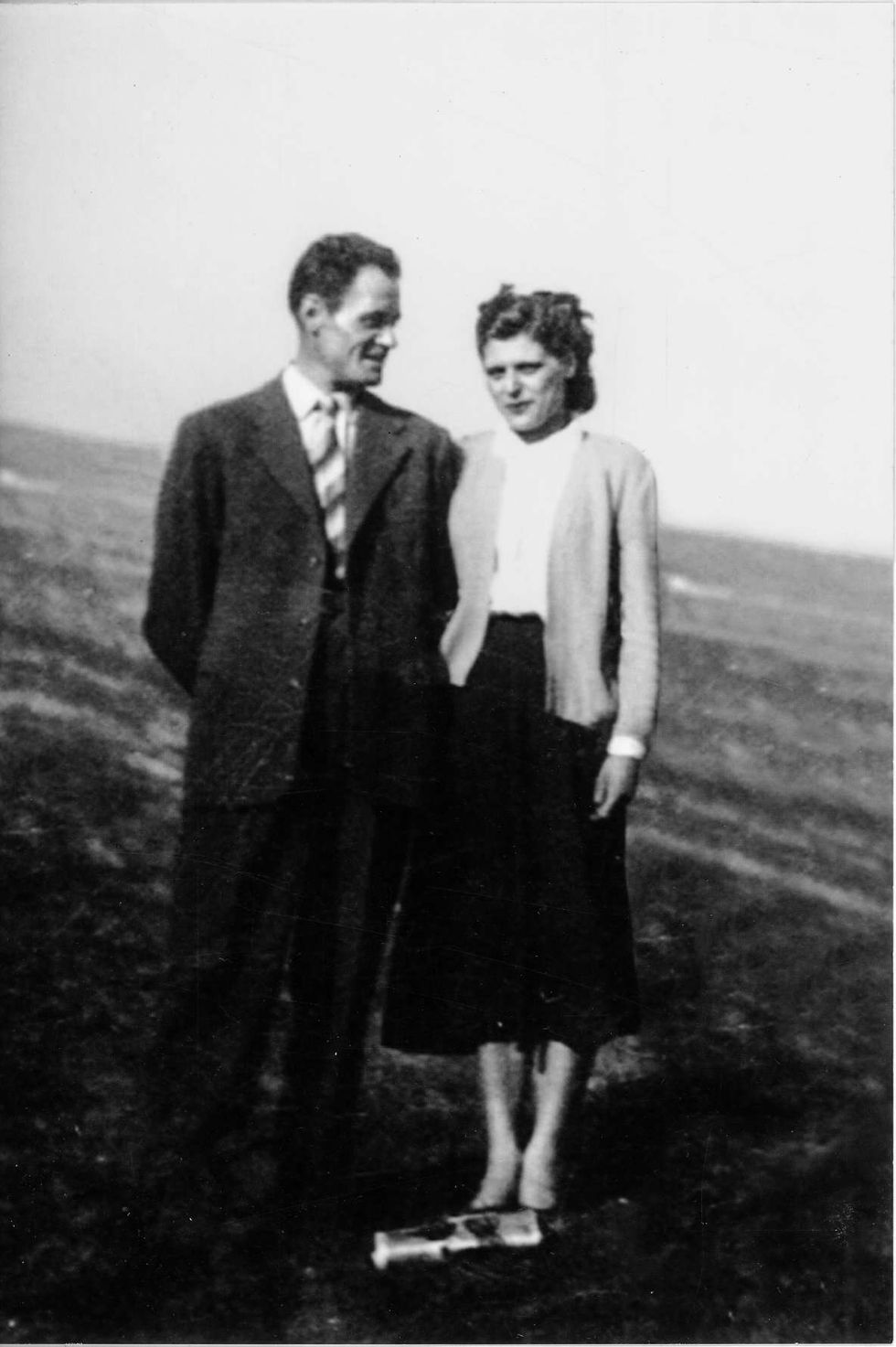 Sonia Gandhi's ParentsEastern Eye
“My mother had received a call from Delhi and, unable to understand what was being said, had handed the phone to ten-year-old Rahul. The call was from his Dadi’s personal secretary, Mr. Dhawan, and the message was rushed and abrupt: ‘There has been an accident, Rahul. Chacha has died.’ Rahul told my mother what he had heard, bursting into sobs. She, still trying to understand what had happened, tried to calm him down. But he was in a state of shock and could only keep repeating, ‘Chacha è morto.’ (‘Chacha has died.’). When we reached home, he was inconsolable, despite our efforts to calm him down. Priyanka was stunned and bewildered. All the adults of my family who had gathered in the house were shocked and saddened, my father most of all.
Sonia and Rajiv flew back to Delhi: “We reached Delhi to find my mother-in-law numb, devastated. She had kept her emotions to herself during those long desperate hours, we were told. Amongst the notes I found in her writing table after she died was one with the lines in her hand: ‘As I was going to the spot I prayed, Oh! God, don’t let it be him.’
Mrs Gandhi “had gone to the hospital with his young widow (Menaka) and asked her to wait till she assured herself that Sanjay’s head had been bandaged”.
“We went straight to the room where Sanjay’s body was laid out. It was a heartbreaking sight….Sanjay was cremated in Delhi near the banks of the river Yamuna… It was a devastating blow for his mother, for his wife (Menaka), barely twenty-three years old, for all of us. His son (Varun), just three months old, was now fatherless.”
Sonia had become very fond of her brother-in-law even though she had no illusions he was responsible for many of the outrages committed during the state of emergency from 1975-77 when Mrs Gandhi, the prime minister, locked up thousands of opposition politicians.
Sonia lost the battle to prevent Rajiv, an Indian Airlines pilot, replacing his younger brother as Mrs Gandhi’s heir apparent.
“Rajiv’s entry into politics in the summer of 1981 was the moment that completely transformed our lives – as individuals, as a couple, as a family,” she noted.
But maybe her tragic fate was sealed when she first met Rajiv, “tall and handsome with deep black eyes” at the Varsity restaurant in Cambridge in 1965.
Christian von Stieglitz, a friend of a friend, said: “Hi Sonia, met my friend Rajiv.”
Rajiv held out his hand with a smile: “How do you do, Sonia?”
How could she possibly have foreseen he would be assassinated a few years after his mother?
Their mutual attraction was instant. Sonia Maino was a 19-year-old English language student from a sheltered, middle class family from Orbassano, a small town in the Torino province in the northern part of Italy.
Rajiv was a 21-year-old undergraduate at Trinity, his grandfather Jawaharlal Nehru’s old college, and meant to be studying engineering.
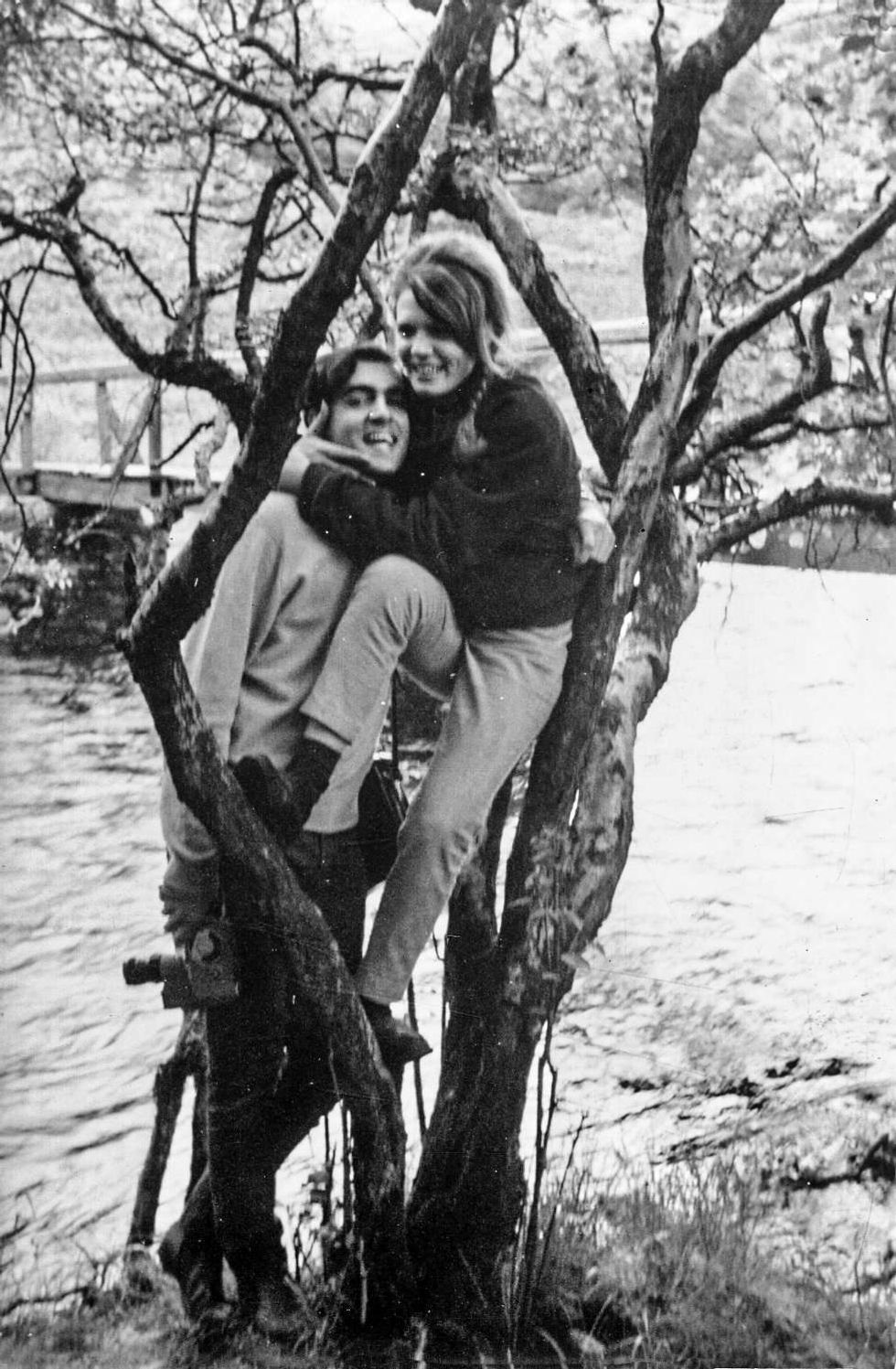 Sonia and RahulEastern Eye
By 1966, Mrs Gandhi was prime minister of India, a position she retained until 1977. She served a second stint from 1980 until her assassination in 1984, when Rajiv was forced by the Congress party to succeed his mother.
Sonia and Rajiv, married in Delhi in 1968, lived in the prime minister’s residence. Their life together before Rajiv entered politics was blissful. By and by, Sonia became more of a daughter to Mrs Gandhi.
Sonia’s account of getting into the white Ambassador car with a fatally wounded Mrs Gandhi is harrowing: “I’m in the car now, crouching on the floor, facing her... Blood – blood on her sari, blood on her chest. Her large eyes are wide open; her face wears a surprised expression. She doesn’t move. I attempt to speak to her, to call out, ‘Mummy, Mummy,’ but no word comes out. I try again, she doesn’t reply.
“Her aides R. K. Dhawan and M. L. Fotedar are in the front of the car, screaming. Heavy, slow traffic, the car barely moves, it has no siren. One red light, then another break. Then the hospital. The gate isn’t opening. Chaos. We are stopped; someone looks through the window in a questioning attitude. They let us in.
“We reach the emergency department, teeming with people, we are stopped again, not allowed in, we have to wait for our turn. Someone calls out to the driver, signals him to move forward. They identify us; she is placed on a trolley. We are led somewhere, an operation theatre? They ask me to follow. I’m taken to a room nearby. No, no, I want to stay by her, I insist. I want to know. I have to see. They don’t reply; they are immersed in their emergency procedures.
“I feel confused, lost... I don’t recognise anyone there. I’m shivering under my dressing gown. I feel scared, my mind is racing. Where is Rajiv? I try to remember. I can’t, I can’t. The children, yes, they’re in school; they must be brought home. Oh God, no, no. Let them be safe, let Rajiv be safe…..At two in the afternoon of October 31, 1984, Indira Gandhi was declared dead.”
There was more tragedy to come. In 1991, Rajiv was campaigning in Tamil Nadu when he agreed to be garlanded by a woman waiting in line: “As he bent his head to receive it, she detonated the explosives strapped to her body….It was May 20, 1991, and Rajiv was forty-six years old.”
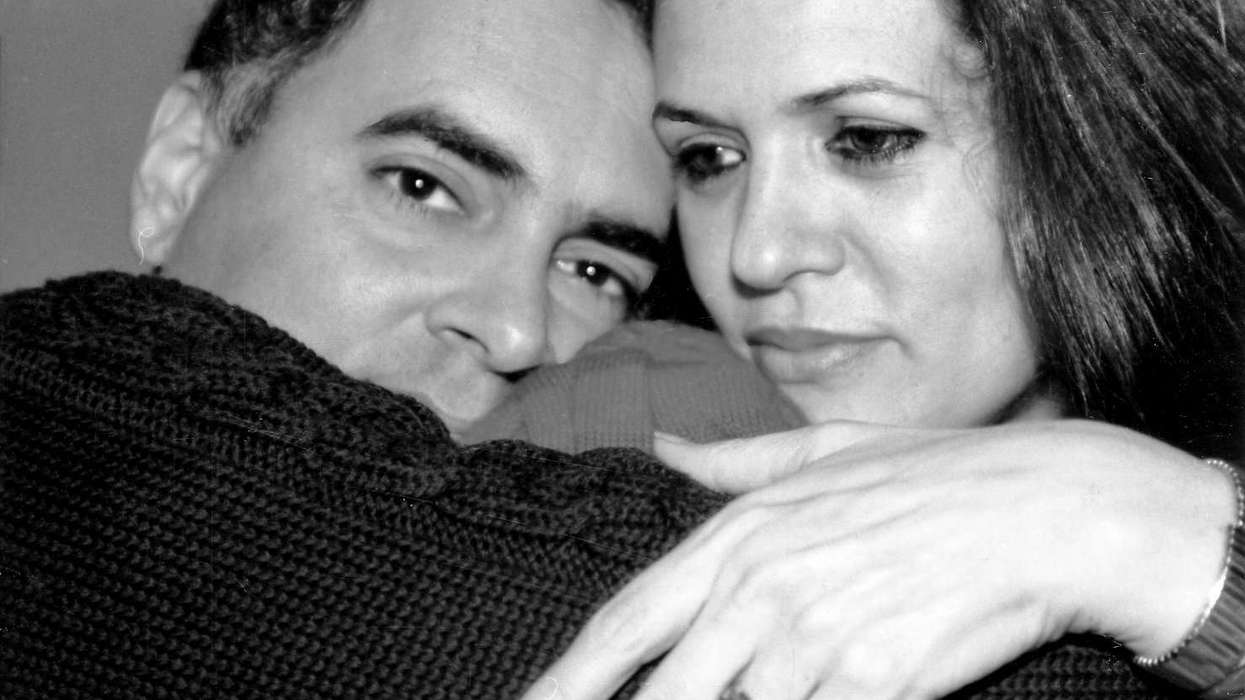
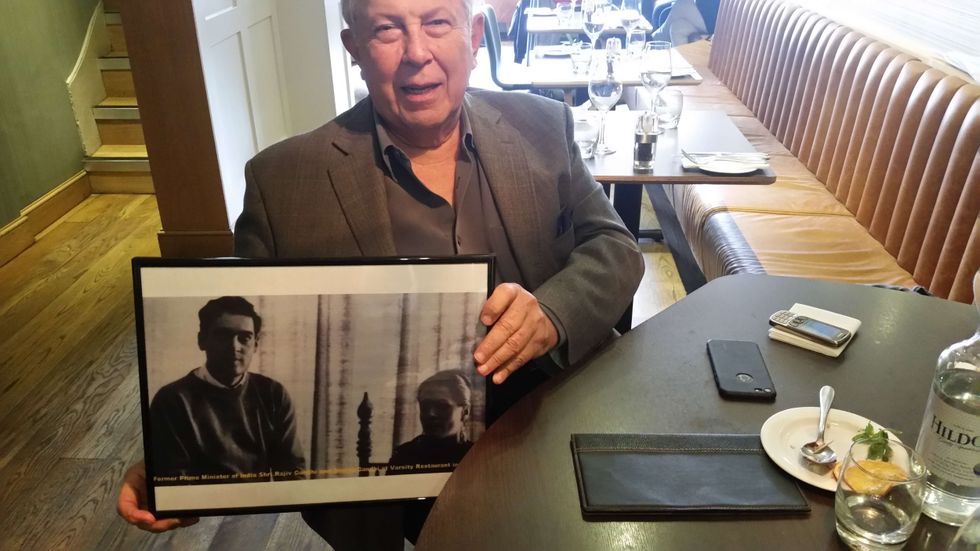 Cipla head Yusuf Hamied with picure of Rajiv and Sonia in 1965.Eastern Eye
When his body was brought back, she insisted his eyes be donated in keeping with her husband’s wishes. She was shocked by the doctor’s bitter response in Hindi: “Aankhen? Arre kya baat karte ho, kuchh nahin bacha hai, kucch nahin!” (“Eyes? What are you talking about? There’s nothing left, nothing!”)
Sonia’s sister, Nadia, who was in Delhi, pleaded with her in Italian: “Sonia, they have killed your mother-in-law, now they have killed your husband. What are you still doing here? What are you waiting for? For your children’s turn. And yours? Come home, Sonia, we all want you back.”
And she replied in Italian: “No, Nadia! You can’t understand. This is my home. It is my country, my children’s country.”
Belonging: A Journey of Love. By Sonia Gandhi. Published by William Collins in the UK. £25

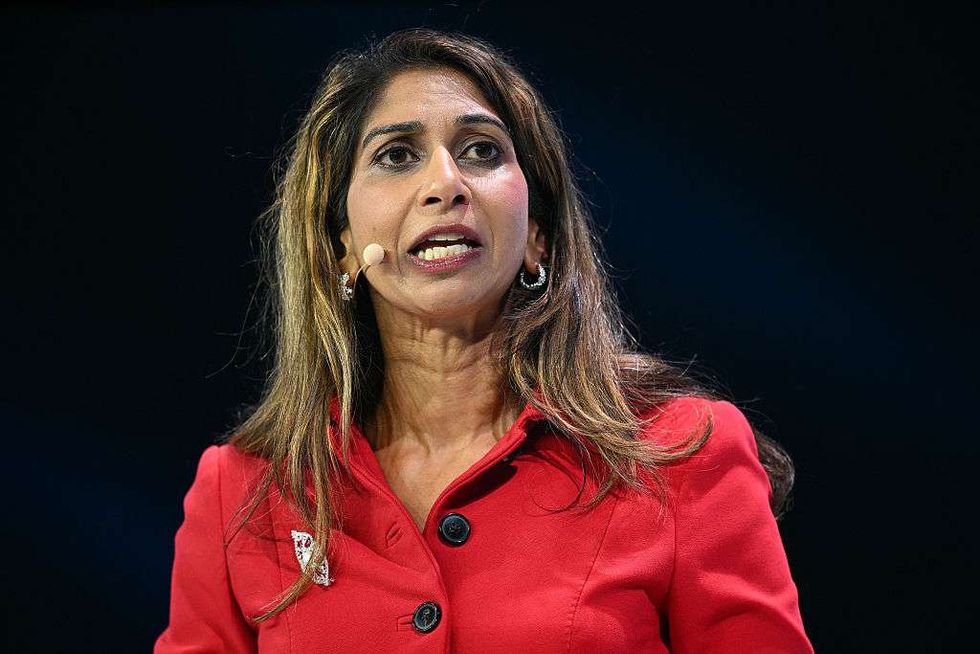 Suella Braverman (Photo by Oli SCARFF / AFP via Getty Images)
 Reform UK shadow chancellor, Robert Jenrick, speaks on stage at a Reform UK rally at Grand Station on November 12, 2026 in Wolverhampton, United Kingdom. (Photo by Christopher Furlong/Getty Images)