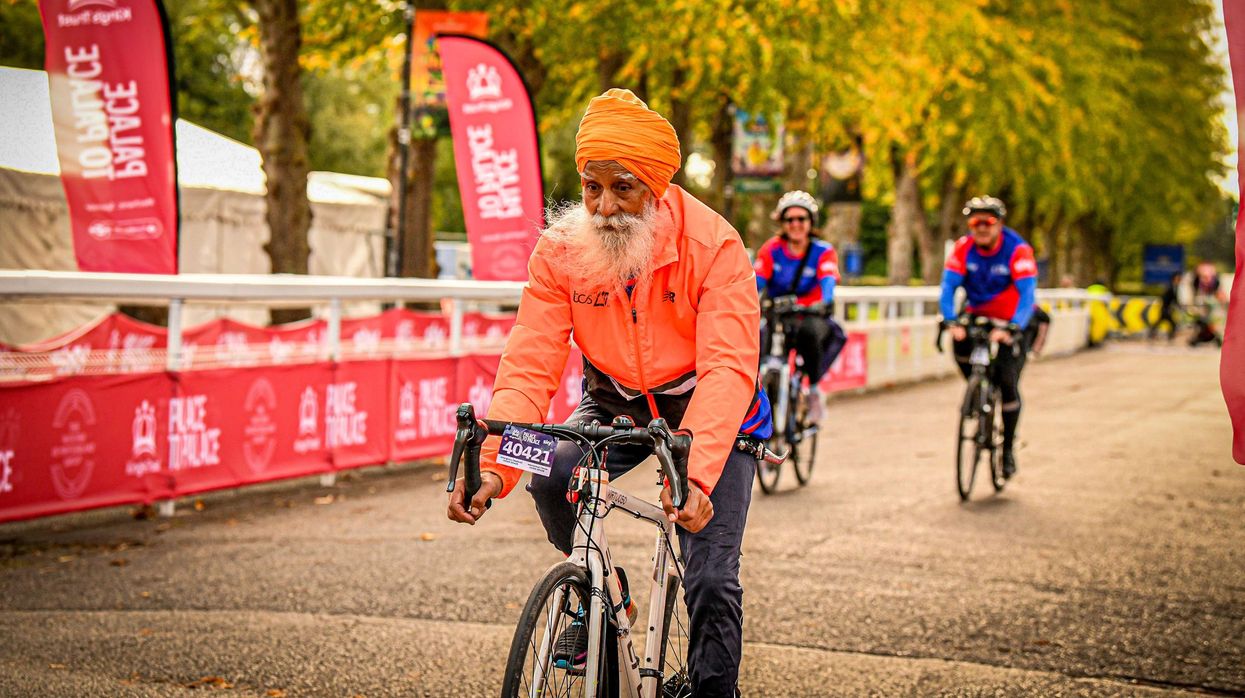

At 77 years old, Rajinder Singh MBE — affectionately known as the Skipping Sikh — is proving that age is no barrier to fitness, faith, or community spirit. With his trademark turban, rope, and infectious smile, he has become a national symbol of positivity and health, using his love of movement to inspire others to take control of their wellbeing.
Rajinder’s passion for exercise began in his childhood in India, where his father — a proud army officer — instilled in him the importance of discipline, strength, and staying physically active. That early inspiration shaped Rajinder’s lifelong commitment to health and fitness. Now based in the UK, he continues to live by those same values — but his mission has grown far beyond himself.
During the Covid-19 lockdowns, Rajinder became a viral sensation when he began posting skipping videos online to lift people’s spirits and encourage families to stay active at home.
Now, five years on from the Covid-19 lockdowns that first brought him national attention, Rajinder is still going strong, showing that his dedication to fitness and community hasn’t wavered. His energy and commitment continue to inspire people of all ages to get active, proving that perseverance and passion last a lifetime.
His humble videos struck a national chord, and his efforts earned him an MBE from King Charles III for services to health and fitness. Yet, for Rajinder, that recognition only deepened his drive to keep going and keep giving back.
This year alone, the Skipping Sikh completed the Ealing Half Marathon, took on a 45-mile charity cycle ride (the oldest person to do so), and is now training for the 2026 London Marathon. His message is simple but powerful: “Health is wealth — if we look after our bodies, they will look after us.”
Rajinder is also proudly representing the Asian community, raising much-needed awareness about why representation in sport matters. By staying active and visible, he is showing others that participation is possible at any age, background, or ability. Everywhere he goes, he stands out — not just for his energy, but for his message. People see him and think, “If he’s doing it, I can too.” Through his actions, he is not just calling for change; he is creating it, inspiring others to follow his lead and get moving.
And his mission couldn’t come at a more important time. Sport England’s latest Active Lives survey (2023-24) shows that the Asian (excluding Chinese) community — which includes Indian, Pakistani, and Bangladeshi people — remains one of the least active groups in the country.
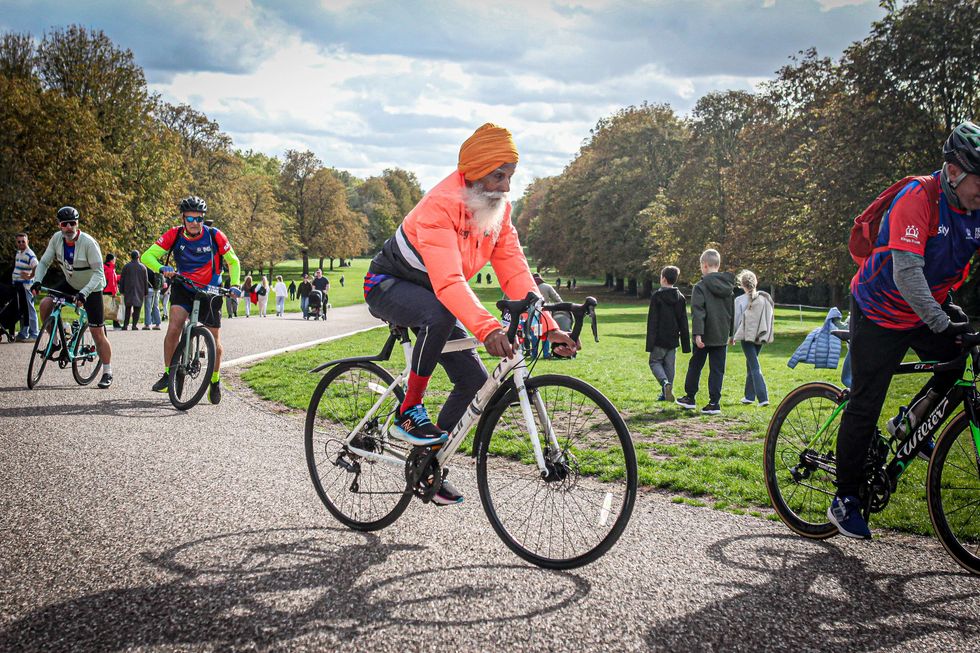 Rajinder Singh MBE MyBibNumber
Only around 55% of adults in this category achieve the recommended 150 minutes of exercise per week, compared with 65% of White British adults. In addition, just 37% of Asian adults meet muscle-strengthening exercise guidelines, well below the national average. Older data from the government’s Ethnicity Facts & Figures site also shows that roughly 31% of Asian adults are classed as physically inactive — meaning they do less than 30 minutes of moderate exercise a week.
Among Asian women, that figure rises even higher, highlighting a persistent gender and cultural gap in physical activity levels. Sport England describes this as a “deep-rooted inequality” that has changed little over the years. For Rajinder, these statistics are personal. “Our community needs to move more,” he says. “We have to look after our health so we’re not a burden on the NHS. Exercise is for everyone — young and old, men and women, rich or poor.”
Through his skipping, running, and cycling, he’s showing that staying active doesn’t require expensive equipment or fancy gyms — just motivation, consistency, and joy. His example is especially powerful for south Asians, who face higher risks of diabetes and heart disease. The Skipping Sikh’s story is more than just about fitness; it’s about faith, family, and serving others. As he prepares for the London Marathon, he continues to lead by example, proving that movement is medicine — and that it’s never too late to start.
Viveen Taylor, Director of EDI at Sport England, said: “Sport England research shows that south Asian adults are on average less active than other groups in the UK. There are a range of factors that could be behind this: lack of opportunities, economic barriers, and cultural barriers.
“Feeling that you belong is crucial too; a recent AI-powered study on images of women in sport found that south Asian women were barely represented at all, which could heighten feelings of exclusion from physical activity. But Skipping Sikh is showing his community that physical activity is for everyone – what a fantastic role model.
“Sport England has invested £250m into areas with low activity levels, working with diverse communities to give everyone the chance to lead an active life. And our new phase of This Girl Can, We Like The Way You Move, is targeting south Asian Muslim women as a priority to show them that they can and should enjoy the incredible benefits of movement.”