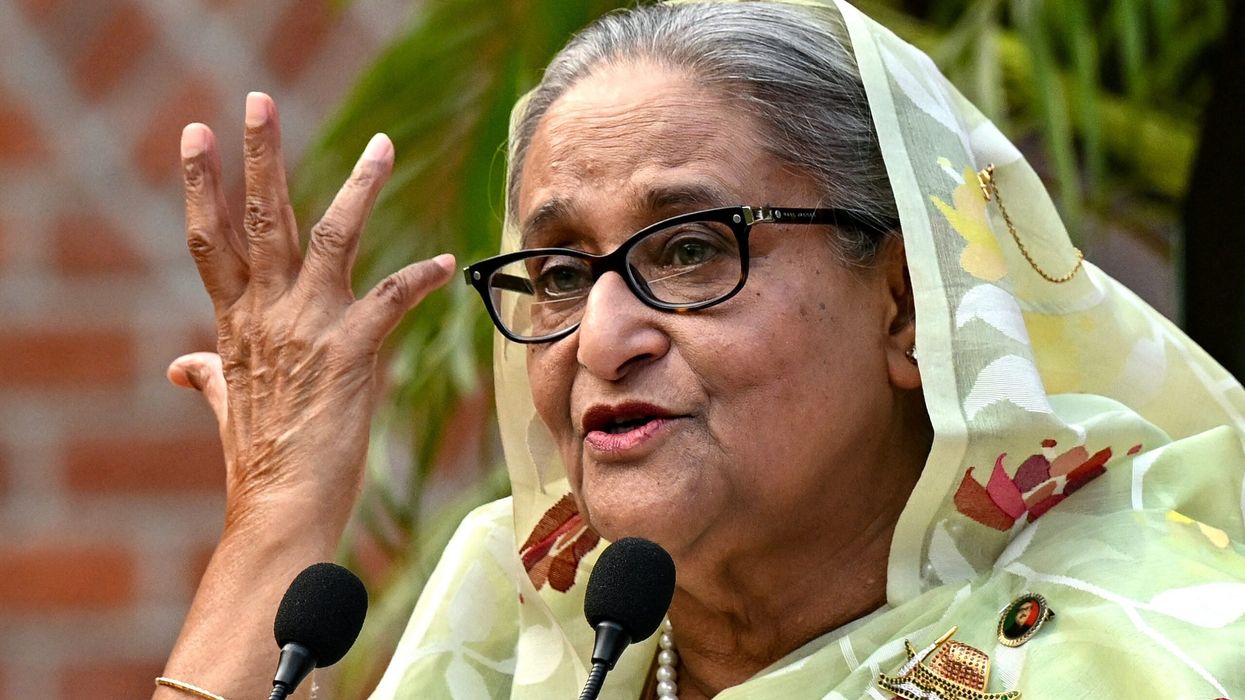

BANGLADESH'S interim government has revoked the diplomatic passport of ousted prime minister Sheikh Hasina and those of all former Cabinet members, more than two weeks after she resigned and fled to India amid a student-led uprising.
The Security Services Division of the Home Affairs Ministry announced on Thursday (22) that diplomatic passports issued to the former prime minister, her advisors, ex-cabinet members, and all members of the recently dissolved Jatiya Sangsad (Parliament), along with their spouses, would be immediately revoked, according to the official BSS news agency.
Following Hasina's departure, president Mohammed Shahabuddin dissolved the 12th Parliament, and the country is currently governed by an interim administration led by Nobel Peace laureate Muhammad Yunus.
The ministry's statement also mentioned that diplomatic passports would be revoked as soon as an official’s tenure or appointment ends.
Ordinary passports may be issued to these individuals, pending clearance from at least two investigating agencies.
Hasina, 76, fled to India after resigning on August 5 in response to widespread protests led by students.
According to the Daily Star, under India's visa policy, Bangladeshi citizens with diplomatic or official passports are entitled to visa-free entry and a stay of up to 45 days.
As of Thursday, Hasina has been in India for 18 days. The cancellation of her diplomatic passport and visa privileges raises the possibility of her extradition, as she faces 51 legal cases in Bangladesh, including 42 for murder.
According to the treaty signed in 2013 and amended in 2016, "extradition may be refused if the offence for which it is requested is an offence of a political character."
It also says that certain offences – like murder – "shall not be regarded as offences of a political character" for the purposes of the treaty. However, one of the grounds for refusal of extradition is if the charges being pressed have not been "made in good faith, in the interest of justice", the report said. (PTI)