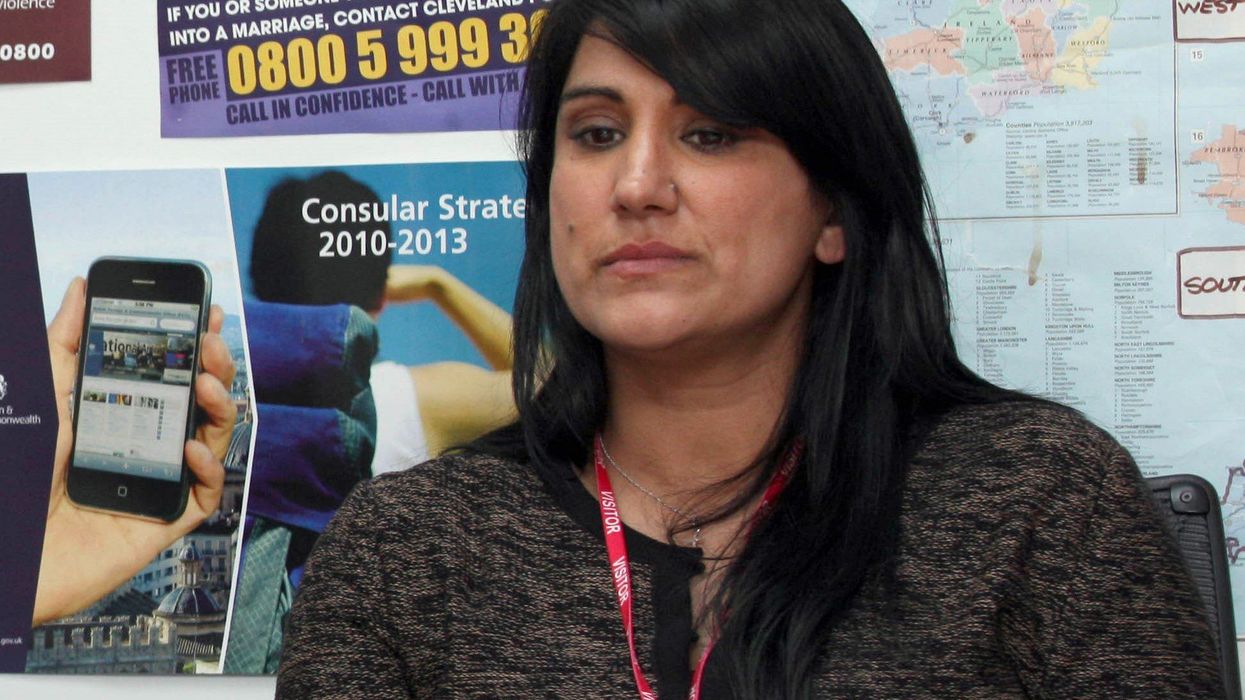

A PROMINENT British Asian campaigner against forced marriages and abuse, has spoken out about her recent work tackling two major British institutional abuse cases, while reflecting on her own journey from surviving honour abuse to becoming a national advocate for victims.
Dame Jasvinder Sanghera, who currently serves as an independent advocate for nearly 300 people who have accused former Harrods owner Mohamed Fayed of abuse, says the department store case reveals a pattern of enablers.
"This is not about one man. This was enabled... And the survivors are certainly saying to me that the HR department allowed it, different people allowed it," she told the Telegraph.
Before her Harrods role, Sanghera worked on the Church of England's Independent Safeguarding Board until June 2023, when her contract was terminated.
She claims she faced resistance while investigating abuse cases within the Church, describing "a culture of silence and denial" that hindered proper scrutiny of safeguarding issues.
"People are still being harmed in the Church of England," Sanghera warns, suggesting the cases she handled were "just the tip of a very deep iceberg." She particularly criticises the Church's handling of information, saying her team struggled to access crucial details needed for investigations.
Sanghera's understanding of abuse stems from personal experience. At 16, she fled her Sikh family in Derby to escape a forced marriage, leading to her being shunned by her community.
Her sister Robina later died after setting herself on fire while trapped in an abusive marriage. These experiences led Sanghera to establish Karma Nirvana, a charity supporting honour abuse victims, in 1993.
The campaigner has also faced institutional abuse herself. In 2018, she reported sexual harassment by a House of Lords peer who had offered her a peerage in exchange for sleeping with him. The case led to changes in the Lords' conduct rules.
Looking at current challenges, Sanghera expresses concern about honour-based offences, which have increased by 60 per cent in the past two years.
She criticises authorities' reluctance to address cultural aspects of abuse, saying: "The perpetrators will use culture to hide behind: 'What do you know, you're white. You don't understand my culture.'"
Despite facing opposition throughout her career, Sanghera remains determined to fight for victims. She continues to support Church abuse survivors voluntarily after her dismissal and is working to ensure Harrods provides psychological support to Fayed's alleged victims while they await a compensation scheme.
Now a grandmother preparing to receive her damehood at Buckingham Palace, Sanghera has set her sights on joining the House of Lords.
"I have got the courage of my convictions, and isn't that what the House of Lords is about?" she says, hoping to continue her advocacy work from within the institution.