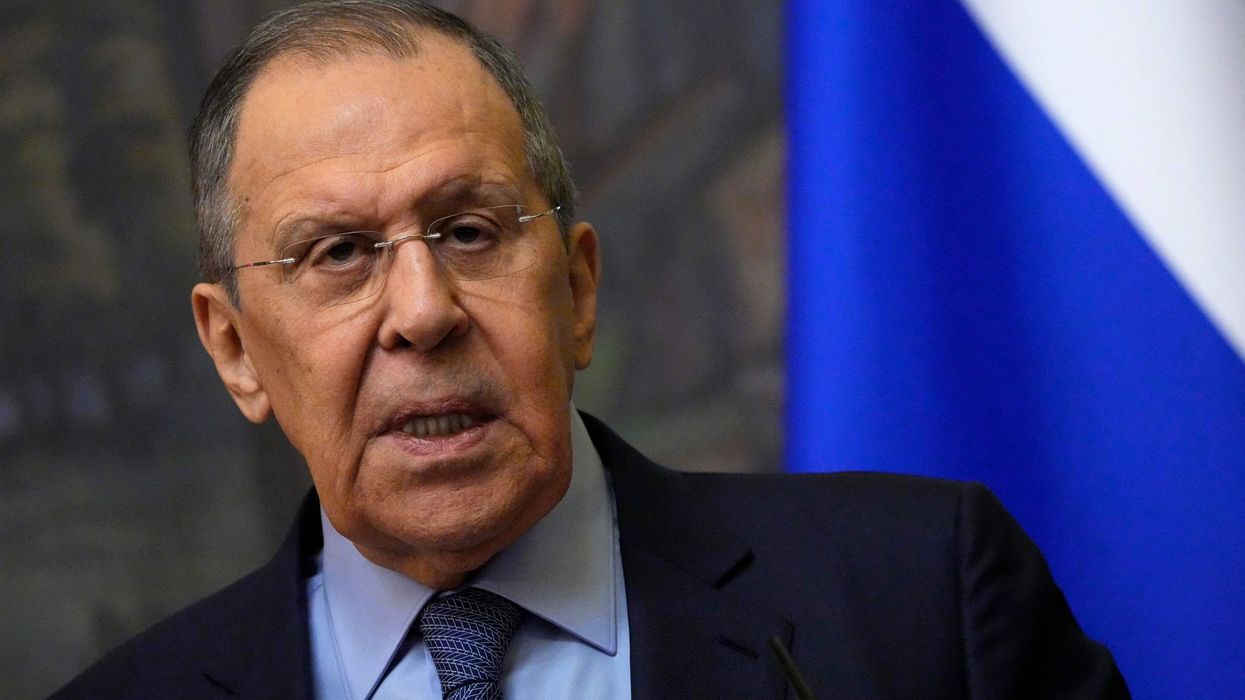

Russia is keen to expand bilateral ties with Pakistan as the first shipment carrying discounted Russian oil reached Karachi Port last weekend, Russian foreign minister Sergei Lavrov said.
Lavrov made these remarks in a video message on the 75th anniversary of the establishment of diplomatic relations between Moscow and Islamabad, the Express Tribune newspaper reported.
He said Russia views Pakistan as a “key international partner in the joint efforts to combat common security challenges and threats, including transborder crime and terrorism.”
“We know about the great interest and respect that the Pakistani people have towards Russia and president Vladimir Putin. We appreciate it very much,” the Russian foreign minister said in a statement.
He said there had been different periods in bilateral relations over the past three-quarters of a century. However, he added, Russia “had always been interested in expanding cooperation” with Pakistan and under no circumstances has abandoned its commitments.
“The participation of Soviet specialists in the construction of the largest steel mill in Karachi (now called Pakistan Steel Mills) in the 1980s, despite the conflict raging in Afghanistan at the time, is clear evidence of this. The Guddu Thermal Power Plant, then the largest in your country, was also commissioned at that time,” according to Lavrov.
“Nowadays, our relations are advanced and based on trust. They are founded on the concurrence or proximity of approaches to the key issues of the international agenda. Together with our Pakistani partners, we stand for shaping a more just and democratic multipolar world order,” he added.
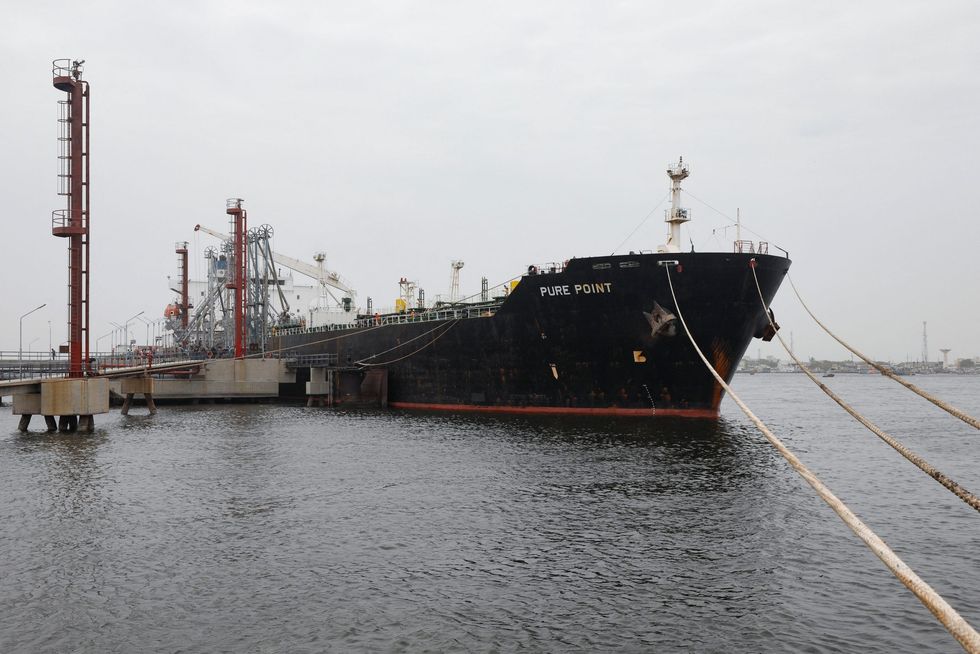 Russian oil cargo Pure Point, carrying crude oil, is seen anchored at the port in Karachi, Pakistan June 13, 2023. REUTERS/Akhtar Soomro
“We respect the cultural and civilisational diversity of peoples and their right to determine the avenues of their political, social and economic development themselves. I would like to note that Russia’s vision of the world order and our understanding of traditional moral values are in harmony with the principles of faith, unity and discipline formulated by the father of the Pakistani people Muhammad Ali Jinnah. It is on these pillars that the statehood of modern Pakistan is based,” Lavrov said.
He said Russia attached great importance to further constructive cooperation with Pakistan in international fora.
“We highly appreciate Pakistan’s contribution to the activities of the United Nations and its specialised agencies. We welcome Islamabad’s active involvement in joint work within the SCO as a full member of this organisation, which plays an important role in establishing multilateral cooperation in Greater Eurasia.”
“It is encouraging that over the recent years, we have succeeded in making significant progress in bilateral trade. Russia has become a major supplier of wheat to Pakistan, with shipments exceeding one million tonnes last year. Negotiations on launching a cooperation project in the oil sector are at their final stage.”
He said that Russia was willing to work together on further engagement with Pakistan and its people, strengthening mutually beneficial relations in politics, security, economy, education, cultural and humanitarian fields, as well as in other areas.
He concluded the video by raising the slogan “Pakistan-Roosi dosti zindabad.”
Pakistan and Russia have remained bitter Cold War rivals, but their bilateral ties have taken a positive turn in recent years, with both sides willing to bury the past and adjust to the new realities. The two countries have been making efforts to translate their years of quiet diplomacy into tangible outcomes.






 Curator Emma Slocombe with ikat robes and arabachi coats in the Peter the Great Room in Blickling Hall Amit Roy
 View of the entrance to Blickling Hall on a rainy autumn dayAmit Roy
 Kente cloth from Ghana in the Long Gallery in Blickling Hall
 Decoration in the Great Hall at Blickling Hall Amit Roy
 Palampore fragment made in coastal south-east India in the Brown Room in Blickling Hall Amit Roy
 Bed valance dating from early 1700s in the Italian Print Room at Blickling Hall Amit Roy
 Indian inspired fabric draped on sofas in the South Drawing Room in Blickling Hall Amit Roy
 Indian inspired fabric draped on sofas in the South Drawing Room with Indian carpet in Blickling Hall Amit Roy
 Karun Thakar has picked out the geometric patterns in the bookcase and the Kente cloth in the Long Gallery in Blickling Hall Amit Roy
 Large tapestry depicting Peter the Great defeating the Swedish army at the Battle of Poltava in 1709 Amit Roy
 ikat robes and arabachi coats in the Peter the Great Room in Blickling Hall Amit Roy
 Baghs and kanthas made by women provide contrast to the men only portraits in the Great Hall at Blickling Hall Amit Roy
 Baghs and kanthas in the entrance Great Hall at Blickling Hall Amit Roy
 Baghs and Kanthas in the Great Hall in harmony with stained glass window at Blickling Hall Amit Roy
 Kimonos reflect Japanese influence in Upper Ante Room in Blickling Hall Amit Roy
 Kimono in Upper Ante Room in Blickling Hall
 A view of the Palace and fort at Agra shows romantic side of India Amit Roy
 Blickling Hall Amit Roy
 Table carpet, European 1670-1680 Amit Roy
 Unfinished 17th century Italian embroidery in the Print Room at Blickling Hall Amit Roy
 Picture of Kashmir shows a romantic view of India Amit Roy
 A panel of Ashburnham bed hangings made in Gujarat for sale in Europe in the Brown Room in Blickling Hall Amit Roy
 Colcha made in the 1600s by women in Bengal for the Portuguese market in the Long Gallery at Blickling Hall Amit Roy




