
IN AN effort to reflect the diversity of modern Britain, the Royal Navy has expanded its mess dress code policy for formal and ceremonial occasions to include ethnic outfits, including the sari.
Lance Corporal Jack Kanani, chair of the Royal Navy’s Race Diversity Network, recently announced the update to the dress code as part of the force’s wider “cultural equivalent” initiative.
The existing code for naval mess events already covers Scottish, Irish, Welsh, Cornish and Manx heritage, represented through the wearing of kilts and tartan dresses.
“As chair of the Royal Navy Race Diversity Network (RNRDN), it gives me great pleasure to announce that existing Royal Navy (RN) cultural mess dress policy has just been updated to include wider forms of British cultural identity,” said Kanani.
“The RNRDN’s initiative, coined the Cultural Equivalent, initially began over two years ago. The network canvased opinions from ethnic minority service personnel to understand how widening existing policy on cultural mess dress would make them feel able to celebrate both their RN and cultural heritage,” he said.
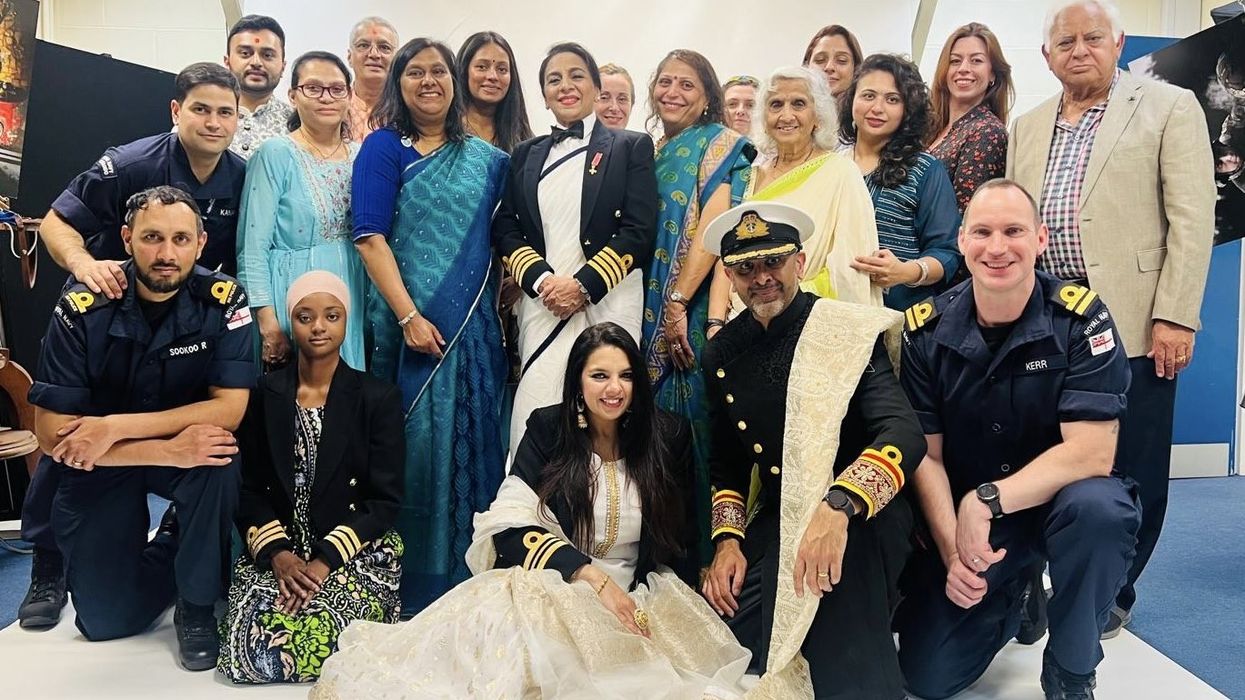
“The update in policy now widens that to be inclusive of other British cultures that serve within the RN,” he added. In a social media post, he illustrated this change with an honorary female captain wearing a white sari, with a white shirt and bow tie along with her mess jacket.
Regulations for naval mess dress have strict rules for above the waist, requiring all officers to sport their uniform jackets with trousers, a tartan kilt or a skirt.
Now, the network hopes Royal Navy officers will be able to celebrate their heritage by wearing a sari or an African outfit coupled with their jacket, shirt and bow tie.
The move has attracted some criticism, with one veteran saying it exposes the “Royal Navy to ridicule”. “The reason for uniform in a disciplined fighting service is to achieve a common identity, not to accentuate the differences... Rather than running a fashion parade, what this team should have been doing is to help recruit sailors from diverse cultural backgrounds,” Retired Rear Admiral Philip Mathias said in response to Kanani’s social media announcement.
The Royal Navy’s Race Diversity Network defended the expansion of the dress code as “reflective of the diverse workforce that serve within it”.
It also clarified that an image accompanying the post on social media was taken during an earlier research phase of the Cultural Equivalent initiative and not illustrative of how different forms of cultural dress will be worn with mess dress under the updated regulations.