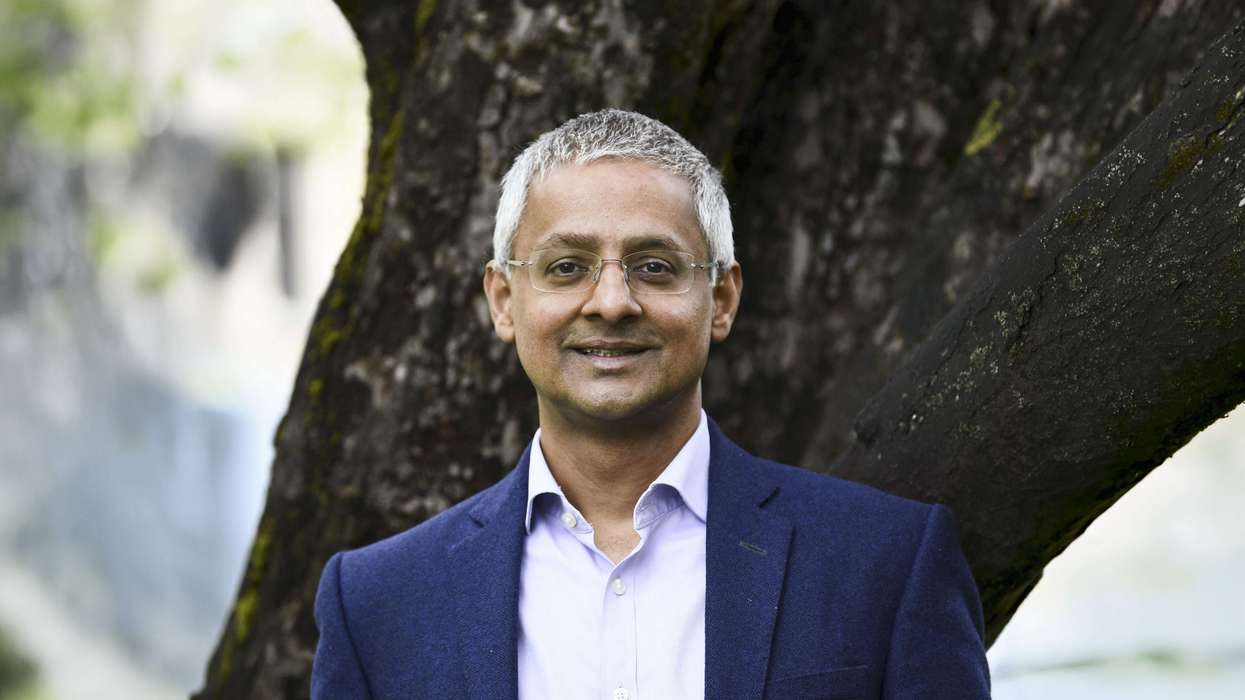

IN LABORATORIES and hospitals across the world, machines now read the code of life with extraordinary speed. Much of that capability traces back to the work of Prof. Shankar Balasubramanian, the Cambridge chemist whose discoveries helped turn genomics from a specialised research pursuit into a cornerstone of modern medicine.
At the University of Cambridge, India-born Balasubramanian, 59, serves as the Herchel Smith Professor of Medicinal Chemistry, a Fellow of Trinity College and a senior group leader at the Cancer Research UK Cambridge Institute.
His reputation was established in the late 1990s through a collaboration with fellow Cambridge scientist Prof. David Klenerman. Together they developed a new method of reading DNA that laid the foundations for modern high-throughput sequencing. The technology was commercialised through the Cambridge spin-out Solexa and later incorporated into sequencing platforms produced by Illumina.
The impact has been profound. What once took years and billions of dollars during the Human Genome Project can now be accomplished in hours at a fraction of the cost. Today, sequencing platforms derived from their work underpin much of the world’s DNA and RNA sequencing, supporting research laboratories, biotechnology firms and hospitals alike.
Rapid genome sequencing has transformed healthcare. Clinicians can now identify cancer-driving mutations, diagnose rare inherited diseases and design treatments tailored to the genetic profile of individual patients. The technology also proved critical during the COVID-19 pandemic, when scientists used genomic surveillance to track viral mutations and emerging variants in real time.
While that breakthrough reshaped genomics, Balasubramanian’s scientific curiosity did not stop there. For nearly three decades his laboratory has investigated unusual DNA structures known as G-quadruplexes – four-stranded configurations that form in guanine-rich regions of DNA and RNA. In 2025, this work was recognised with the Royal Society of Chemistry’s Khorana Prize.
His team’s studies suggest these structures may act as molecular switches influencing gene expression. Researchers are now developing small molecules that bind selectively to G-quadruplexes, an approach that could lead to new cancer treatments. Early compounds have shown “promising anti-cancer activity”, raising hopes for therapies that avoid some of the toxicities associated with conventional chemotherapy.
Alongside his academic career, he has played a key role in translating scientific discoveries into biotechnology ventures. He co-founded Solexa in 1998, helping to drive the global adoption of next-generation sequencing. He later co-founded Cambridge Epigenetix, now Biomodal, which develops technologies to study epigenetic modifications – chemical changes that influence gene activity without altering DNA itself.
Recognition has followed from across the scientific world. Knighted in 2017 for services to science and medicine, Balasubramanian has also received honours including the Royal Medal, Millennium Technology Prize, the Breakthrough Prize in Life Sciences and the Canada Gairdner International Award.
Yet he consistently emphasises that discovery is rarely a solo endeavour. Reflecting on the recognition of his work, he noted that such honours “recognises a large body of work carried out by many students and postdocs” who contributed to the research.