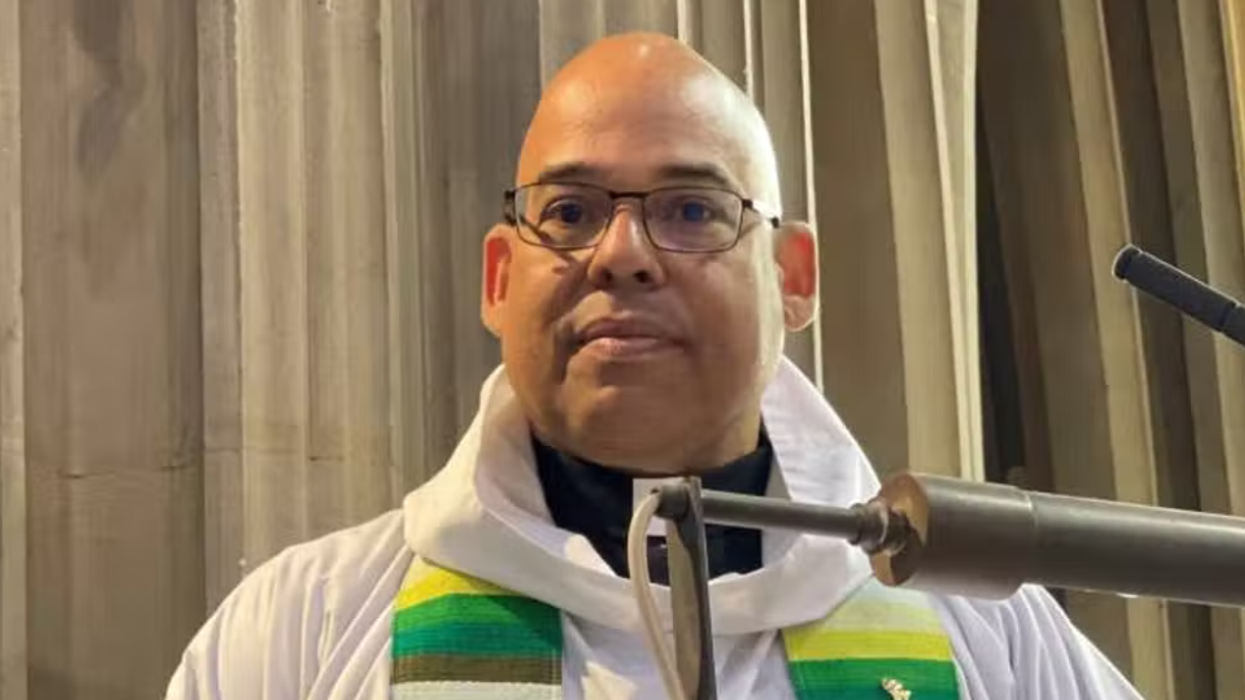

A former Barbados high commissioner of Indian heritage has been appointed the first racial justice director of the Church of England.
Anglican priest Guy Hewitt will assume office in November as the head of the Church’s racial justice unit, set up following the recommendations of the Archbishops’ Anti-Racism Taskforce report.
Revd Hewitt will work alongside the Archbishops’ Commission for Racial Justice to oversee the implementation of the recommendations.
Born in London to Barbadian and Indian parents in 1967, he has worked internationally on issues of marginalisation, economic enfranchisement, racial justice, youth empowerment, and gender equality.
Revd Hewitt is currently an honorary senior research fellow with the Institute of Commonwealth Studies at the University of London.
He is also an advisory board member of the Windrush Scandal Research Project. He was priested in Barbados in 2005 and trained for ordained ministry with the Diocese of Southwark.
Having most recently served as priest-in-charge at St James in the Hill Church in Hollywood, Florida, he is currently an Associate Vicar at All Saints Church in Fulham, southwest London.
“I am humbled by the confidence of those who have chosen me to serve as the inaugural director and look forward to what I plan to be a participatory and inclusive process of restoration," he said after his appointment.
“The indelible link between our faith and public life is reinforced at Confirmation with our vow to defend the weak, and to seek peace and justice,” Revd Hewitt said.
William Nye, Secretary General of the Archbishops’ Council, said he was “delighted” about the appointment as “Guy brings a wide experience of leadership from the public and third sectors in England and in Barbados”.
“This is a vital post, helping the Church address the challenges of racial justice, and helping the Church speak into this agenda nationally,” Nye said.