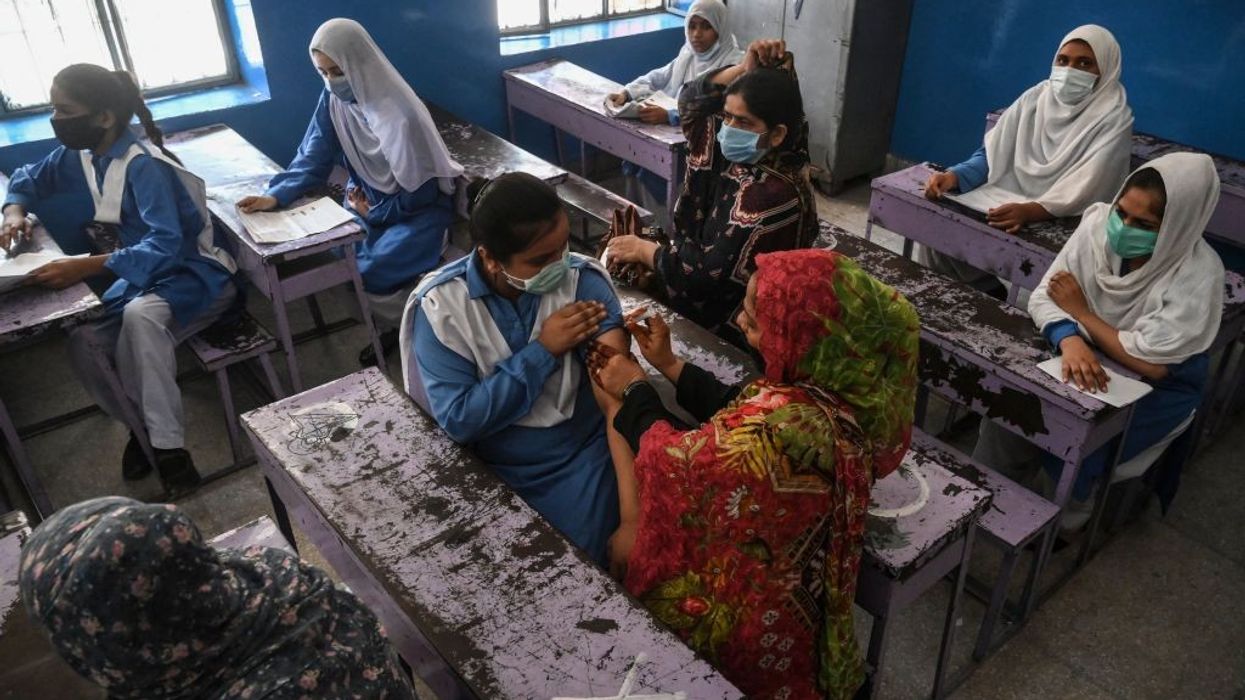

PAKISTAN has banned travel from 15 countries and tightened up travel restrictions on 13 other nations amid the threat of the new Covid-19 variant Omicron.
The National Command and Operation Centre (NCOC), Pakistan’s top coronavirus response agency, reviewed the Covid-19 situation across the globe to revise the categorisation of travel.
According to an NCOC statement on Monday (6), the agency revised categories based on disease profiles and health protocols applicable to travellers from different countries. Countries have been placed in three categories - A, B and C.
Category ‘C' includes 15 countries: Croatia, Hungary, the Netherlands, Ukraine, Ireland, Slovenia, Vietnam, Poland, South Africa, Mozambique, Lesotho, Eswatini, Botswana, Zimbabwe and Namibia.
A "complete ban on inbound travel from Category C countries" has been imposed but essential travel from these countries would necessitate obtaining an exemption certificate, it said.
Pakistan will allow travel only with 100 per cent vaccination for all inbound passengers and those aged above six years are required to have negative PCR test reports (maximum 48 hours old) before boarding.
However, deportees are exempted from the PCR test report requirement.
All travellers aged six years or above have to undergo rapid antigen tests (RATs) on arrival even if travelling via direct or indirect flights from Category ‘C' countries. RAT negative cases will be allowed to proceed.
However, RAT negative travellers from South Africa, Mozambique, Lesotho, Eswatini, Botswana, Zimbabwe and Namibia will have to undergo three days of mandatory quarantine followed by a PCR test to be conducted on the third day by the civil administration. RAT positive cases will be quarantined for 10 days.
The NCOC placed Germany, Trinidad and Tobago, Azerbaijan, Mexico, Sri Lanka, Russia, the US, the UK, Thailand, France, Austria, Afghanistan and Turkey in category B. Travellers from these countries should be fully vaccinated.
All passengers aged six years or above are required to have negative PCR test reports (maximum 48 hours old) before boarding, but deportees are exempted from the PCR test requirement.
RAT of random flights will be conducted at airports on arrival from Category ‘B' countries. RAT negative cases will be allowed to proceed but RAT positive cases will be quarantined for 10 days.
All other countries not included in Category ‘C' and ‘B' are placed in Category ‘A'. Travellers should be 100 per cent vaccinated. All those aged six years and above should be in possession of a negative PCR test report (maximum 48 hours old) before boarding. But deportees are exempted from PCR test requirements.
All Pakistan nationals can travel from Category 'C' countries without exemption till December 15 but testing protocols will be mandatory on arrival.
(PTI)






 Curator Emma Slocombe with ikat robes and arabachi coats in the Peter the Great Room in Blickling Hall Amit Roy
 View of the entrance to Blickling Hall on a rainy autumn dayAmit Roy
 Kente cloth from Ghana in the Long Gallery in Blickling Hall
 Decoration in the Great Hall at Blickling Hall Amit Roy
 Palampore fragment made in coastal south-east India in the Brown Room in Blickling Hall Amit Roy
 Bed valance dating from early 1700s in the Italian Print Room at Blickling Hall Amit Roy
 Indian inspired fabric draped on sofas in the South Drawing Room in Blickling Hall Amit Roy
 Indian inspired fabric draped on sofas in the South Drawing Room with Indian carpet in Blickling Hall Amit Roy
 Karun Thakar has picked out the geometric patterns in the bookcase and the Kente cloth in the Long Gallery in Blickling Hall Amit Roy
 Large tapestry depicting Peter the Great defeating the Swedish army at the Battle of Poltava in 1709 Amit Roy
 ikat robes and arabachi coats in the Peter the Great Room in Blickling Hall Amit Roy
 Baghs and kanthas made by women provide contrast to the men only portraits in the Great Hall at Blickling Hall Amit Roy
 Baghs and kanthas in the entrance Great Hall at Blickling Hall Amit Roy
 Baghs and Kanthas in the Great Hall in harmony with stained glass window at Blickling Hall Amit Roy
 Kimonos reflect Japanese influence in Upper Ante Room in Blickling Hall Amit Roy
 Kimono in Upper Ante Room in Blickling Hall
 A view of the Palace and fort at Agra shows romantic side of India Amit Roy
 Blickling Hall Amit Roy
 Table carpet, European 1670-1680 Amit Roy
 Unfinished 17th century Italian embroidery in the Print Room at Blickling Hall Amit Roy
 Picture of Kashmir shows a romantic view of India Amit Roy
 A panel of Ashburnham bed hangings made in Gujarat for sale in Europe in the Brown Room in Blickling Hall Amit Roy
 Colcha made in the 1600s by women in Bengal for the Portuguese market in the Long Gallery at Blickling Hall Amit Roy




