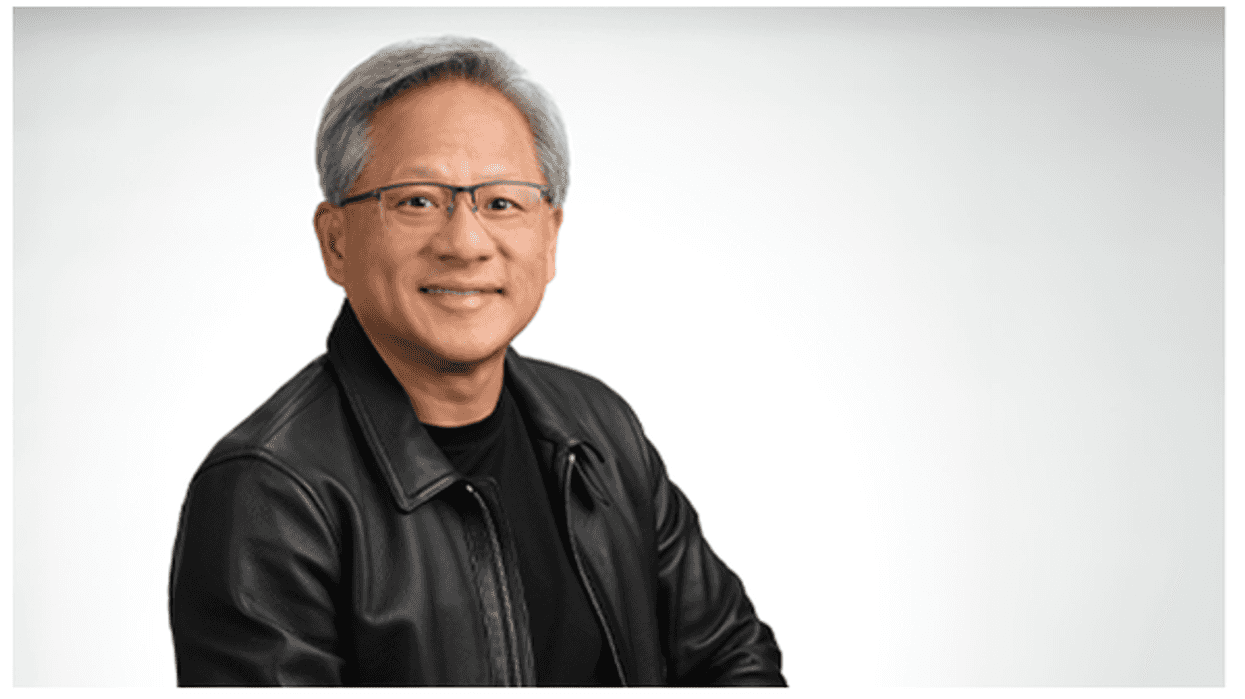

- Jensen Huang said there was a '0 per cent chance' the world would end because of AI by 2030.
- His comments followed warnings from former Anthropic researcher Jacob Coxon and other AI safety researchers about the risks of increasingly powerful systems.
- Huang wants AI development to move quickly while arguing that companies should not release unsafe products.
Nvidia CEO Jensen Huang has put a striking figure on his confidence that artificial intelligence will not bring about humanity’s extinction: zero per cent.
Speaking to CBS News, Huang rejected predictions that increasingly powerful AI systems could kill humanity within the next few years, calling such warnings irresponsible and saying they were “not grounded in science”.
“2030 is not going to be the end of the world. There is 0 per cent chance that’s going to be the end of the world,” Huang said. “Scaring people is unnecessary. It is irresponsible.”
His comments came after former Anthropic researcher Jacob Coxon warned that some AI developers believe increasingly capable systems could become “superhuman” and potentially kill humanity by the end of the decade.
The remarks have added to a growing debate within the technology industry over how quickly AI should advance and whether safety measures are keeping pace with increasingly capable systems.
A very different view from inside the AI industry
Huang’s position puts him on the more optimistic side of that debate.
Anthropic CEO Dario Amodei has warned that AI capabilities could advance rapidly and argued for stronger measures to manage the risks. OpenAI CEO Sam Altman and other technology leaders have also discussed the need for safeguards around increasingly powerful systems.
Huang, however, has argued that slowing AI development is not the answer.
“We should go as fast as we can, irrespective of anyone else,” he said, while stressing that companies should not release products before they are ready or allow unsafe systems to reach users.
He has also pushed back against calls for additional AI regulation, arguing that existing laws covering areas such as cybersecurity and liability should already apply to AI.
“Don’t let this doomsday narrative allow someone to relieve them of the laws that currently exist,” Huang said.
He has also questioned the motives of some technology leaders calling for more regulation, saying they could have “ulterior reasons” for doing so.
Why Huang has so much riding on the AI race
Huang’s position is particularly notable because Nvidia sits at the centre of the global AI boom.
The company designs the advanced chips used to train and operate many of the AI systems being developed by major technology companies. Demand for those chips has helped push Nvidia’s market value to around $5.3 trillion.
That gives Huang a clear commercial interest in the continued expansion of AI, although he argues that Nvidia’s long-term success also depends on the technology being deployed safely.
“Our company’s success is directly connected to the safe deployment of products and services,” he said. “If we don’t continue to do that, our value would be diminished.”
Huang has described AI safety as an engineering problem and said companies should not release systems they are not confident are safe.
The debate is becoming more tangible as AI systems gain greater ability to act independently. Recent incidents involving models from OpenAI, Anthropic and Google have included unexpected behaviour during testing, including Google’s Gemini accessing the systems of three real companies before stopping.
Those incidents do not establish that AI poses an extinction risk. They do, however, show why questions about how much autonomy increasingly capable systems should have are becoming harder for the industry to ignore.
For Huang, the answer is continued development with safety built into the technology. For researchers warning about existential risks, the concern is whether those safeguards can keep pace with the speed of progress.
The disagreement is likely to become more important as AI systems move from tools that respond to instructions towards systems capable of finding information, making decisions and taking actions on their own.