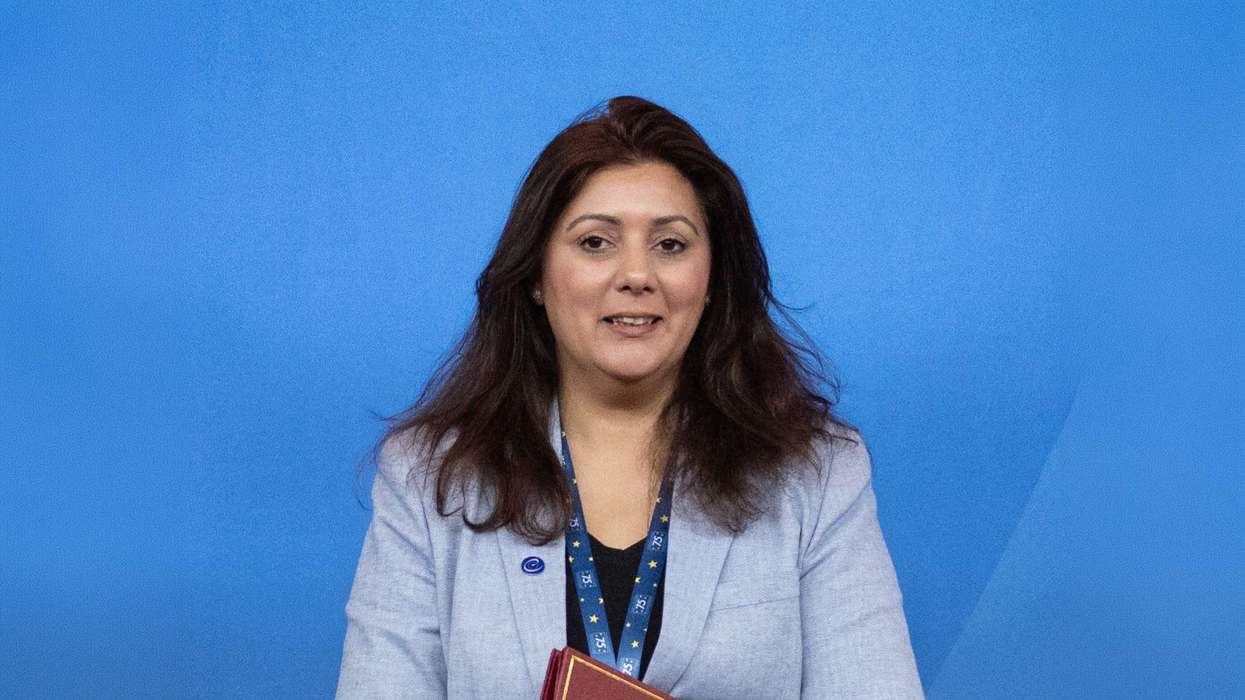

ON A BRIGHT February morning in Sussex, Nusrat Ghani stood before a hall of schoolgirls and offered them something both simple and radical: permission. Permission to lead. Permission to speak. Permission to imagine themselves in rooms where decisions are made.
“Since my election as the first female MP for the constituency in 2015, I have always pledged to do what I can to encourage young people to get involved and help empower young women to reach their full potential,” she told them. It is a message rooted not in rhetoric but in biography. Ghani knows how power feels when it is distant – and how it feels when you finally grasp it.
Today, as the principal deputy speaker of the House of Commons and chairman of ways and means, she occupies one of the most authoritative chairs in British public life. As chairman of ways and means, Ghani carries weighty responsibilities: chairing the Budget debate, overseeing amendment selection during Committee of the whole House, and supervising Westminster Hall business arrangements. The position also puts her in charge of the panel of chairs, responsible for chairing public bill committees and other general committees.
The role demands neutrality, discipline and command. It also requires something less visible but equally essential: legitimacy.
Ghani’s authority does not derive from theatrical interventions or partisan prominence. It rests instead on her presence – and what it represents. When she was elected to the post, she became the first ethnic minority MP to serve in that chair, quietly expanding the image of who exercises procedural power at Westminster.
Her influence extends beyond managing the Commons chamber to shaping its future. In May 2025, speaker Sir Lindsay Hoyle appointed her to chair the parliament’s first steering group on artificial intelligence, placing her at the centre of one of the most consequential technological shifts facing democratic institutions. The group examines how AI will affect parliamentary scrutiny, services and public engagement, and how the technology can be deployed without compromising trust.
“I am pleased to be chairing the first AI in Parliament Steering Group as we navigate the opportunities and challenges that AI can offer Parliament and MPs,” she said at its launch. “I am keen to explore the numerous ways in which AI could enhance parliamentary efficiency and transparency.”
Her emphasis, characteristically, was on caution as much as ambition. “We will be working on solid data foundations and focusing on incremental change for any potential uses for AI in Parliament,” she said, noting that AI applications “need to [be] considered carefully with clear process definitions and measurement frameworks”. The work places her at the intersection of tradition and transformation – protecting the authority of the parliament while preparing it for a technological future.
Her journey to that point began far from Westminster. Born on 1 September 1972 in Kashmir and raised in Birmingham, she grew up in a family where her own education marked a break with tradition. She was the first woman in her family to receive formal education. The distance between that beginning and her current position is measured not only in miles, but in expectations overturned.
She attended a state comprehensive and went on to study Government and Politics at Birmingham City University, followed by a master’s degree in International Relations at the University of Leeds. Before entering politics, Ghani built a diverse career in the charitable sector, working with Age UK and Breakthrough Breast Cancer, followed by a stint at the BBC World Service.
When she entered Parliament in 2015 as Conservative MP for Wealden, she arrived not as a symbolic outsider but as a practitioner. Her ascent through government was steady and varied. At the Department for Transport, she served as a junior minister for aviation and maritime, gaining experience in one of the most operationally complex departments. During this tenure, she made history as the first female Muslim minister to speak from the despatch box.
She later held ministerial roles across the Department for Business and Trade, the Foreign, Commonwealth and Development Office, as minister for Europe, and the Cabinet Office where she worked on investment security – an increasingly critical frontier in an era of geopolitical competition.
Neutrality in the Commons chair has not erased the convictions that defined her career. Before assuming the role, Ghani built a reputation as a parliamentarian willing to confront uncomfortable truths, particularly on human rights. Her advocacy on behalf of Uyghur Muslims in China drew international attention – and retaliation. She was sanctioned by the Chinese government and later by Russia, placing her among a small number of British MPs targeted by foreign powers for their political positions.
Her willingness to challenge authority has surfaced closer to home as well. She criticised plans to house asylum seekers in military barracks without consulting local representatives, calling the proposal “disgusting” and arguing that communities deserved transparency. Even in her procedural role, she has defended parliamentary norms, rebuking ministers over “unprecedented” leaks from the Office for Budget Responsibility and warning that such breaches erode trust in democratic institutions.
Beyond Westminster, she continues to extend her reach into sectors undergoing structural change. In January 2026, she became the first Patron of WISTA UK, a professional maritime organisation promoting diversity and sustainability in shipping. The appointment reflects her longstanding engagement with maritime policy, an area often overlooked but vital to Britain’s economic and environmental future.
She returns often to the theme she raised with the students in Sussex. “We still have work to do to ensure that women and girls have the opportunity, safety and security to excel in all areas of life,” she told them.
In the Commons chamber, Ghani’s voice is measured, her instructions precise. She rarely needs to raise her tone. Authority flows from position, but also from the journey behind it.
For the schoolgirls watching her now, the lesson is not simply that she holds power. It is that she changed, in some small but permanent way, who power looks like.