
The author Sam Naidu has told Eastern Eye the story behind Navi Pillay, who has just been awarded the 2026 Nobel Peace Prize.
In September 2010, Rosemarie Hudson, publisher of BlackAmber, got in touch to suggest an interview with Sam Naidu, who had written a biography of a South African woman called Navi Pillay.
The book, Navi Pillay: Realising Human Rights for All, had been brought out by Arcadia Books, an imprint of BlackAmber which aimed “at providing black role models from varied fields and backgrounds for a diverse audience”.
Samantha Naidu’s CV said she was “born in Durban, South Africa. Currently, she is a Research Associate with the Department of English, Rhodes University, Grahamstown, South Africa, and lectures part-time at Brunel University, UK. A former Commonwealth and Mellon Scholar, her research interests are postcolonial feminist aesthetics and literature of migration and diaspora. She holds a Bachelor of Journalism BA (Hons), MA and a PhD and has published extensively in her field.”
The interview took place in the Dulwich Art Gallery café in south London where Naidu spoke about her book.
That was 17 years ago.
After Judge Navanethem (“Navi”) Pillay was awarded the Nobel Peace Prize, Eastern Eye spoke to Naidu. She was thrilled, of course, as was Hudson.
Naidu, currently professor of Literary Studies in English at Rhodes University, explained why she had picked Pillay for a biography all those years ago.
“I chose Navi Pillay as a subject because her life story is truly remarkable, and because she is a black South African woman,” Naidu told Eastern Eye.
Most papers in India have pointed out that Pillay is of “Indian origin” – which she is.
Naidu said: “In South Africa, under apartheid, Indians, Coloureds and indigenous Africans were categorised as Black. There was a hierarchy of oppression, so perhaps today the designation ‘brown’ is more appropriate. Racial categorisation is always painful and contentious.”
Naidu continued: “In the South African context – as well as globally – she is a super achiever and one of South Africa’s most successful, awe-inspiring, selfless women. One of her greatest achievements involved dealing with the apartheid regime’s legal/justice system. By lobbying to have unjust laws changed, she has made a lasting impact on human rights law in South Africa and in the world.”
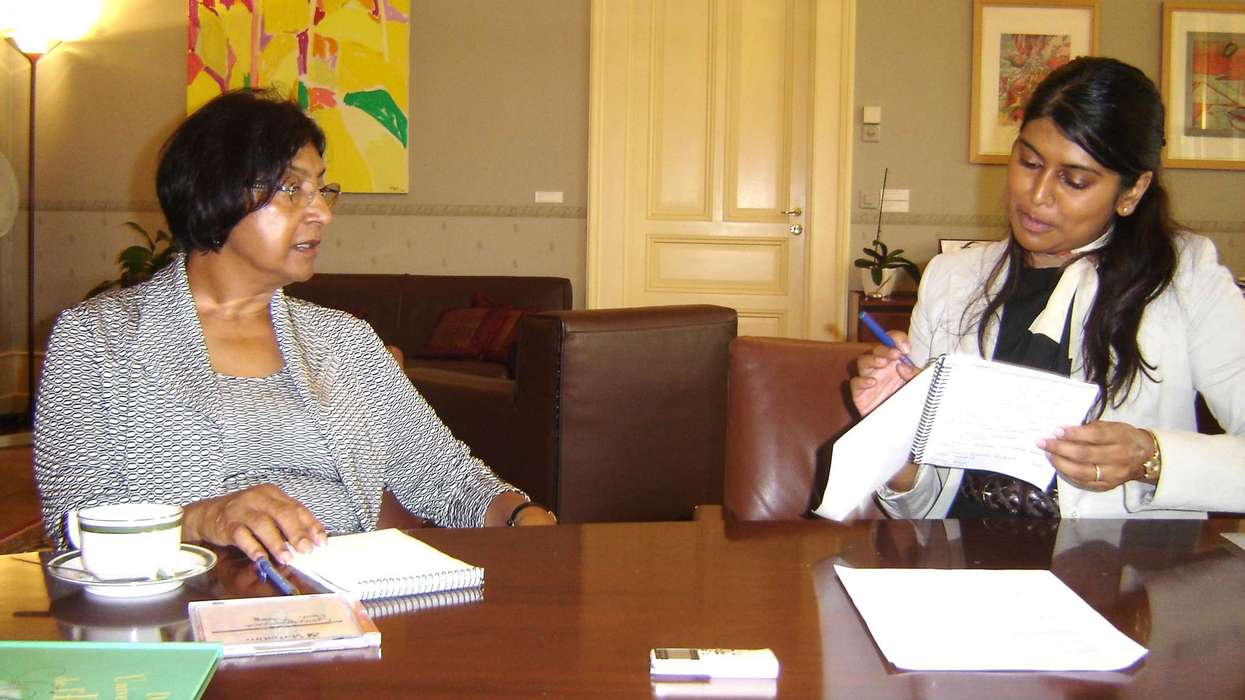
She went on: “In the biography, I describe Pillay as an extremely down-to-earth, no-nonsense kind of person with a wicked sense of humour. She was generous with her time and answered all my questions frankly. We had communicated before my arrival at the Palais du Wilson. But when I arrived in Geneva in July 2009, and she saw me for the first time, she joked, ‘Ah, but you are only a young one. I was expecting an old person like me.’ Under the warmth and good humour, I detected a steely grit so formidable that no foe to justice and no obstacle to human rights – not even Trump or Netanyahu – can quell.”
She added: “The biography took just over a year to research and write. I travelled to the United Nations headquarters in Geneva, the Palais du Wilson, in July 2009 to interview Pillay and various colleagues at the Office of the High Commissioner for Human Rights. I also interviewed family, friends and former colleagues of Pillay in South Africa where I was granted access to her personal archives. My biggest challenge in writing the biography was keeping the language simple so that the text was widely accessible to all readers.”
She commented: “I see Navi Pillay as someone who represents all the unrealised ambitions of generations of women everywhere. Hopefully, South African readers will see that despite all the constraints of the apartheid era, someone like Navi was able to achieve, triumph, succeed, for the betterment of others. This is a very rare achievement.”
She summed up Pillay’s career: “Navi Pillay, former United Nations High Commissioner for Human Rights from 2008 to 2014, has had a remarkable career as a Human Rights advocate. Born in Clairwood, Durban, 1941, she challenged and overcame the obstacles of apartheid South Africa by graduating with a law degree. A staunch anti-apartheid activist, in 1967 she was the first
black woman in the country to set up a law practice to defend anti-apartheid activists.
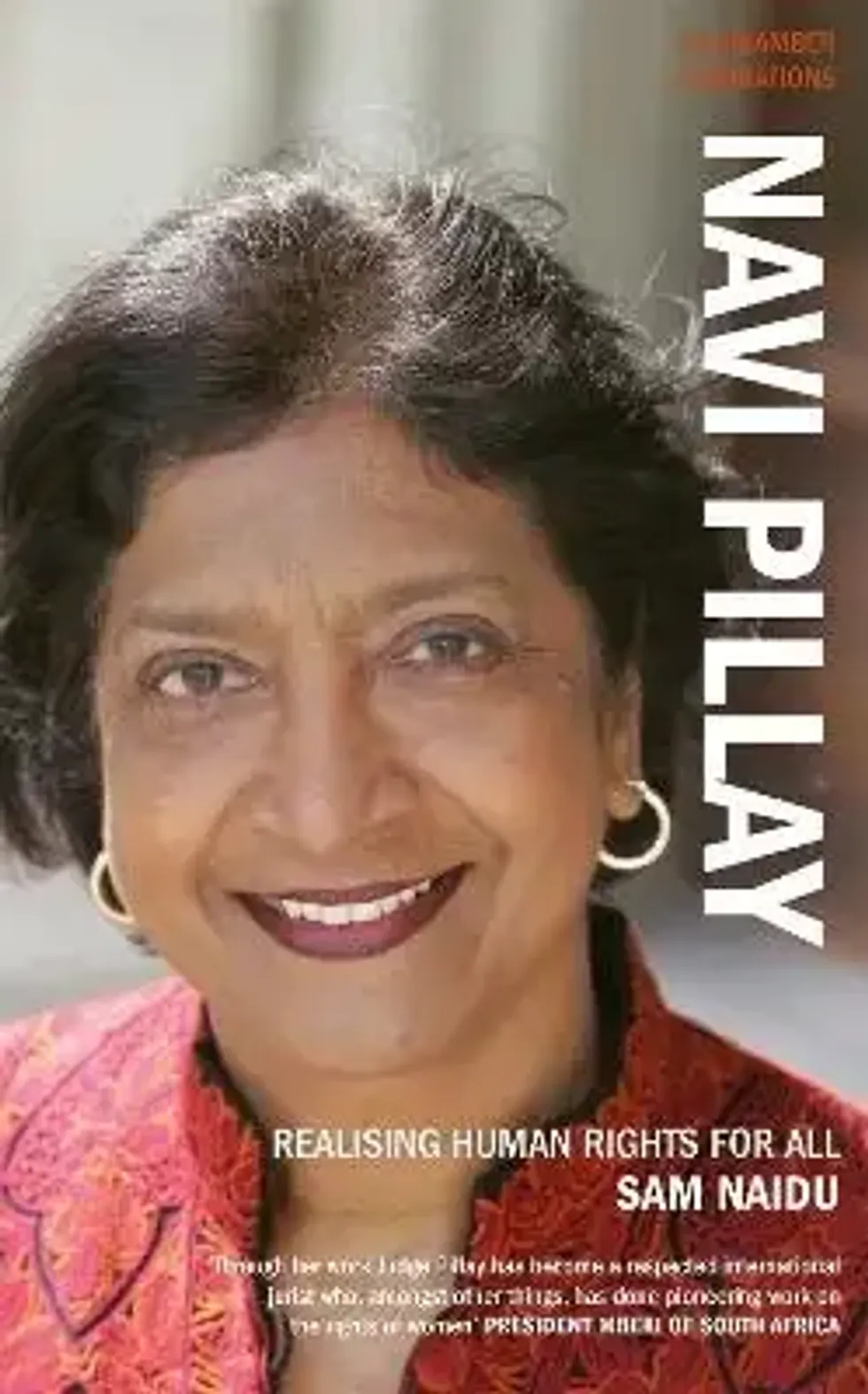 Cover of the biography Sam Naidu
“In 1973 she obtained legal representation for prisoners at Robben Island and, in 1986, co-founded the Advice Desk for Abused Women – now the Advice Desk for the Abused. In 1995, under a democratically-elected government, Pillay was recommended by former president, Nelson Mandela, as the first black female judge in the Supreme Court.
“She joined the International Tribunal for Rwanda in the same year and in 1999 was promoted as the Tribunal’s Judge President. She then moved to the International Criminal Court in Hague, after which, in 2008, she was appointed United Nations High Commissioner for Human Rights.
“The detailed story of her childhood and early career in South Africa is told in my biography. Pillay is descended from Indian indentured labourers, who were brought to Port Natal during the era of British colonialism to work on the sugarcane fields. She is an extraordinary woman whose exemplary life has its origins in one of the darkest moments in the annals of human rights and the law – apartheid.”
Naidu described her reaction to Pillay getting the Nobel Peace Prize: “It is a most fitting acknowledgment of her courage, determination and razor-sharp legal mind over decades of human rights advocacy. Yes, I did send her an email of congratulations but I am sure she is completely inundated by the media and well-wishers right now. Whether defending political prisoners on Robben Island, transforming international criminal law by introducing the provision that sexual violence can be an act of genocide, or more recently, denouncing the genocide in Gaza, Pillay has been a fearless trailblazer in the area of human rights since the 1960s.
“While the previous four Nobel Peace Prize winners – Chief Albert Luthuli, Desmond Tutu, Frederik Willem de Klerk and Nelson Mandela – are mainly political figures, Pillay is a lawyer and a champion of human rights and justice in a very practical, hands-on way. She has spent many years working cases and presiding in courts of law across the globe. No doubt, an iconic figure such as Mandela has far-reaching and enduring global impact, but Pillay is someone who has occupied official positions of global authority.
“In August 2009 Forbes magazine published its list of the world’s 100 most powerful women. Ranked at number 64, the current United Nations High
Commissioner for Human Rights, Navi Pillay, was the second African to ever make the list.
“Forbes uses two criteria to compile its list: visibility and the size of the organisation the person is head of. Navi Pillay indisputably qualified on both scores. As the most senior UN human rights regulator, Pillay was frequently in the media spotlight, and the Office of the High Commissioner for Human Rights employed about 1,000 people, wielding a budget of roughly $120m. Pillay, who calls herself ‘the voice of victims everywhere’, had, according to the OHCHR mission statement, a ‘unique mandate from the international community to promote and protect all human rights’. She began her career fighting for human rights and justice in apartheid South Africa, but today she speaks for victims everywhere in the world.”
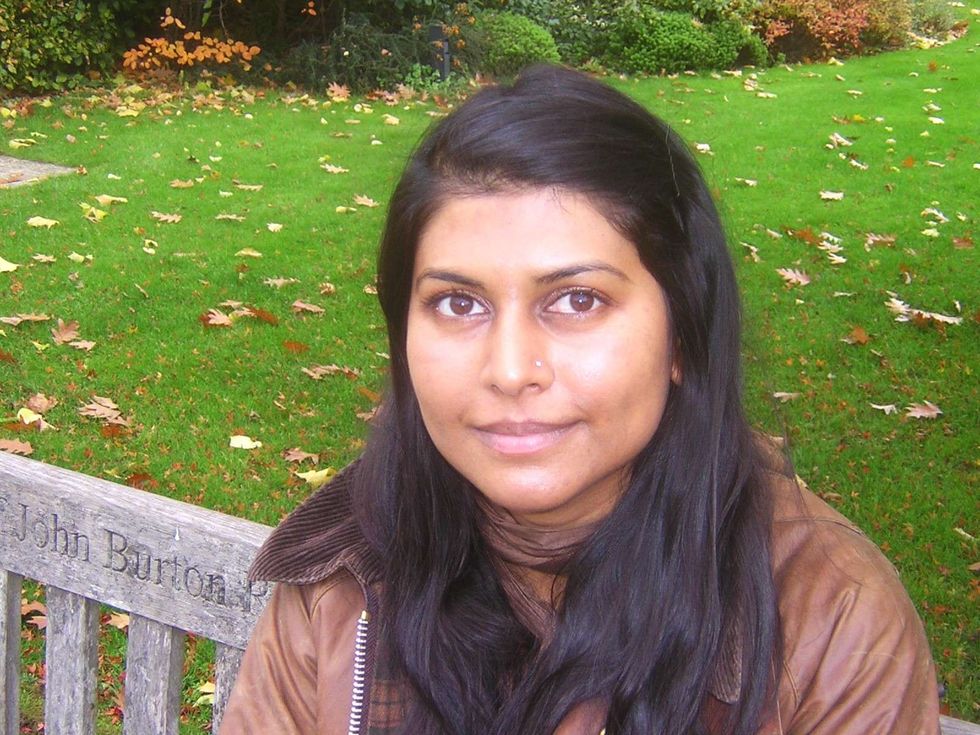 Sam NaiduEastern Eye
Asked why she thought she had won the Nobel Peace Prize, Naidu replied: “Pillay’s interventions at the International Criminal Tribunal for Rwanda changed international human rights law forever. The ICTR became the first known court, international or municipal, to hold that sexual violence can be an act of genocide.
“Pillay sat on the bench that presided over the landmark case that changed the law. On 30 May 1996 the former bourgmestre of Taba, a commune in Rwanda, Jean-Paul Akayesu was brought before Trial Chamber I. Fifteen charges of genocide, crimes against humanity, and violations of Article 3 common to the Geneva Conventions were brought against him. He pleaded not guilty to all the charges.
“During the trial several of the victim-witnesses recounted acts of sexual violence perpetrated against them. But Akayesu was not being charged with sexual violence offences. Faced with this conundrum, Pillay posed a question to the Office of the Prosecutor: what are the judges expected to do with the evidence of sexual violence in a trial where there are no charges relating to sexual violence and the main charge is genocide?
“As a direct result of Pillay’s pointed question, the prosecution filed an indictment which later led to the finding that rape may under certain circumstances constitute genocide. For the first time, the leading instruments of international criminal law, which are the primary sources of the law of genocide, mentioned sexual violence specifically as an act of genocide. Pillay was instrumental in this legal and feminist coup. Subsequently, this provision was
incorporated into the leading modern instruments of international criminal law, such as the Statutes of the ITCR, the International Criminal Tribunal for the former Yugoslavia and the International Criminal Court.”
Naidu concluded: “There has rarely been a feminist victory with more real, material impact. For eons, women in war-ravaged zones were considered the spoils of war. As Pillay herself said, rape was no longer a trophy of war, it was now a war crime.”



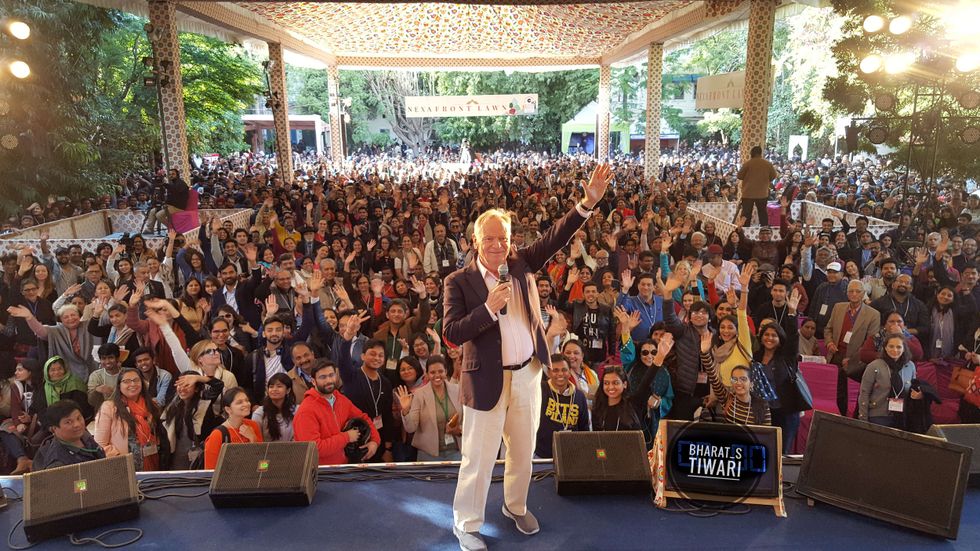 Jeffrey Archer at Jaipur Literary Festival in 2019Eastern Eye
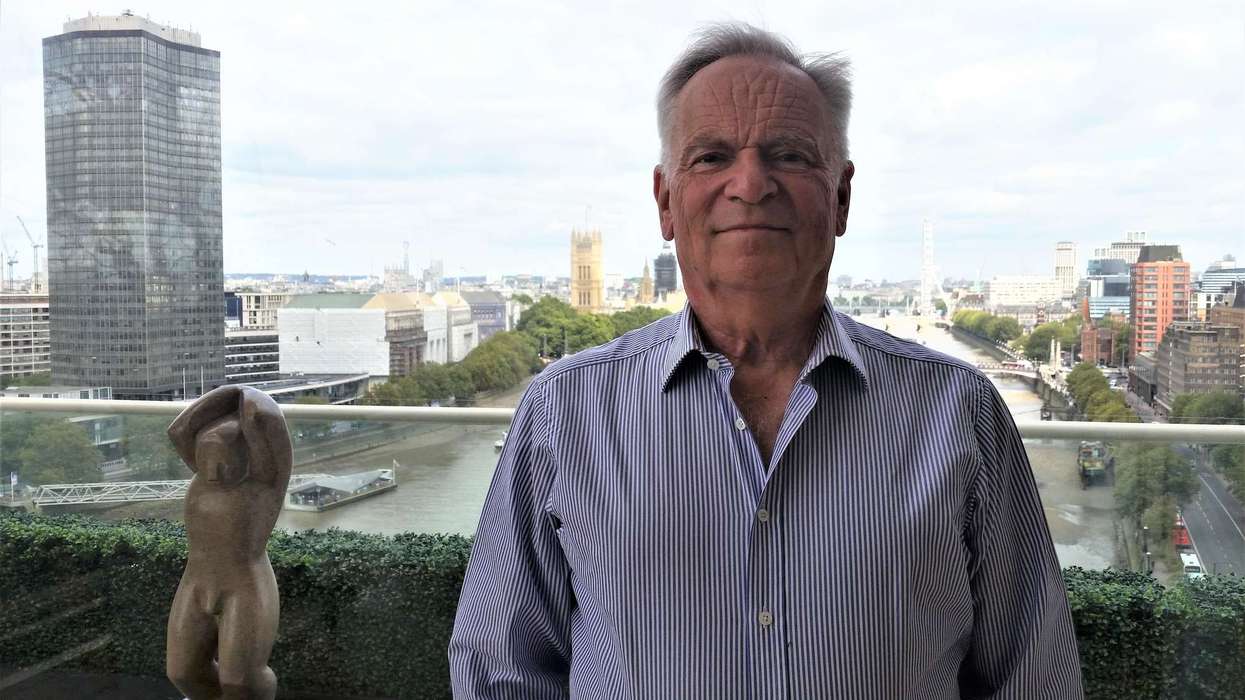
 Jeffrey Archer part of the menuAmit Roy
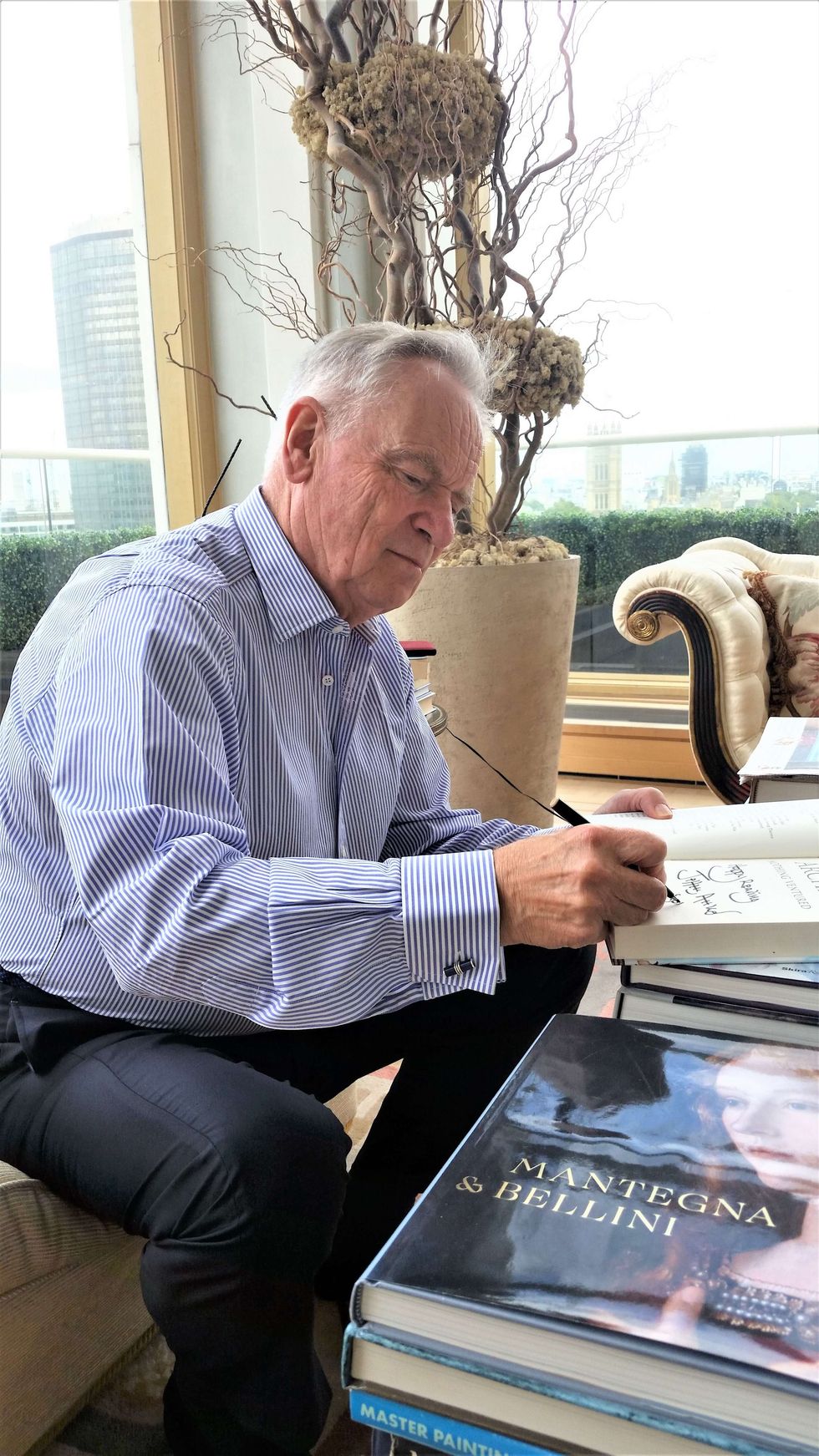 Jeffrey Archer signing a book Amit Roy
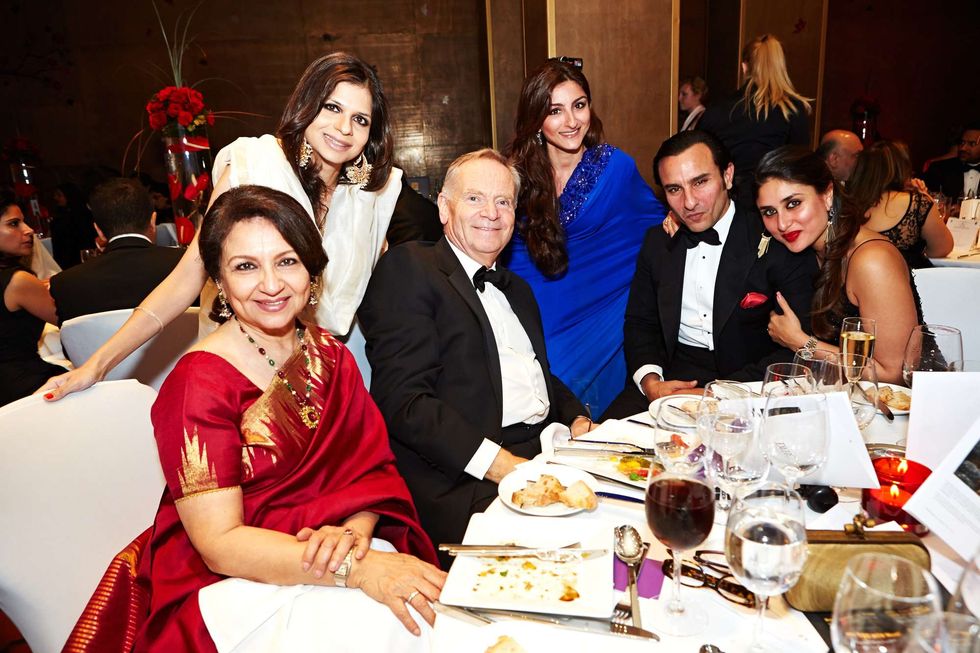 Jeffrey Archer with Sharmila Tagore and her family at an auction dinner in London in 2013Eastern Eye
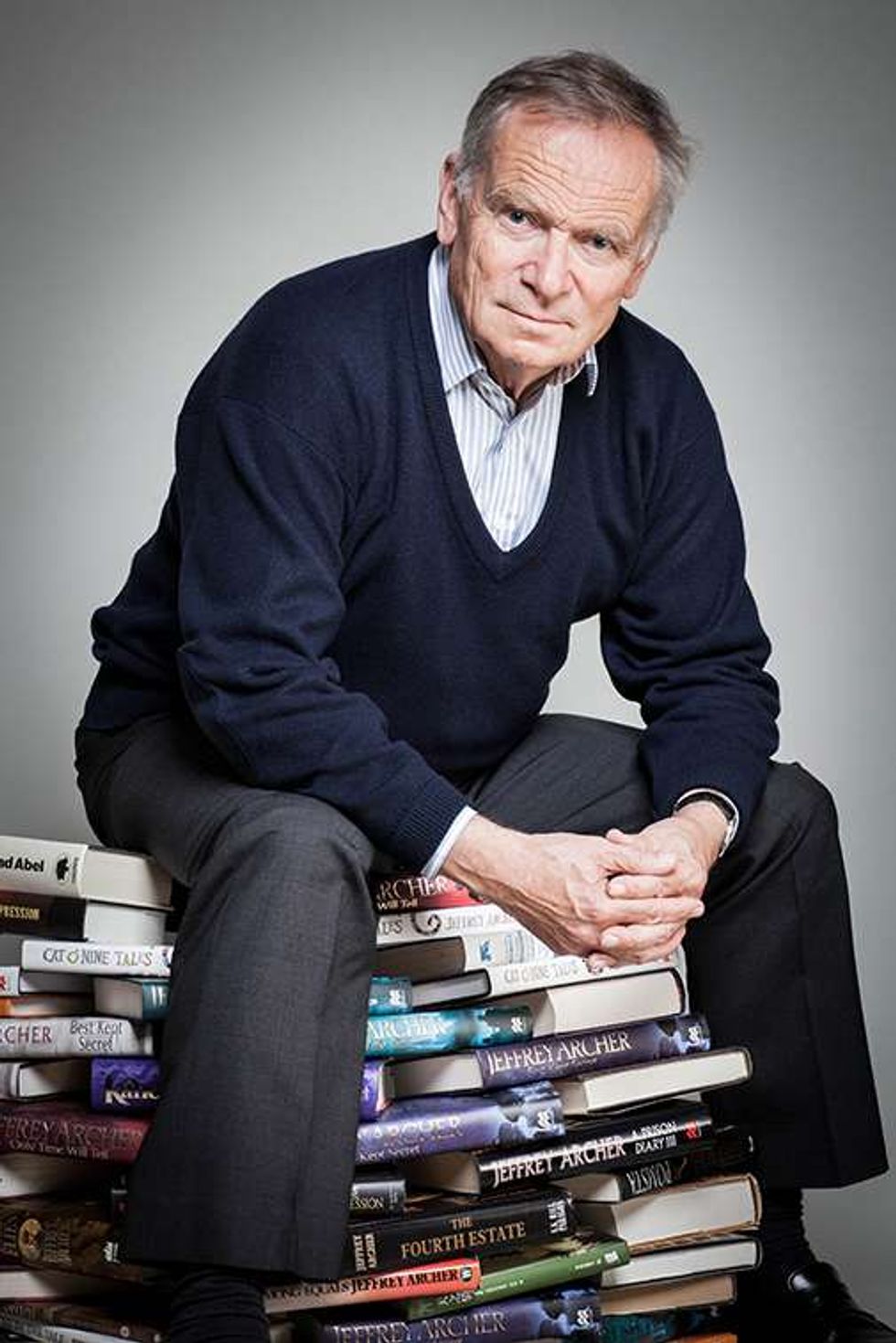 Jeffrey Archer Eastern Eye
 Cover of one of his booksEastern Eye

