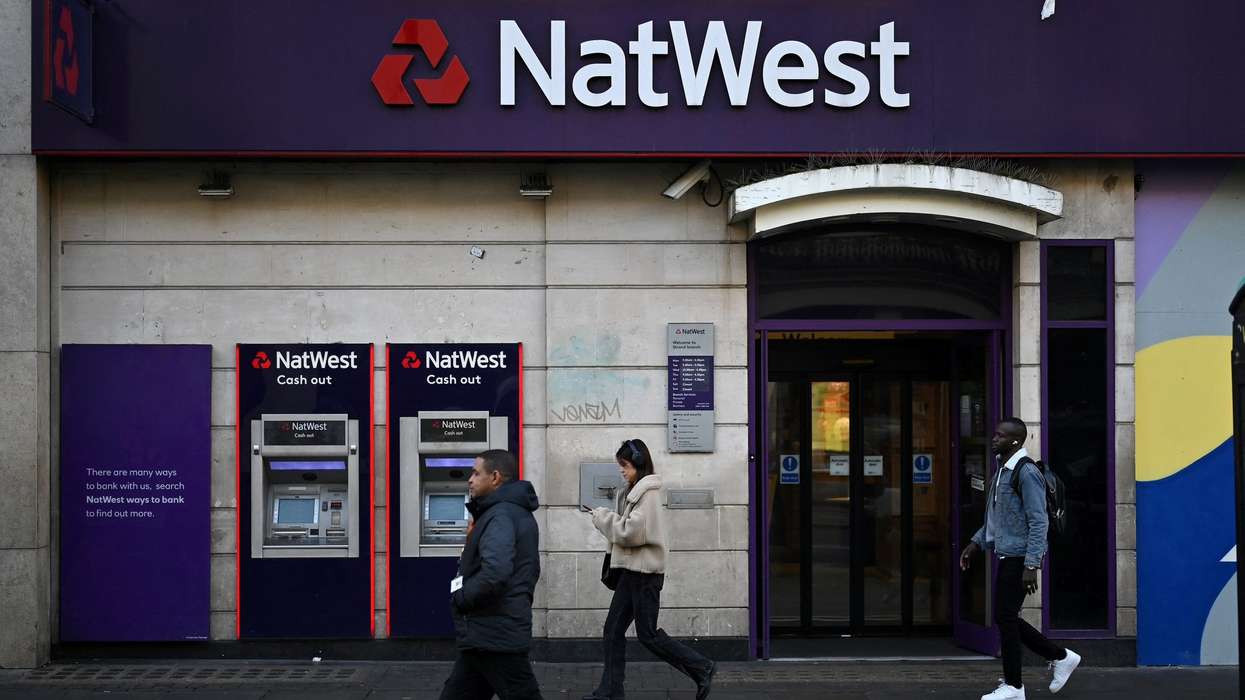

NATWEST helped fund London-based consumer credit firm Amplifi Capital with up to £250 million before the company entered insolvency last month, according to company filings reviewed by Reuters.
The filings show NatWest provided funding to Castor Financing, a business that financed Amplifi, between 2023 and 2025. The links, which have not previously been reported, highlight how banks have provided funding to non-bank financial institutions (NBFIs) as regulators continue to examine risks linked to the sector.
Amplifi, which had £119 million in total assets in its latest filed accounts for the year ended March 2024, specialised in unsecured personal loans. The company entered insolvency in June after struggling to adapt to new consumer credit rules.
The Bank of England is among global regulators examining whether defaults by NBFIs could create wider risks for the financial system.
Earlier this year, UK mortgage originator Market Financial Solutions also collapsed, owing £1.8 billion and leaving banks including Barclays and HSBC facing losses.
"We have started to see how the banks are involved in NBFIs that have collapsed but we could never have known it the day before, so it is scary," said Jackie Ineke, chief investment officer at Swiss fund Spring Investments.
Reuters could not establish whether NatWest, whose business loan book totals £160 billion, is owed money by Amplifi or related businesses. Its funding of Castor represents the biggest source of finance for Amplifi that Reuters was able to identify.
Amplifi's former chief executive and chair did not respond to messages sent through social media.
The Bank of England declined to comment, citing its policy of not commenting on individual firms. Britain's Financial Conduct Authority, which oversees NBFIs, also declined to comment.
Amplifi began in 2013 as a small lender to credit unions before expanding into consumer lending in 2022 with its Reevo brand, which offered unsecured personal loans carrying interest rates of between 23 per cent and 50 per cent.
As it looked to fund its expansion, Amplifi sold some of its loans to Castor in 2023. Castor then sold loan notes to NatWest, according to Companies House filings.
Castor describes itself as a "special purpose vehicle for the purpose of purchasing a portfolio of loans". Company filings said those loans were originated and serviced by Amplifi.
An archived report on Amplifi's website from September 2023 said the company had secured a £100 million "securitisation warehouse" with NatWest to support further lending.
The arrangement gave NatWest, which was partly owned by the British taxpayer until May 2025, exposure to higher-risk consumer lending, an area where regulations encourage banks to avoid lending directly.
Company filings show Castor increased its debt facilities in March 2025, with NatWest named as the holder of "Class A2" loan notes. As is common for this type of debt, the notes were listed on an exchange. Filings from the Vienna Stock Exchange show the Class A facility was increased to £250 million in March 2025.
British asset manager M&G was also listed as the holder of up to £56 million of Castor's "Class B" notes in March 2025.
"Funds managed by M&G first provided financing to Amplifi in 2023 and subsequently supported the business through its financial difficulties," an M&G spokesperson said, adding that it deferred interest payments while Amplifi sought ways to remain viable.
The type of financing used by Amplifi has become more common because banks are required to set aside less capital against potential losses than they would for direct lending.
Banks face a 20 per cent capital requirement, compared with 100 per cent if they lend directly, Michael Roberts, chief executive of corporate and institutional banking at HSBC, told British lawmakers in November.
Barclays analysis found banks can triple their return on equity by funding NBFIs through securitisation instead of lending directly to the non-banks' customers.
Such borrowers account for a small share of overall bank balance sheets. The European Central Bank said in May that the bloc was not facing systemic risk from turbulence in private credit, although some parts of financial markets remained exposed.
The ECB also said European banks' exposure to non-bank financing firms had increased, rising to 11 per cent of total assets by the end of 2025 from around 6 per cent a decade earlier.
"It leads to fears of what's the next one, will there be a bigger one, how will we know?" said Ineke at Spring Investments, speaking generally about NBFI defaults.
The additional funding from NatWest and M&G came as Amplifi's financial position weakened. The company reported a loss of £100,000 in the year ended March 2024, compared with a profit of £5.5 million the previous year, according to its latest filed accounts.
The accounts said new UK regulations introduced in July 2023 required Amplifi to review its practices. The auditors also said the company had become over-reliant on its credit union business, where performance had deteriorated.
A Reuters review of accounts filed between 2015 and 2025 showed Amplifi had several funding sources, including a £50 million loan facility in 2024 from an unnamed lender.
(With inputs from Reuters)