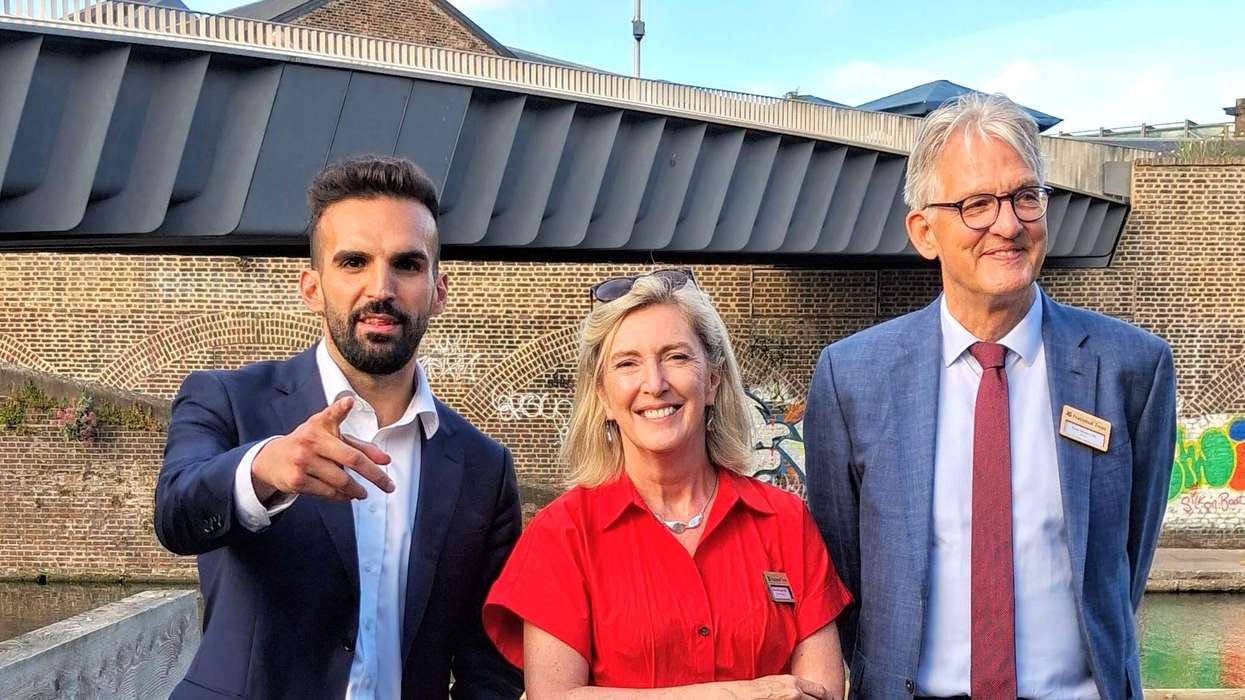

RESTORING nature for people who do not have access to green spaces – especially in urban areas – has become a priority for the National Trust. How this is being done was explained by René Olivieri and Hilary McGrady, chair and director general, respectively, of the National Trust.
They were speaking recently at the National Trust’s summer reception, held at Camley Street Natural Park, a two-acre nature reserve in St Pancras in central London that has been nurtured over the past 40 years by the London Wildlife Trust.
The site, on the bank of the Regent’s Canal, by St Pancras Lock and adjoining St Pancras Basin, is both a sanctuary for wildlife and an educational centre. The park includes a summer-flowering mead ow, a pond with varying water level, and coppiced and deciduous woodland. Marsh-nesting birds include reed bunting, moorhen, coot and reed warbler.
Passengers using King’s Cross or St Pancras stations are probably unaware of what has been described as a “lovely oasis”. Olivieri said: “So why have we chosen this particular place (for the summer reception)?
“First, because we’re very aware if we want to restore nature across the nation, which is very central to our new strategy, we have to work more closely with different organisations. And those organisations are represented by the likes of the (London) Wildlife Trust.
“But there’s another reason why being in this metropolitan area is important, and that is that 87 per cent of Britain’s population lives in cities, and we know that everybody has a right of access to nature. It’s an important part of what everybody’s life should contain. It isn’t just the right thing to do to give them that ac cess to nature. It’s actually essential, because if they don’t experience nature, as David Attenborough said, then they aren’t going to care for it.
“If we want to succeed in restoring nature, we need people who live in cities to back us up. Now the National Trust is lots of different things to lots of different people, and it will always be that way. It always has been that way. But we want to focus particularly on our nature agenda. And why have we done that? Because, as you all know, the decline of nature, climate change, they are the biggest challenges of our time, and perhaps of any time.”
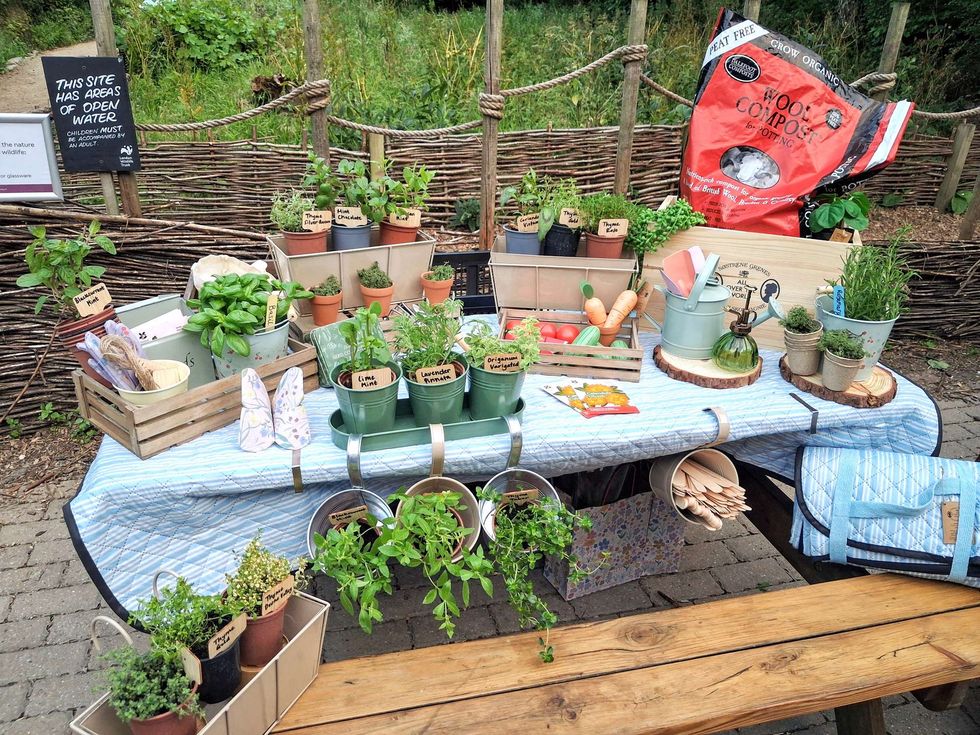 The sky gardening projectNational Trust
McGrady said the National Trust was committed to “ending unequal access to nature, to history, and to beauty. Restoring nature can only happen if we get people engaged in that process.”
She referred to a project called the “Sky Gardening Challenge”, to encourage people to put plants in their balconies: “As René says, over 80 per cent of people living in the cities, a lot of them in high-rise flats, how are they having access to nature? So we launched this little thing about saying, ‘What about greening your balcony? What can we do to help you?’ Provide you with some seeds, provide you with some advice, a workshop as to what to do. It started literally from a little seed of an idea to 9,000 people applying to us this year to want to be part of that pro gramme. Such a lovely, easy entry into why nature matters. What about pollinators? What can I do to help them? It’s been a really interesting exercise in how to engage local communities at a really local level in the place that they live.”
She referred in passing to an exhibition of Winston Churchill’s paintings at the Wallace Collection (Churchill: The Painter is on until November 29).
To British Asians and increasingly to most young people in Britain, the great wartime prime minister is linked to the Bengal Famine of 1943 in which two or three million starved to death.
McGrady said: “Churchill was a massive fan of nature, of course, and he paint ed every day. He was out painting, particularly at Chartwell, and this year we have lent 15 of his paintings to the Wal lace Collection. If you have a chance, go and see it because it really is beautiful to see those paintings in a different context in an exhibition that celebrates a side of Churchill that not many people know about. It is really worth going to see.”
She mentioned other programmes, such as Spring Watch and Hidden Treasures of the National Trust, done with the BBC, and another in partnership with Pokémon, which she described as “a lovely entry point for young kids to come to our places”.
“I’m not allowed to have favourite properties, but Crom (a 2,000-acre tranquil estate on the shores of Upper Lough Erne) in County Fermanagh is one of the most special places on the planet,” she said.
McGrady added: “Why are we interested in trying to get close to where people live? Well, because we know not everybody has the access they need, they deserve for their health and their well being, and for the good of nature. And, so, I’m delighted we have been working with the GLA (Greater London Authority).”
She concluded by referring to “the bigger vision of a West London regional park, one that might have Osterley at the heart of it”.
The West London Regional Park has been called a “once-in-a-generation” green space project spearheaded by Ealing and Hounslow councils. With the National Trust’s Osterley Park and House sitting right at the heart of the landscape, this initiative aims to connect more than 500 hectares of parkland and waterways.
McGrady said: “It is really looking amazing, but that can spread out, allowing nature to travel, allowing people to travel safely, have that access to nature that they desperately need. But in order to have something of that kind of scale, you need vision, you need people that are going to make it happen, you need a determination to break through the challenges and the barriers in the way.”
Mete Coban, who is one of London mayor Sir Sadiq Khan’s 10 deputy mayors and has responsibility for environment and energy, said: “The work the London Wildlife Trust does to help nature thrive across our city is incredible. London is a very green city – 47 per cent of our space, spatially, is green. But the question is, for who is this green? Who has access to all these beautiful green and blue spaces we have across our city? And it was really after the pandemic that people grew to appreciate how much benefit nature brings to our city.




 The September 11 Memorial and Museum stands on the site of the former World Trade Centre in New York, where the twin towers were destroyed in the 2001 attacks Spencer Platt/Getty Images