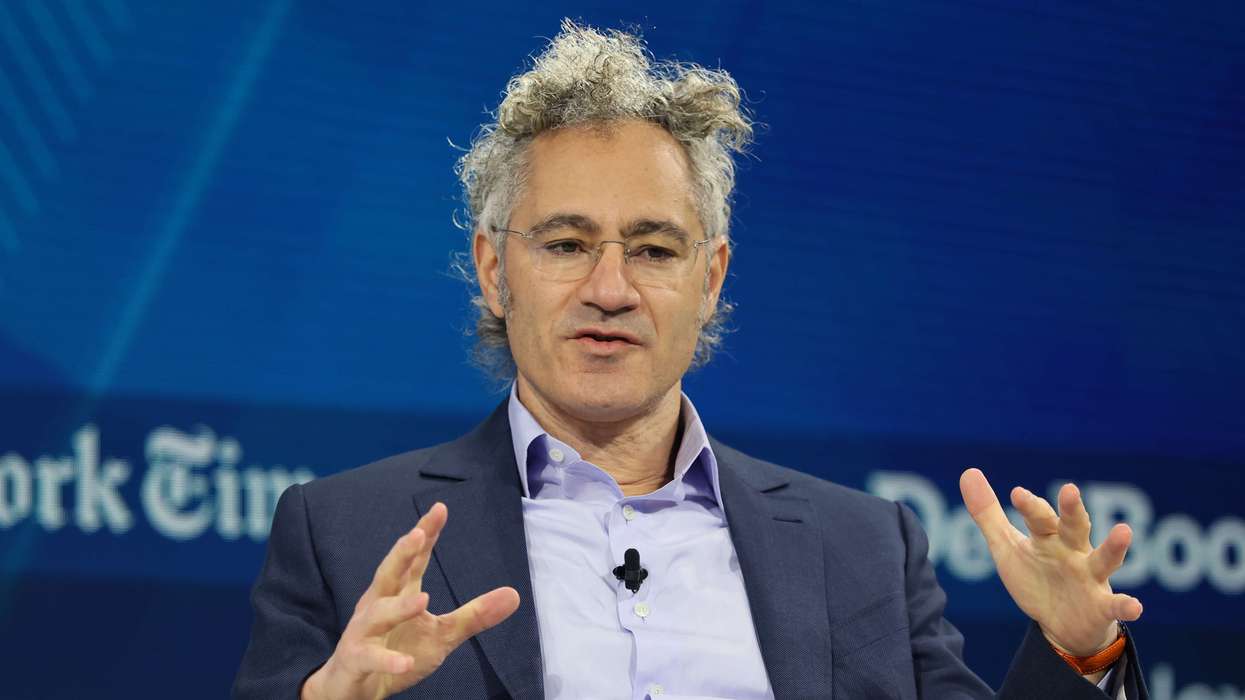

- Alex Karp believes AI will make a handful of people vastly richer while average workers see far smaller gains.
- The Palantir CEO says the biggest winners from AI may be people most of society cannot relate to.
- Other business leaders and AI experts have also warned that the benefits of artificial intelligence could become heavily concentrated.
Artificial intelligence may improve living standards, but it could also create one of the widest wealth gaps in modern history. That is the warning from Palantir CEO Alex Karp, who believes the biggest financial rewards from the AI boom will flow to a small group of technology insiders rather than the wider public.
Karp's comments come as the AI industry continues to attract record investment, pushing the market values of technology companies to new highs. The debate over AI wealth inequality has also intensified, with business leaders and researchers questioning who will ultimately benefit from the technology's rapid growth.
Palantir's own rise reflects that trend. The AI software company's market value has climbed to around £240 billion ($322 billion), helping lift Karp's personal fortune to an estimated £11.2 billion ($15 billion).
'A complete decoupling of wealth'
Speaking on the MDMeets podcast with Axel Springer CEO Mathias Döpfner, Karp suggested artificial intelligence could make him "20x wealthier", implying his fortune could eventually approach £223 billion ($300 billion).
The average middle-class worker, however, may only see their salary double over the next decade.
According to Karp, that difference could create "a complete decoupling of unimaginable wealth and normal wealth."
He argued that the issue goes beyond the size of the fortunes being created. The people accumulating them, he reportedly said, as quoted in a news report, may be individuals most people struggle to connect with.
"It's done by people you don't really relate to, like very oddly shaped IQ specimens that you probably wouldn't want to have over for dinner," Karp said. "And if they were over for dinner you'd have nothing to talk to them about, and vice versa."
Karp also criticised what he sees as exaggerated claims surrounding artificial intelligence. He reportedly said the technology is being oversold in the US, adding that such messaging is unnecessary because AI's capabilities are already significant.
Not a concern Karp alone is raising
Karp is not the only prominent business leader questioning how AI's economic gains will be shared.
According to Oxfam, global billionaire wealth rose more than 16 per cent in 2025 to a record £13.6 trillion ($18.3 trillion), roughly three times faster than the average growth recorded over the previous five years.
Among the biggest beneficiaries has been Elon Musk, whose fortune is estimated at around £620 billion ($833 billion) after briefly becoming the world's first trillionaire earlier in 2026.
Oxfam has argued that someone with a £745 billion ($1 trillion) fortune could pay a 10 per cent wealth tax worth about £74.5 billion ($100 billion) and still remain among the world's richest people. The charity estimates that the same amount could lift more than 800 million people out of extreme poverty for a year.
BlackRock CEO Larry Fink has also warned that the early financial gains from AI are flowing primarily to companies that own the models, data and computing infrastructure.
Speaking at the World Economic Forum in Davos earlier this year, Fink reportedly said, as quoted in a news report, that wealth created since the fall of the Berlin Wall has increasingly been concentrated among a much smaller group of people than society can sustain. He added that AI's biggest gains are currently going to those who control the technology rather than the wider workforce.
Nobel Prize-winning computer scientist Geoffrey Hinton, often referred to as the "Godfather of AI", has voiced similar concerns. He reportedly said last year that companies could use AI to replace workers, creating higher profits for a small group while leaving many others worse off.
JPMorgan Chase CEO Jamie Dimon has taken a more measured view but acknowledged that many lower-income Americans have been left behind. He reportedly told Axios that while concerns about inequality can sometimes be overstated, it is understandable why many people feel frustrated as the wealthiest continue to become even richer.
As AI adoption accelerates across industries, the debate is shifting beyond technological breakthroughs. Increasingly, the bigger question is who will benefit most from the next wave of economic growth—and whether the rewards will be shared widely or concentrated among a select few.