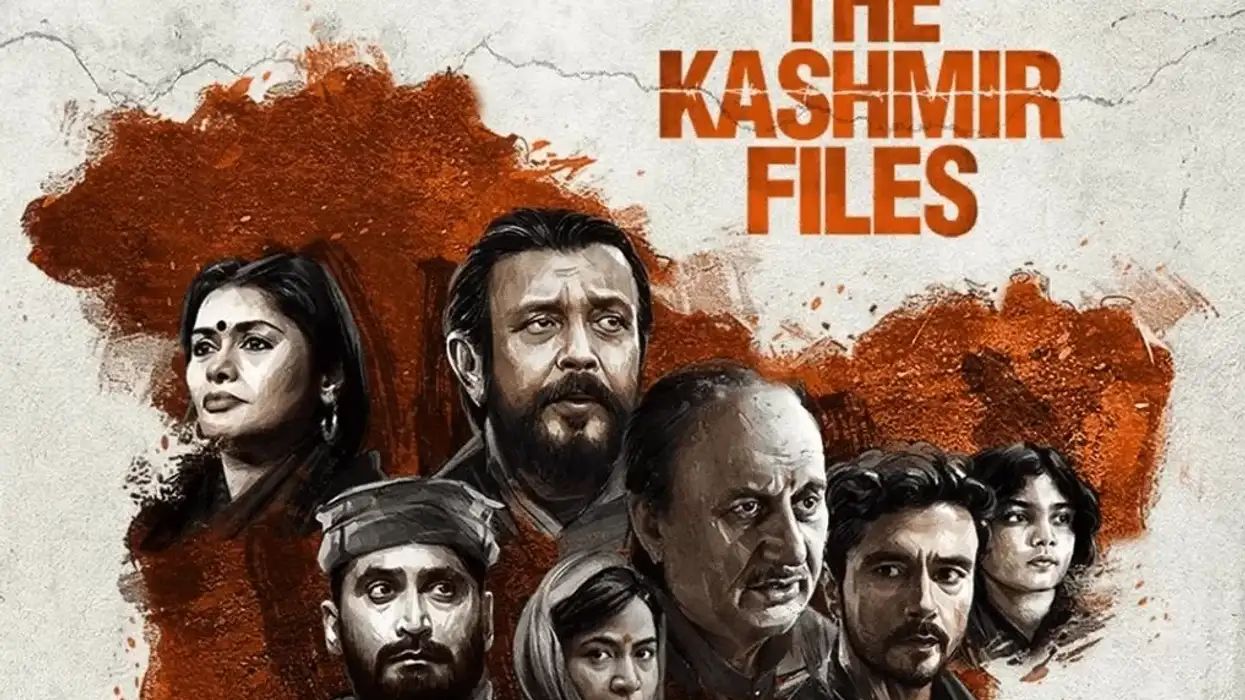

Indian Prime Minister Narendra Modi on Tuesday praised filmmaker Vivek Ranjan Agnihotri’s The Kashmir Files, a film based on the exodus of Kashmiri Pandits from the Kashmir Valley in the 1990s. He said the film is "bringing the truth in its correct form" and history has to be presented in the right context from time to time.
The prime minister's ringing endorsement of the film while addressing a BJP Parliamentary Party meeting was echoed by Union minister Hardeep Singh Puri and Uttar Pradesh Deputy Chief Minister Keshav Prasad Maurya among others.
As the debate around the movie escalated, the Uttar Pradesh government joined a host of states in declaring the film tax-free.
Slamming the "campaign to discredit" the Vivek Agnihotri directorial by those who claim to be the flagbearers of freedom of expression, Modi said there have been continuous efforts to "bury the truth".
"They are shocked that the truth that they tried to suppress is now coming out with the backing of facts and efforts," Modi said about the film at the centre of a political slugfest with the Congress and several other opposition parties objecting to it.
The video of the prime minister's speech was shared on Twitter by the BJP and several party leaders.
Released last week, The Kashmir Files stars Anupam Kher, Mithun Chakraborty, and Pallavi Joshi. The film has been written by Agnihotri and produced by Zee Studios.
"You must have heard the discussion about The Kashmir Files, those who carry around the flag of freedom of expression, that whole group is rattled for the last few days. Instead of assessing the film on the basis of facts and truth, a campaign is on to discredit it," Modi said.
Underlining that history has to be presented in the right context before the society, Modi said just as books, poetry, and literature play a role in this, in the same way even films can do the same. "My issue is not about a film, but about bringing the truth in its correct form before the country.
"There can be many aspects of truth and different views, those who think it is not correct can make their own film, but they are shocked that the truth that they tried to suppress is now coming out with the backing of facts and efforts," the PM said.
Referring to British filmmaker Richard Attenborough's 1982 biographical drama Gandhi, starring Ben Kingsley, Modi said post-independence, the world heard more about Martin Luther King and Nelson Mandela.
"Had someone taken the effort to make a film on Gandhi and presented it to the world, the message may have been delivered."
His comments were followed by Uttar Pradesh Chief Minister Yogi Adityanath's announcement regarding the film's exemption from entertainment tax. Prior to UP, Gujarat, Madhya Pradesh, Uttarakhand, Haryana, Karnataka, Tripura, and Goa also declared The Kashmir Files tax-free.