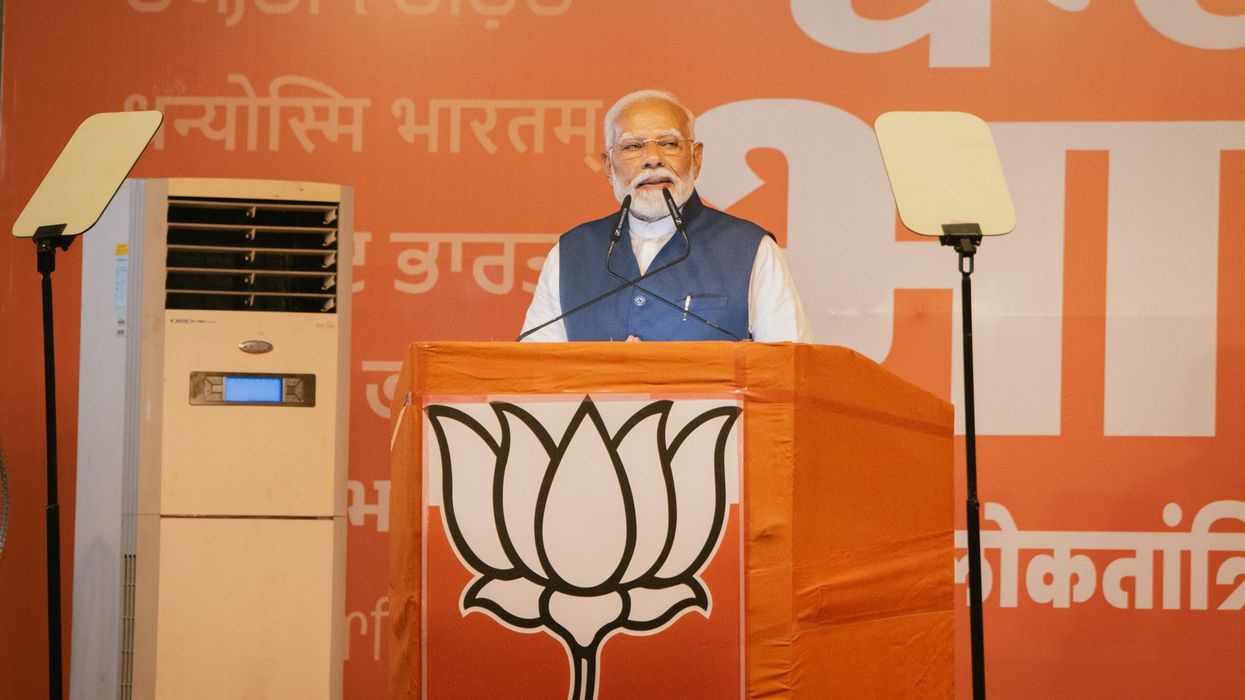

The narrower victory margin for Indian prime minister Narendra Modi's alliance in the elections will delay reforms that could have led to aggressive fiscal consolidation, an analyst at Moody's Ratings said on Wednesday.
Modi's Bharatiya Janata Party (BJP) won 240 seats on its own, 32 short of the halfway mark in the 543-member lower house, with the National Democratic Alliance (NDA) securing a total of 293 seats.
"It looks like the prospects for even more aggressive consolidation are not as bright as they were prior to the election results," Christian de Guzman, senior vice president, sovereign risk group, told Reuters in an interview. "I still think that the prospects for consolidation will remain intact, and they will retain a level of fiscal discipline."
India's benchmark 10-year bond yield saw its biggest surge in eight months following the poll outcome.
India aims to narrow its fiscal deficit to 4.50 per cent of gross domestic product by the end of 2025/26, from the 5.1 per cent projected in the current year ending in March 2025.
The smaller mandate for Modi raises risks of more populist spending to consolidate political support, Guzman said.
The July budget would account for the government's plans with the Reserve Bank of India's record 19.75 billion pounds worth surplus transfer. It could use it to consolidate the fiscal position further or to garner political support, Guzman said. "A shaky political outcome perhaps suggests higher odds for the latter."
S&P Global Ratings raised India's sovereign rating outlook to 'positive' from 'stable' last week, saying the country's robust economic expansion had a constructive impact on its credit metrics.
On Wednesday, Fitch said the weakened majority for Modi's alliance could pose challenges for the more ambitious elements of the government's reform agenda.
(Reuters)