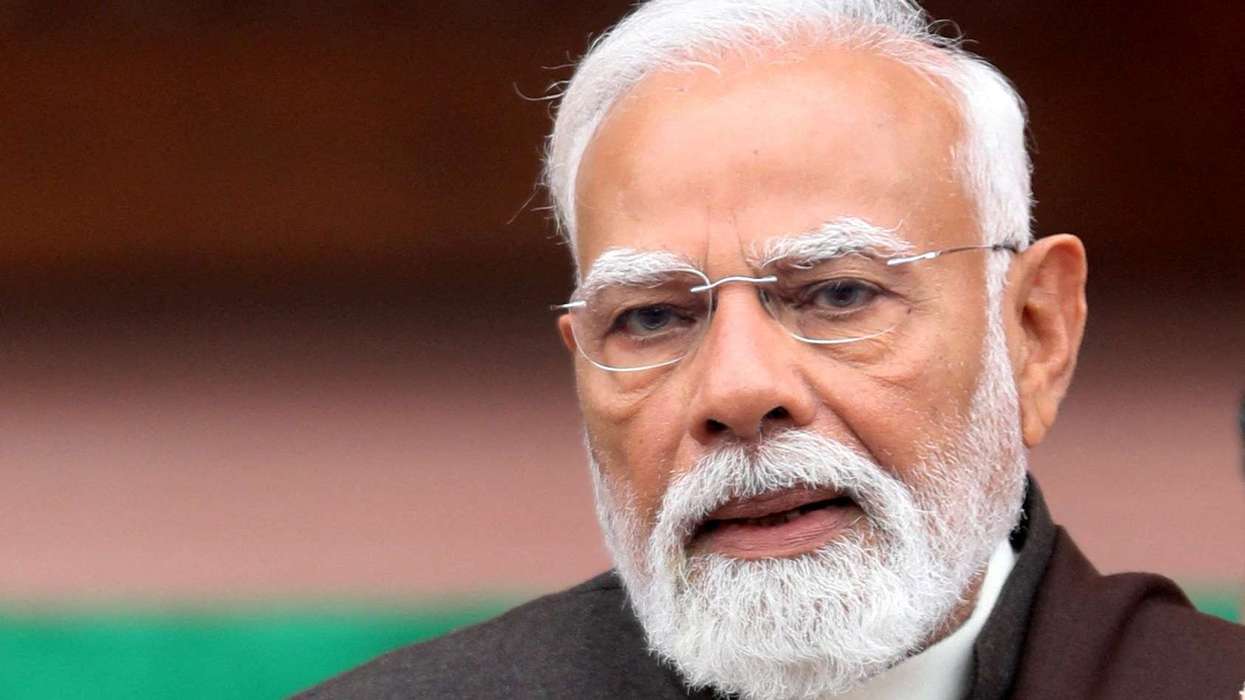

- India's government bill to expand parliament and fast-track a 33 per cent quota for women failed on Friday, with 298 votes in favour and 230 against — well short of the two-thirds majority needed
- The bill would have increased lower house seats from 543 to more than 800, based on a redrawing of constituency boundaries
- Opposition parties backed women's quotas in principle but said linking them to delimitation was a ploy to benefit Modi's BJP
INDIA's ruling coalition suffered a rare parliamentary defeat on Friday (17) after a bill designed to increase the number of women lawmakers failed to secure the two-thirds majority required to pass the lower house.
The bill, which would have expanded the Lok Sabha from 543 to more than 800 seats, was intended to fast-track a 2023 law guaranteeing women a third of all parliamentary seats.
The government argued the seat expansion, based on a redrawing of constituency boundaries to reflect population growth since the last census in 1971, was necessary to make the quota viable.
When the vote was called, 298 lawmakers voted in favour and 230 against, well short of the constitutional majority needed. Two related bills were shelved as a result.
The defeat is a significant setback for prime minister Narendra Modi, who had convened a special sitting of parliament this week hoping to pass a package of landmark reforms.
Opposition parties, while broadly supportive of women's quotas in principle, argued that the boundary redrawing — known as delimitation — was a political manoeuvre designed to entrench the ruling Bharatiya Janata Party's dominance.
The BJP commands strong support in India's densely populated northern states, which would gain the most seats under a population-based redistribution.
Southern states, where opposition parties hold sway and birth rates have historically been lower, fear a significant reduction in their share of parliamentary power.
Opposition leader Rahul Gandhi was swift to condemn the bill's approach. "They used an unconstitutional trick in the name of women to break the Constitution," he posted on X shortly after the result was announced.
Fellow Congress lawmaker Jairam Ramesh called the linking of delimitation to women's reservation a "nefarious" move, and said the government should instead implement the 33 per cent quota "in the existing set up of the Lok Sabha for the 2029 elections."
The government rejected those accusations. Home minister Amit Shah, speaking in parliament before the vote, warned opposition members: "The women of this country will not forgive you."
Women currently make up just 14 per cent of the lower house and 17 per cent of the upper house, with around 10 per cent representation across state legislatures.
The 2023 reservation law passed with cross-party support but was tied to the completion of a national census — still under way — meaning it would not have taken effect before the next general election in 2029.
The bill was an attempt to accelerate that timeline, but the government's decision to bundle it with delimitation proved fatal to its prospects.
(Agencies)