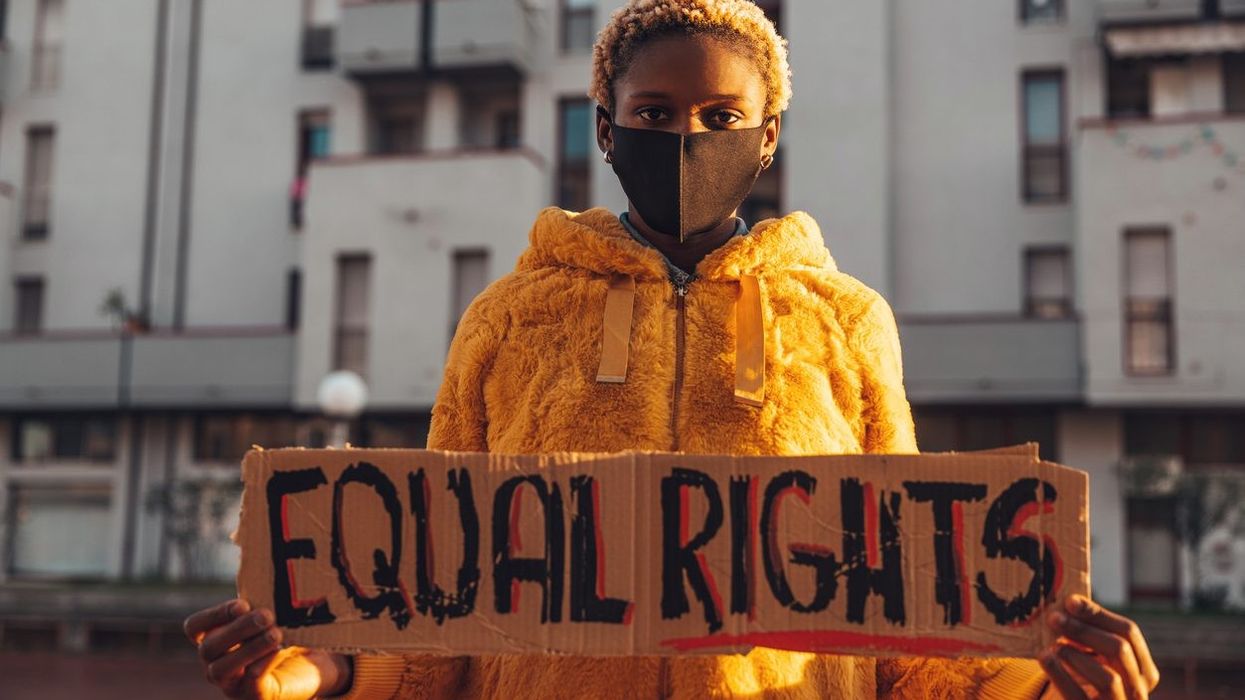

THE number of black and minority ethnic (BME) workers in insecure work has more than doubled over the last decade, a new analysis by the Trades Union Congress (TUC) revealed on Monday (14), calling for government action.
The TUC, an umbrella group of 48 unions comprising more than 5.5 million members, said the phenomenon of low pay, variable hours and fewer rights and protections was an example of "structural racism".
It based its findings on analysis of a study it commissioned of agency, casual, seasonal and other workers between 2011 and last year but excluded those on fixed-term contracts.
The figures showed that 3.9 million people were in insecure employment: of those, 836,340 were from BME backgrounds in 2022, up from 360,200 in 2011.
BME men were almost twice as likely to be in insecure work as their white counterparts (19.6 per cent compared with 11.7 per cent), with women also affected (15.7 per cent to 9.9 per cent)
Overall, workers from BME backgrounds accounted for two-thirds of the increase, despite comprising only 14 per cent of the overall workforce.
Corresponding figures for low-paid workers from white backgrounds remained relatively stable, the TUC said, describing it as an example of inequality in the labour market.
According to the unions body, the UK is becoming a “nation of insecure jobs”, with precarious and low-paid work widespread in all regions and nations.
There are 3.9 million people in insecure employment – one in nine across the workforce.
London (13.3 per cent) and the South West (12.7 per cent) have the highest proportion of people working in insecure jobs.
The organisation has previously highlighted the growth of insecure jobs in the UK such as those employed on zero-hours contracts, which offer no minimum guarantee of hours.
Sectors most affected were in the caring profession, leisure services, and process, plant and machine operatives, as well as delivery drivers.
TUC general secretary Paul Nowak said: "Too many black and ethnic minority workers are trapped in low-paid, insecure jobs with limited rights and protections, and treated like disposable labour. The massive and disproportionate concentration of BME workers in insecure work – like in the gig economy – is structural racism in action.
“Across the labour market, and at every stage, BME workers face discrimination and persistent barriers at work. It’s time to end the scourge of insecure work once and for all – that's how we start to tackle the discrimination that holds BME workers back.
Nowak called on the government to end the "exploitative" zero-hours contracts, for improvements to pay and standards, and for firms to close the ethnicity pay gap, which exacerbates existing discrimination.
To end the scourge of insecure work, the TUC has urged to introduce fair pay agreements to raise the floor of pay and conditions in sectors blighted by it.
The other demands include cracking down on bogus self-employment by introducing a statutory presumption that all individuals will qualify for employment rights, eliminating the two-tier workforce, ensuring equal employment rights for all, granting immediate flexible working rights to employees and creating a comprehensive ethnicity monitoring system.



