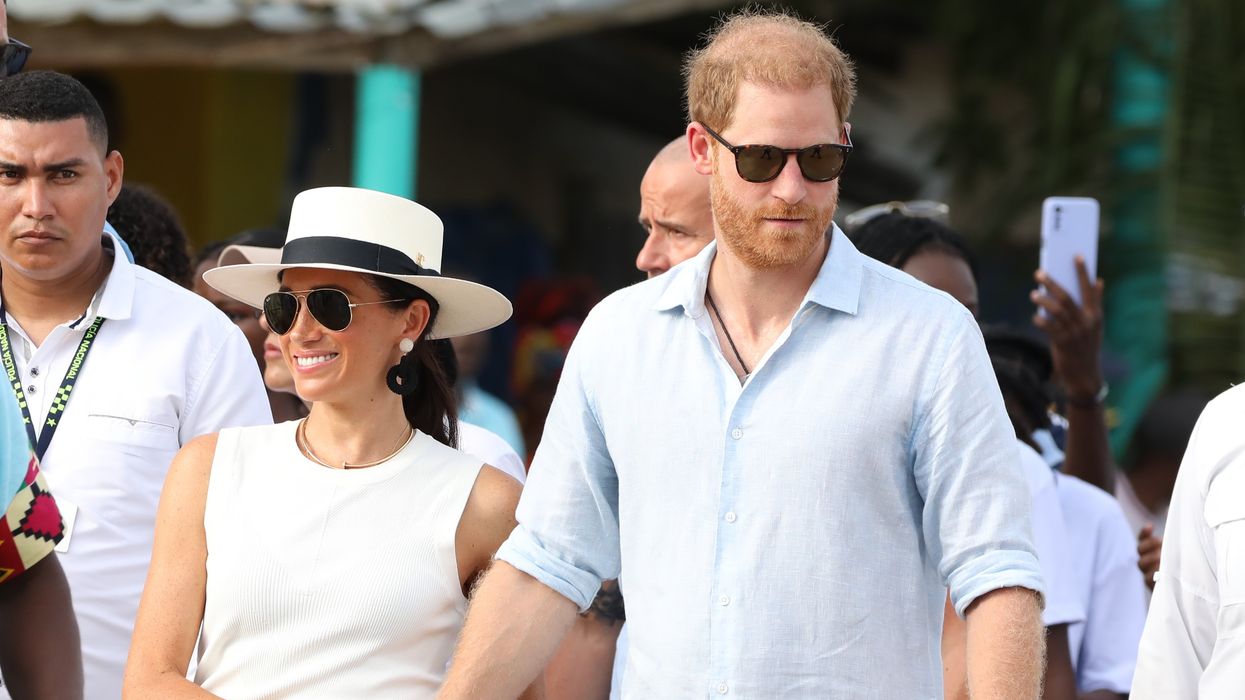

A light-hearted video posted by Meghan Markle to mark her daughter Princess Lilibet’s fourth birthday has reignited long-standing conspiracy theories questioning the authenticity of the Duchess of Sussex’s pregnancies.
Viral video shared on Instagram
The 80-second Instagram reel features Meghan, visibly pregnant, lip-syncing and dancing to the "Baby Mama Dance" trend in what appears to be a hospital room. The video also includes brief appearances by Prince Harry and is captioned: “Four years ago today… Both of our children were a week past their due dates… so when spicy food, all that walking, and acupuncture didn’t work – there was only one thing left to do!”
The dance, popularised on TikTok by expectant mothers, involves light twerking and is intended as a fun way to pass time while waiting for labour to progress. Meghan's video appears to join this trend, but instead of ending speculation around her pregnancies, it has given rise to further unfounded claims on platforms such as X, Reddit and YouTube.
Persistent ‘fake pregnancy’ theory
Baseless online rumours that Meghan wore a prosthetic baby bump during both her pregnancies began circulating shortly before the birth of her son Archie in 2019. These claims allege that Meghan used a surrogate and faked her pregnancies using a commercially available product known as a “Moonbump”.
Some users pointed to the shape of Meghan’s stomach in the recent video as evidence of a fake bump. However, a midwife consulted by media outlets explained that the visible outline was likely cardiotocography (CTG) equipment, which monitors foetal heart rates and contractions in high-risk labours – a category Meghan falls under, given her disclosure of preeclampsia.
Other claims questioned the placement of Meghan’s cannula, but experts confirm that an IV line placed halfway up the arm is standard procedure in many hospitals.
Timeline discrepancies debunked
Conspiracy theorists also disputed the authenticity of the clip by questioning the timing of the "Baby Mama Dance" trend. Some falsely claimed the trend didn’t exist until 2023, despite widely available videos of the dance circulating online as early as 2018.
Another widely circulated comment suggested Meghan appeared too slim to be heavily pregnant, despite her public statements that she gained around four stone during each pregnancy. Critics claim the weight does not show in the video, but health professionals note that it is common for some women to carry most of their pregnancy weight in the abdomen.
Ongoing attempts to dispel rumours
This is not the first time Meghan has attempted to publicly address speculation about her pregnancies. In May, she shared a collage on social media for her wedding anniversary, which included an ultrasound image and a photo of her bare bump. These, too, were picked apart online, with critics alleging the ultrasound lacked identifying details and the bump looked overly smooth or shiny.
The Sussexes’ approach to privacy has added fuel to the fire. Meghan and Harry chose not to follow royal tradition by conducting a hospital steps photoshoot after Archie’s birth in 2019. Instead, they held a private photo session two days later at Windsor Castle. This departure from royal norms, as well as their decision to give birth at the Portland Hospital rather than the Lindo Wing, prompted speculation that they were hiding something.
Some conspiracy theorists even claimed that early photos of baby Archie featured a lifelike doll and that an official tweet announcing a surrogate birth was deleted, both claims for which there is no credible evidence.
Experts weigh in on conspiracy psychology
Professor Sander van der Linden, a social psychologist at the University of Cambridge, explains that directly addressing conspiracy theories often backfires. “Generally, the more you try and refute a conspiracy theory, the more you fuel the idea that there’s something to it,” he said. “It legitimises it – why would you respond unless it’s something credible?”
He adds that in an era where artificial intelligence and video manipulation are widespread concerns, even legitimate personal footage can become the subject of suspicion. “It creates an extra cloud of confusion,” he said.
Van der Linden also pointed to a broader issue of underrepresentation of women of colour in media portrayals of pregnancy. This lack of visibility may contribute to public confusion or misguided expectations, making it easier for misinformation to take hold. He cited the similar case of Beyoncé, who was also targeted with fake pregnancy claims.
Meghan’s mental health struggles
The Duchess has previously spoken candidly about the toll online abuse has taken on her mental health, particularly during her first pregnancy. In interviews, Meghan described how relentless tabloid scrutiny and online trolling affected her well-being during that period.
Despite the criticism, Meghan's recent post may simply have been a personal memory of a challenging time. Some women online responded positively, sharing that they too had danced to the same song in late pregnancy. One user, Drea Humphrey, commented: “When you’re that pregnant, you don’t care about looking bizarre.”
Cringe factor or calculated response?
Whether the video was meant as a deliberate response to trolls or simply a moment of levity during labour, it has reignited debate. For some viewers, the focus is less on conspiracy and more on the awkwardness of sharing such an intimate moment publicly.
But for Meghan and Harry, whose every public gesture is analysed under a microscope, the line between transparency and overexposure remains difficult to navigate. With their children still in the public eye and conspiracy theorists undeterred, even a seemingly playful post carries unexpected consequences.