
AT THE Maha Kumbh in Prayagraj, in India's northern state of Uttar Pradesh, the process of initiating over 100 women as ‘Naga Sanyasinis’ of Juna Akhada began on Sunday.
Naga Sanyasinis are female ascetics belonging to the Naga sect, a prominent and ancient monastic order within the broader Hindu tradition.
The term "Naga" is derived from the Sanskrit word for "naked," symbolising renunciation of material possessions and worldly attachments.
Divya Giri, a saint at Shri Panch Dashnam Juna Akhada, said that 102 women received the ‘Naga Diksha’ in the first phase of the registration process.
These women were granted the title of ‘Avdhutani’ after completing 12 years of service under their guru.
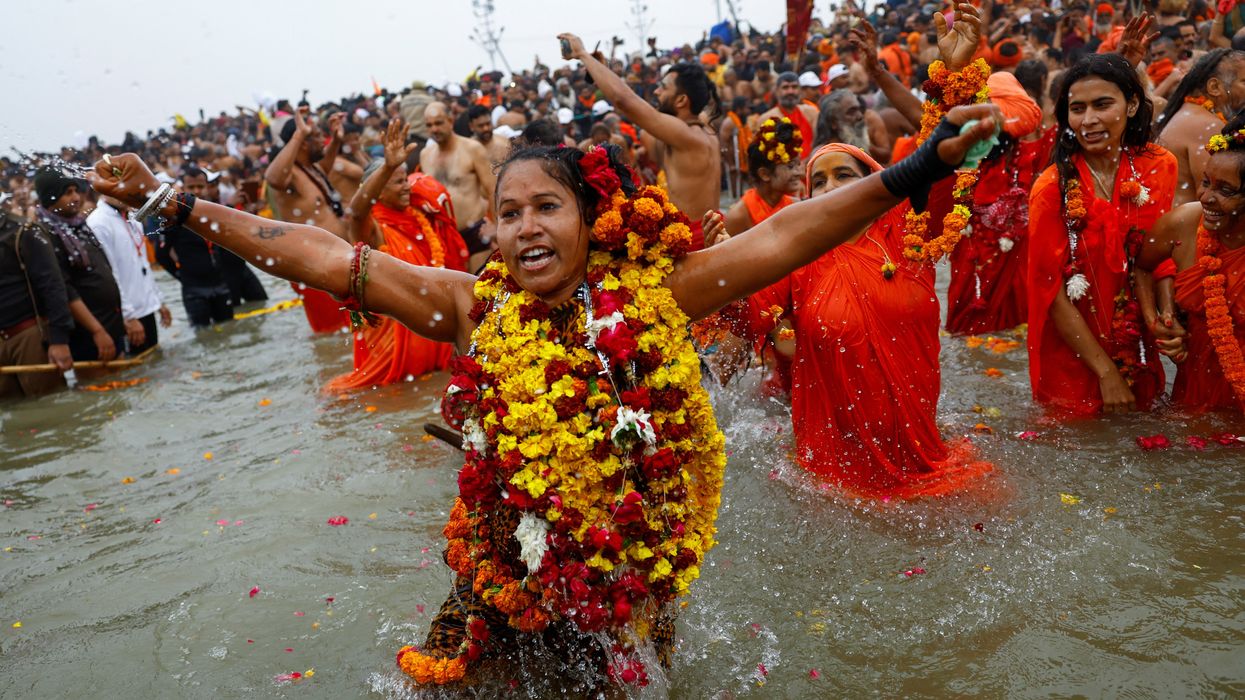
Following tradition, the women, dressed in 2.75-metre unstitched clothes, arrived at the banks of the Ganga, where their heads were shaved. They then took a holy dip in the river and were given a water pot (Kamandal), Ganga ‘jal’, and a staff.
The final phase of the initiation will be performed by Swami Avadheshanand Giri, the Acharya Mahamandaleshwar of Juna Akhada.
Three foreigners were also initiated as Naga Sanyasinis and became members of Shri Panch Dashnam Juna Akhada.
Among them, Italy’s Bankiya Mariam was renamed Shivani Bharti, Bequeven Marie from France was renamed Kamakhya Giri, and Nepal’s Mokshita Rai took the name Mokshita Giri after their initiation.
The Maha Kumbh, a six-week-long Hindu festival, has drawn millions of people to Prayagraj.
Each morning, crowds gather along the confluence of the Ganga and Yamuna rivers for ritual bathing. Organisers expect around 400 million visitors to attend the festival, which concludes on February 26.
Held every three years in four cities on the banks of sacred rivers, the Kumbh Mela rotates among Prayagraj, Haridwar, Nashik, and Ujjain. The Maha Kumbh is held every 12 years, attracting the largest number of devotees due to its auspicious timing.
Hindus believe that immersing in the sacred rivers during the Kumbh Mela absolves sins and offers liberation from the cycle of life and death.
The festival’s origins trace back to the Rigveda and the legend of ‘Sagar Manthan,’ where drops of nectar from a divine pitcher fell at the four locations.
The event is a blend of religious devotion and cultural spectacle, with ascetics and devotees from various Hindu sects participating in rituals, including the ‘Shahi Snaan’ or royal bath.
(With inputs from agencies)