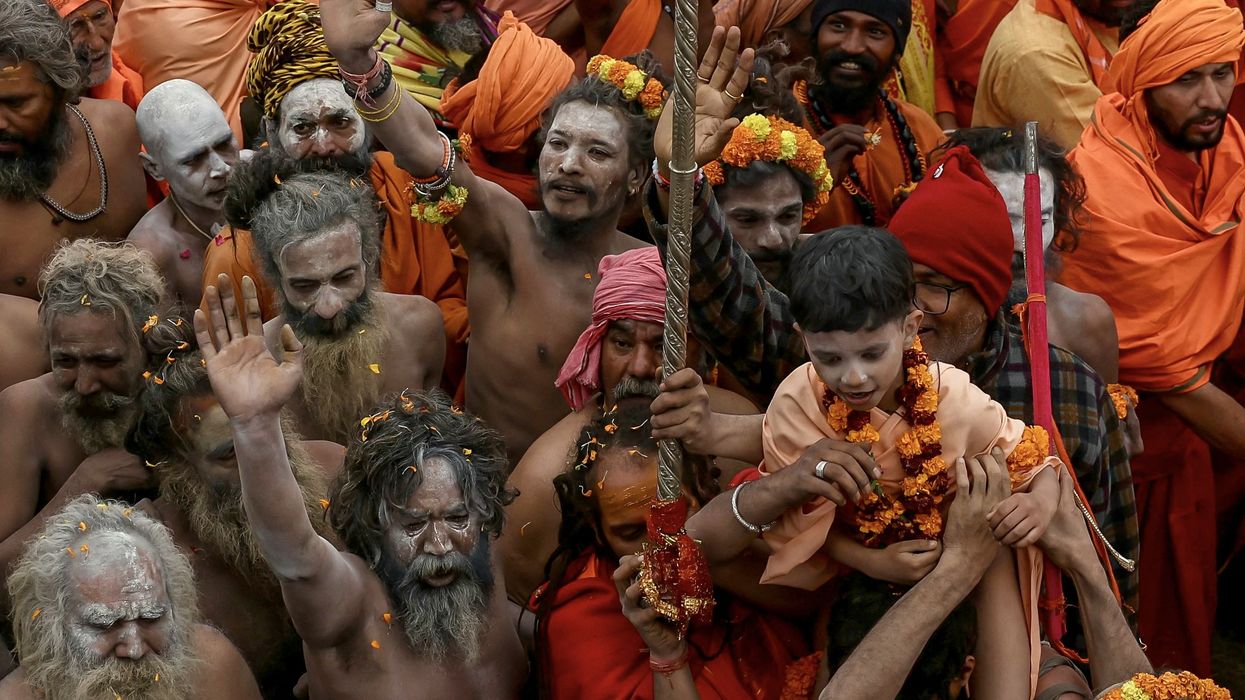

MILLIONS of devotees, including ascetics with matted hair and holy ash smeared on their bodies, took a ritual dip in the rivers of Prayagraj on Tuesday, marking the first 'Amrit Snan' (royal bath) of the Maha Kumbh Mela on Makar Sankranti.
The ritual bathing, conducted at the confluence of the Ganga, Yamuna, and the mythical Saraswati, is believed to cleanse sins and grant salvation.
Thirteen Akharas of ascetics from different sects participated in the bathing ritual, a highlight of the Maha Kumbh Mela held every 12 years.
In a celestial coincidence, two major bathing rituals occurred on consecutive days, with Paush Purnima on Monday and Makar Sankranti on Tuesday. Ashutosh Varshney, convenor of the Prayagraj-based Ram Naam Bank, highlighted the significance of this rare alignment.
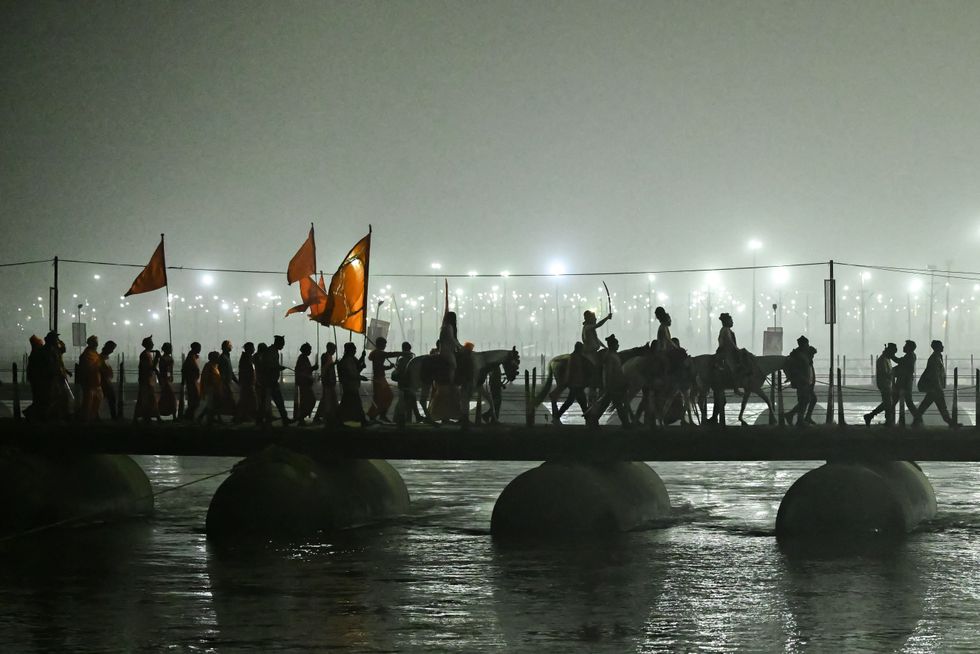 The Maha Kumbh Mela is described as the largest human gathering in the world. (Photo: Getty Images)
Shri Panchayati Akhara Mahanirvani and Shri Shambhu Panchayati Atal Akhara were the first to take the 'Amrit Snan' on this occasion, following a schedule set by the festival administration. Devotees chanted 'Har Har Mahadev,' 'Jai Shri Ram,' and 'Jai Ganga Maiyya' as they moved towards the freezing waters.
On Monday, the first major 'snan' of the festival took place on Paush Purnima, with an estimated 15 million people participating. The six-week-long Maha Kumbh Mela is expected to draw over 400 million attendees, with 150,000 tents set up across 4,000 hectares to accommodate the crowds.
Uttar Pradesh state chief minister Yogi Adityanath congratulated devotees on the occasion, describing the event as a reflection of eternal culture and faith. The event is also significant as it follows the recent consecration of Lord Ram Lalla in Ayodhya.
Mahant Ravindra Puri, president of the Akhil Bharatiya Akhara Parishad, explained that terms like 'shahi snan' have been replaced with 'Amrit Snan' to reflect Sanskrit terminology. “When it comes to our Gods, we should make efforts to have names in Sanskrit,” he said, emphasising that the change is not intended to create divisions.
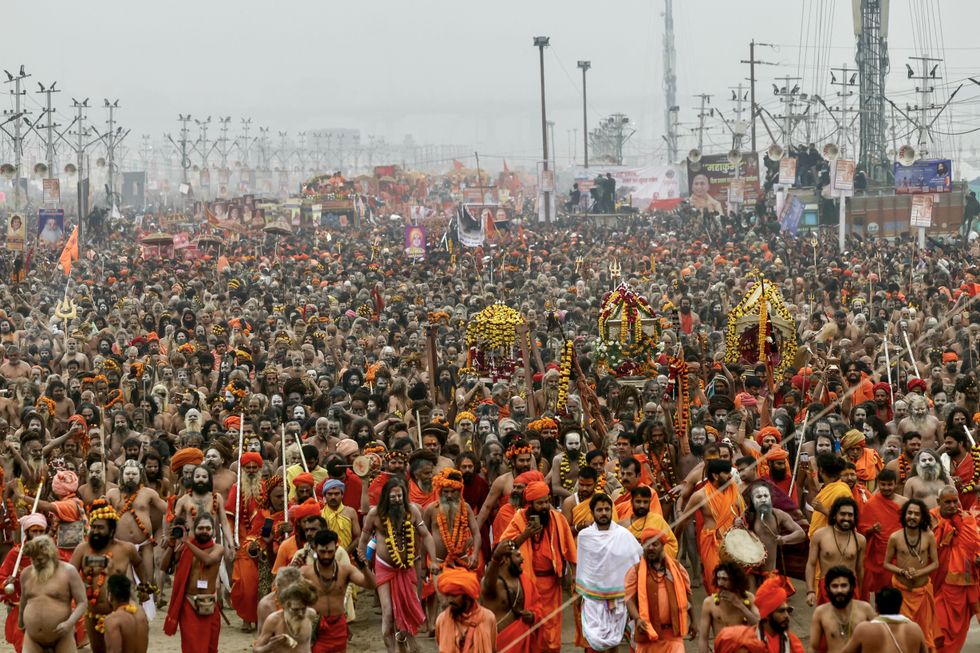 Thirteen Akharas of ascetics from different sects participated in the bathing ritual, a highlight of the Maha Kumbh Mela held every 12 years. (Photo: Getty Images)
The Maha Kumbh Mela is described as the largest human gathering in the world. Security arrangements include 50,000 personnel to ensure the smooth functioning of the event. With a budget of £656 million, the festival is also expected to contribute an estimated £24.6–28.7 billion to the economy.
This year's Maha Kumbh Mela is considered even more auspicious by seers, who claim its celestial combinations occur only once every 144 years.
In past editions, the massive gathering has even been visible from space, showcasing the scale of this sacred event.
(With inputs from agencies)