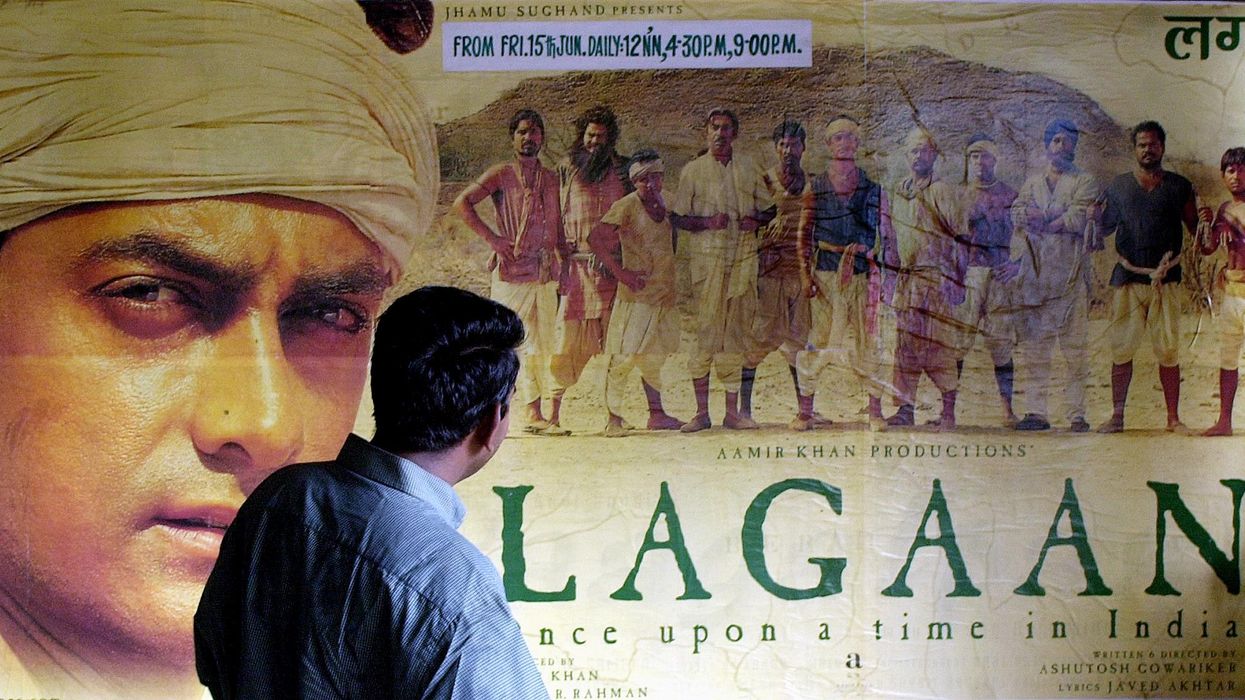

Filmmaker Ashutosh Gowariker's 2001 blockbuster film Lagaan: Once Upon A Time, which completed its 21 years of its release today, might be getting the Broadway treatment soon.
Lagaan, set in 1893 during the late Victorian period of India's colonial British Raj, follows the story of Bhuvan (Aamir Khan), a villager from Champaner, Gujarat, who is challenged by an arrogant British officer, played by Paul Blackthorne, to a game of cricket, as a wager to avoid paying the taxes (Lagaan) they owe.
An industry source has revealed that Lagaan, which was produced by Aamir Khan Productions, its rights are being pursued by several producers from the UK.
"Several leading producers from the UK have requested for the rights from Aamir Khan Productions and a final decision will be made soon regarding the West End Theater," the source stated.
The West End Theater is the UK equivalent of The Broadway show which is one of the biggest and most popular theatres worldwide.
The source further added, "Aamir Khan's team is yet to make a final decision about it. The makers have different plans which include doing a worldwide tour of the show that will feature a completely original cast."
Meanwhile, it will be interesting to see a movie based on India's victory over the Britishers getting the Broadway treatment in the UK.
Helmed by Gowarikar, Lagaan was nominated in the Best Foreign Language category at the 74th Academy Awards and received widespread critical and commercial acclaim. It was the third film from the country to be nominated in the category after Mother India (1957) and Salaam Bombay! (1988).
Apart from Aamir, the movie also starred Gracy Singh, Rachel Shelley, Raghubir Yadav, Suhasini Mulay, Rajendra Gupta, and Akhilendra Mishra among others.










English questioning rose from 20 per cent to 31 per cent, and racist jokes from 36 per cent to 41 per cent
Workplace violence against Black and ethnic minority employees rises to 26 per cent
Highlights
The Trades Union Congress surveyed 1,044 Black, Asian and ethnic minority employees. The results show clear increases in racist behaviour between 2020 and 2026.
Workers having their English questioned rose from 20 per cent to 31 per cent. Those hearing racist jokes went up from 36 per cent to 41 per cent.
Racist comments made to workers or around them increased from 31 per cent to 36 per cent.
Violence and threats
The most worrying finding involves physical threats and violence, which jumped from 19 per cent to 26 per cent.
Racist posts shared on workplace social media grew from 22 per cent to 28 per cent. Racist materials being passed around increased from 19 per cent to 25 per cent.
Beyond direct racism, many workers face unfair treatment. Nearly half (45 per cent) said they get harder or less popular jobs.
Over two in five (43 per cent) receive unfair criticism. The same number (41 per cent) stay stuck on temporary contracts.
Work conditions got worse too. Those not getting enough hours rose from 30 per cent to 40 per cent.
Workers denied overtime went from 30 per cent to 37 per cent. Being kept on short-term contracts increased from 33 per cent to 41 per cent.
Direct managers cause most unfair treatment (35 per cent), followed by other managers (19 per cent).
Bullying mainly comes from direct managers (30 per cent) and colleagues (28 per cent). Racist behaviour mostly comes from colleagues (33 per cent) and customers or clients (22 per cent).
Paul Nowak, TUC general secretary, said: "Black and ethnic minority workers are facing appalling and growing levels of racism and unfair treatment in Britain. This racism is plaguing the labour market – and it's getting worse."
The TUC is calling for urgent government action to tackle the problem. The union wants ring-fenced funding for the Equality and Human Rights Commission to enforce workplace protections.
It is pushing for mandatory ethnicity pay gap reporting for companies with over 50 employees.
The TUC says the Employment Rights Act, which makes employers responsible for protecting workers from harassment by customers and clients, will be an important step forward.
The union also wants employers to treat racial harassment as a health and safety issue and monitor ethnicity data across recruitment, pay and promotions.