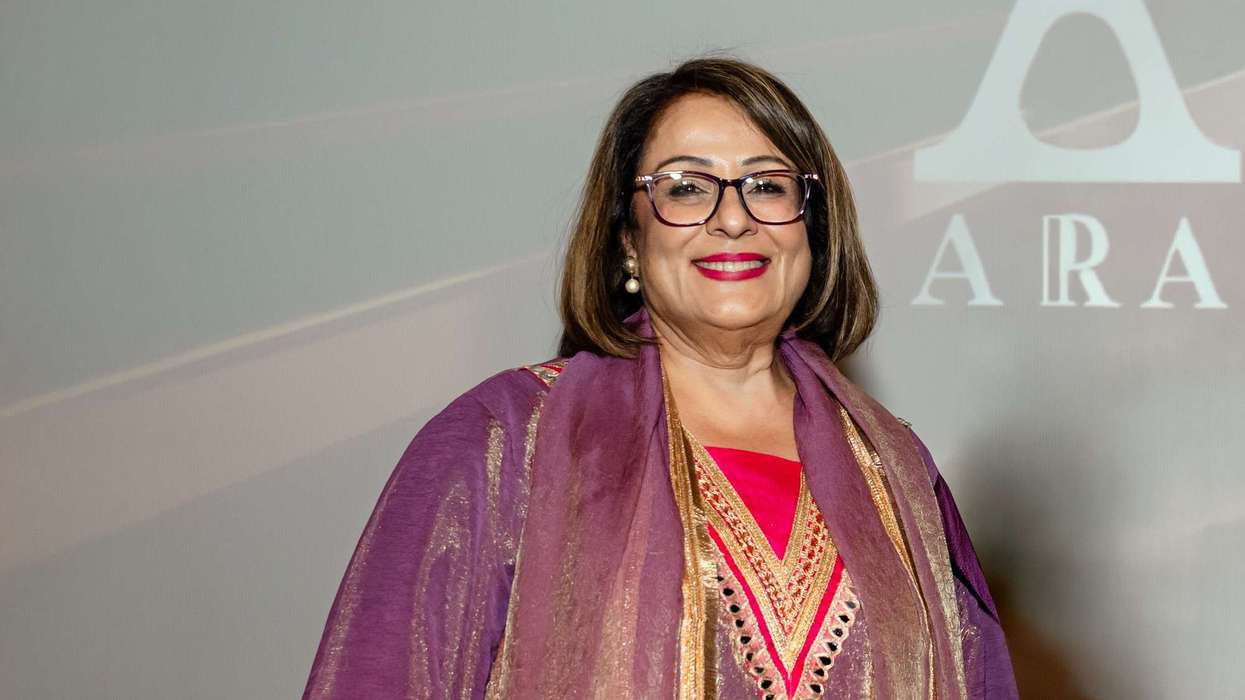

A SENIOR criminal judge who has combined courtroom authority with advocacy on the wellbeing of the judiciary, Her Honour Judge Kalyani (Kaly) Kaul has emerged as a distinctive voice within Britain’s legal establishment.
Her influence extends beyond the courtroom into the international debate on the pressures faced by judges. In March 2025 she was present at the United Nations when 25 July was declared the International Day for Judicial Wellbeing following the adoption of the Nauru Declaration on Judicial Wellbeing.
Kaul, founder of the Judicial Support Network (JSN), has been a major inspiration for the Nauru Declaration and contributed to its text.
“I never expected our project to reach the UN General Assembly and it was the proudest moment of my life to be there when the vote was taken and to know that the JSN played a part in sharing our experiences with senior judges all over the world,” he has said.
Born in Britain to a family of Kashmiri origin, Kaul grew up in a household closely connected to journalism and public life. Her father, Mahendra Kaul, was a broadcaster with the BBC and Voice of America, while her mother, Rajni Kaul, worked in journalism and librarianship. She studied law at the London School of Economics.
Called to the Bar in 1983, she began practising as a criminal barrister at a time when few women held senior courtroom roles. She became a recorder in 2009, was appointed Queen’s Counsel in 2011, and became a circuit judge in 2015.
In 2019 she brought proceedings against the Ministry of Justice, the lord chancellor and the lord chief justice, arguing that the government and senior judicial authorities owed judges a duty of care to provide a safe working environment. During the proceedings, the government accepted that ministers and the judiciary owe judges a duty of care regarding workplace conditions.
While the case was settled in 2023 with a payment of £50,000, without admission of liability, the episode drew attention to structural pressures within the profession and strengthened Kaul’s advocacy on judicial welfare. During the litigation she co-founded the JSN, run by judges to provide peer support across the UK, Canada, Australia and New Zealand.
Kaul has argued that the hierarchical culture of the judiciary discourages judges from raising concerns. “Many want to complain but fear repercussions,” she said. She has also called for clearer standards governing professional behaviour in court. “I want to see the implementation of anti-bullying codes that govern not only how judges treat counsel and how counsel treat judges, but also how the judiciary treats one another.”
Still serving on the bench, Kaul has combined judicial authority with a willingness to challenge the institutional culture of the courts. Whether viewed as a reform-minded insider or an outspoken critic, her campaign for judicial wellbeing has helped push the legal establishment to confront how judges themselves are supported within the system they uphold.