by Amit Roy
GOLDERS GREEN CREMATORIUM IS PREFERRED CHOICE FOR HINDUS
AS WE filed out into the sunlight from the West Chapel after broadcaster Mahendra Kaul’s funeral service last Sunday (22) at Golders Green Crematorium in north London, Lord Navnit Dholakia, the Liberal Democrats deputy leader, remarked: “I was here only three weeks ago.”
Indeed, Golders Green has become journey’s end for an increasing number of Indians who came to Britain in their youth in the 1950s and 1960s.
Cremation was not legal in Britain until 1885. In 1902, Golders Green was the first crematorium to be opened in London, built on land purchased for £6,000 in 1900. The first Hindu to be cremated there, signified by a tablet, was a member of a Bengal royal house, Lieutenant-Colonel His Highness Maharaja Sir Nripendra Narayan Bhup Bahadur, GCIE, CB, of Cooch Behar.
He “died suddenly, at Bexhill-on-Sea, Sussex, 18th September 1911, having had issue four sons and three daughters”. His cortege was taken in a royal procession to Golders Green.
One of his granddaughters was Gayatri Devi, the late Maharani of Jaipur, who died in 2009 and was described in her prime as one of the most beautiful women in the world. I can recommend her autobiography, A Princess Remembers: The Memoirs of the Maharani of Jaipur, as one of the best books on Indian royalty.
In the final act of her life, she insisted on being shifted from the King Edward’s Hospital in London so that she could end her days in Jaipur.
Now hardly a day passes when there isn’t a Hindu funeral at Golders Green. The rites at Kaul’s funeral were mostly performed by the nearest male member of the family, his grandson, Callum Lee.
Kaul’s wife Rajni, his daughter Kalyani Kaul, QC, and granddaughter Symran Lee, were present in the chapel, along with their extended family, and friends who remembered Kaul from the time he was the face of the BBC’s Asian Programmes Unit as co-presenter of Nai Zindagi Naya Jeevan (New Life New Way) on BBC1.
In a sense, Kaul’s passing ends a link with my father’s BBC generation.
Kaul and my late father (who had been recruited from an English language newspaper in Patna to produce the Bengali programme Bichitra for the BBC External Services from London) were contemporaries at the BBC.
I always enjoyed lunch at the BBC canteen in Bush House in the Aldwych, and have family pictures from when Kaul attended my sister’s wedding. Indians and Pakistanis who worked for the BBC were part of a tightly knit family.
The restaurateur Rohit Khattar was very eloquent in summing up Kaul’s life and times – and holding up a mobile phone recording of Kaul’s unmistakable voice.
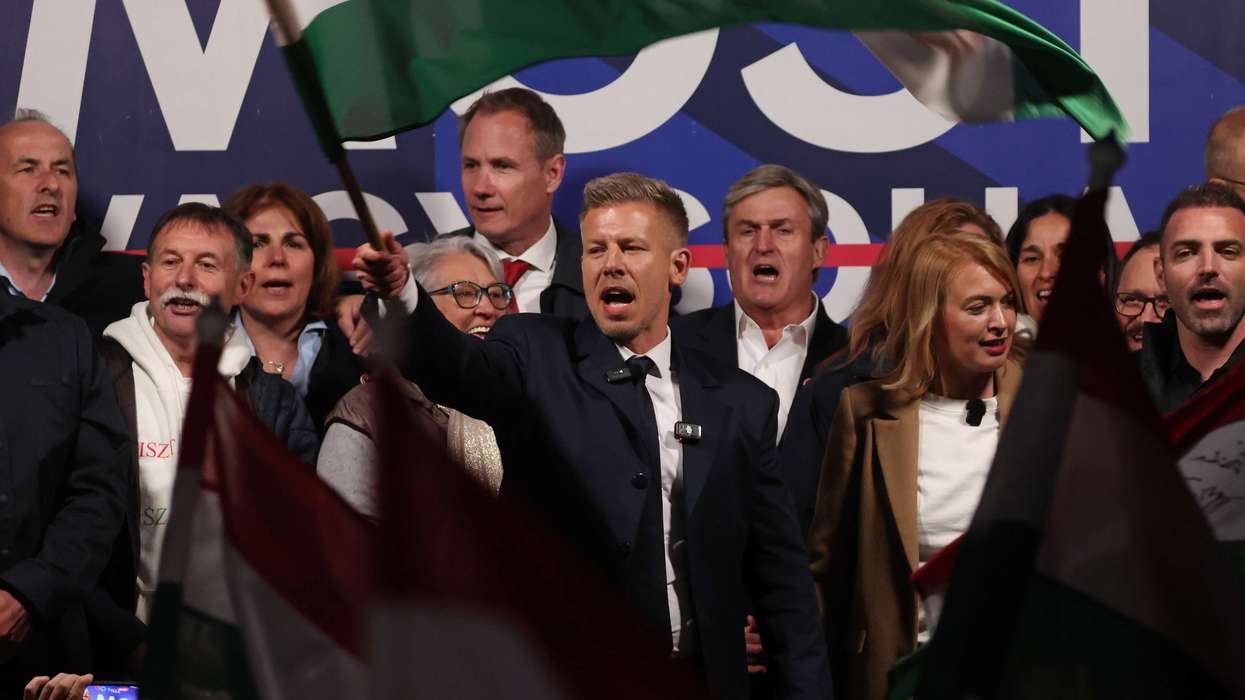 Peter Magyar stands with local Tisza party candidates after he spoke to voters at his final election campaign rally before Hungarian parliamentary elections on April 11 in Debrecen, Hungary. Getty Images