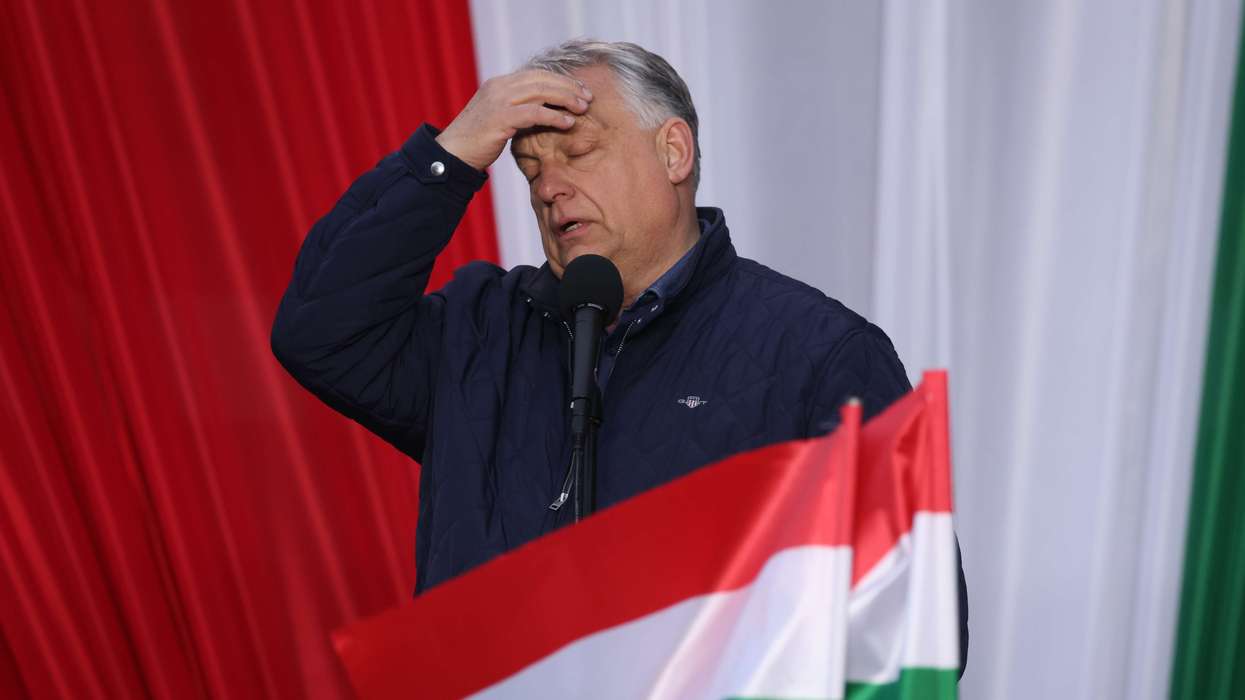

The Budapest crowds celebrating Viktor Orban’s defeat after 16 years in power in Hungary seemed to evoke more the euphoric spirit of the East European regime changes of 1989 rather than a general election result.
Yet 1989 had been the year of hope in which Orban himself burst onto the Hungarian political scene. He began as a young democrat, who fused anti-Communism with an appeal to Hungarian pride in the memory of the democratic uprising of 1956, crushed by Soviet tanks. Could that young Orban - who once led crowds chanting “Russians go home” have imagined he would travel so far to become Vladimir Putin’s chief autocratic ally in Europe, so that the same “Russians go home” chant now rang out to celebrate his demise, as new prime minister Peter Magyar made his victory speech. There was, at least, relief at Orban’s rapid concession, recognising his landslide defeat.
Hungary’s capital had voted against Orban four years ago, only to find itself as an isolated island of liberalism on the Hungarian political map as Orban’s party swept the small cities, towns and rural constituencies across the country. Yet 2026 saw a dramatic blue wave sweep the map for the opposition. Those once dismissed as a metropolitan elite who did not understand the real Hungary, were this time part of a nationwide majority for change. Magyar - a former insider who broke with Orban - commanded an anti-Orban majority spanning every shade of political opinion - from leftwingers, environmentalists and young liberal pro-Europeans to moderate conservatives, sympathetic to Orban’s pitch, but increasingly fed up with the endemic corruption of the regime.
That Orban’s defeat was also a significant setback for US president Donald Trump gave this Hungarian election a high international profile. This US administration seems to take what the author George Orwell called "doublethink" to new levels on a weekly basis. So vice-president JD Vance could hold a press conference in Budapest to challenge "foreign interference" in the Hungarian election from Brussels and other European capitals, while imploring Hungarians to re-elect Orban. Trump offered a commitment to invest in Hungary in what sounded a more ‘Hungary First’ than ‘America First’ pitch to Hungary’s voters to stick with his friend and ally.
That plea fell on deaf ears. The victorious opposition leader declared a return to normality - and a return to Europe, which the Hungarian government had often sought to stalemate from within. Magyar even made an apparently unplanned declaration that he would like to see the UK back in the EU club too.
Orban’s Hungary had been unusual in Europe - as a slim majority of Hungarians expressed confidence in Trump as a global leader when his second term began. But attitudes in Hungary have changed this year as Trump has become ever more reckless on the global stage. If Trump is a liability in Hungary, perceptions of being his ally are likely to be a liability everywhere in Europe.
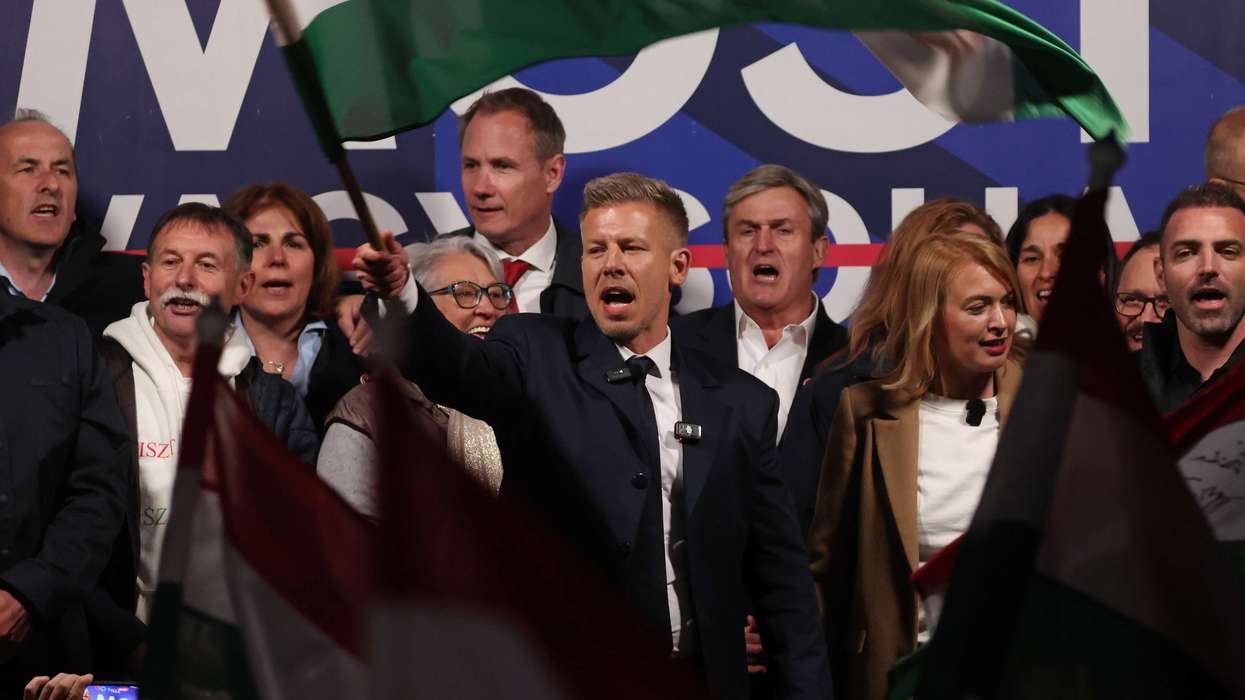 Peter Magyar stands with local Tisza party candidates after he spoke to voters at his final election campaign rally before Hungarian parliamentary elections on April 11 in Debrecen, Hungary. Getty Images
Trump posting a threat to “destroy an entire civilisation” in Iran marked a new low. The world held its breath, before Trump declared for peace talks instead. Attempts to present Trump as playing strategic mind games become ever more implausible, as he flips from blood curdling threats of destruction, to declaring peace, and abandoning the talks. Trump’s message - a de facto threat of genocide - meets the threshold for a war crime. America’s constitution was designed to constrain unaccountable power, but no document can substitute for a lack of political will within Congress and the courts to operate its checks and balances properly.
For the narrow waterway in the Straits of Hormuz to become so central to the prospects of the global economy has seen many refer to the Suez crisis of 1956. The lesson of Suez was that Britain's pretensions to remain an independent global power were largely a mirage. By contrast, the United States of America in 2026 remains the predominant military, economic and diplomatic power in the world, though the Trump administration is determined to demonstrate how to negate those advantages through incompetence.
This global crisis has stabilised prime minister Sir Keir Starmer’s fragile political position, at least temporarily even while making the UK government’s core challenges on living standards and defence spending more intractable. All European leaders and publics are having to adjust to an unfamiliar new reality: that this US administration has limited interest in America’s traditional role as an ally of Europe’s security, prosperity and democracy if it can be a disrupter of old norms instead.
Hungary's election has shown that illiberal, elected autocrats can still be defeated at the ballot box. Trump himself will find heavy losses for the Republicans in November’s midterm Congressional elections hard to avoid, but that will only be half-time in his second presidential term. Two more years could prove a very long time in international politics when dealing with the erratic diplomatic and economic consequences of Trump.