
THE 13th edition of the Jaipur Literature Festival will be held in the British Library in London next weekend, bringing together writers, historians, journalists and thinkers from across the world.
The Asian Media Group, publishers of Eastern Eye and Garavi Gujarat newsweeklies, is a media partner for this year’s festival which will be held from June 5 to 7.
Friday (5)’s launch event will mark the 50th anniversary of the death of Agatha Christie. Bestselling crime writer Lucy Foley, Christie’s great-grandson James Prichard, and Lucy Rowland, curator of the British Library’s forthcoming exhibition on Christie, will appear in conversation with journalist and historian Shrabani Basu.
Sanjoy K Roy, managing director of Teamwork Arts, the organisation behind the festival, said JLF had grown into “a vibrant confluence of south Asian literary heritage and global voices”.
This year’s programme reflects “the many layers of our shared world, from crime and myth to geopolitics, history and the evolving language of ideas”.
The programme spans a wide range of themes. A session called Desi Noir will bring together crime writers Vaseem Khan and Abir Mukherjee with Basu to examine the appeal and moral complexity of the genre.
In The Narrative Arc: South of South, novelists Tash Aw and Tahmima Anam will be joined by writer Somnath Batabyal to discuss displacement, resistance and what it means to write from the margins.
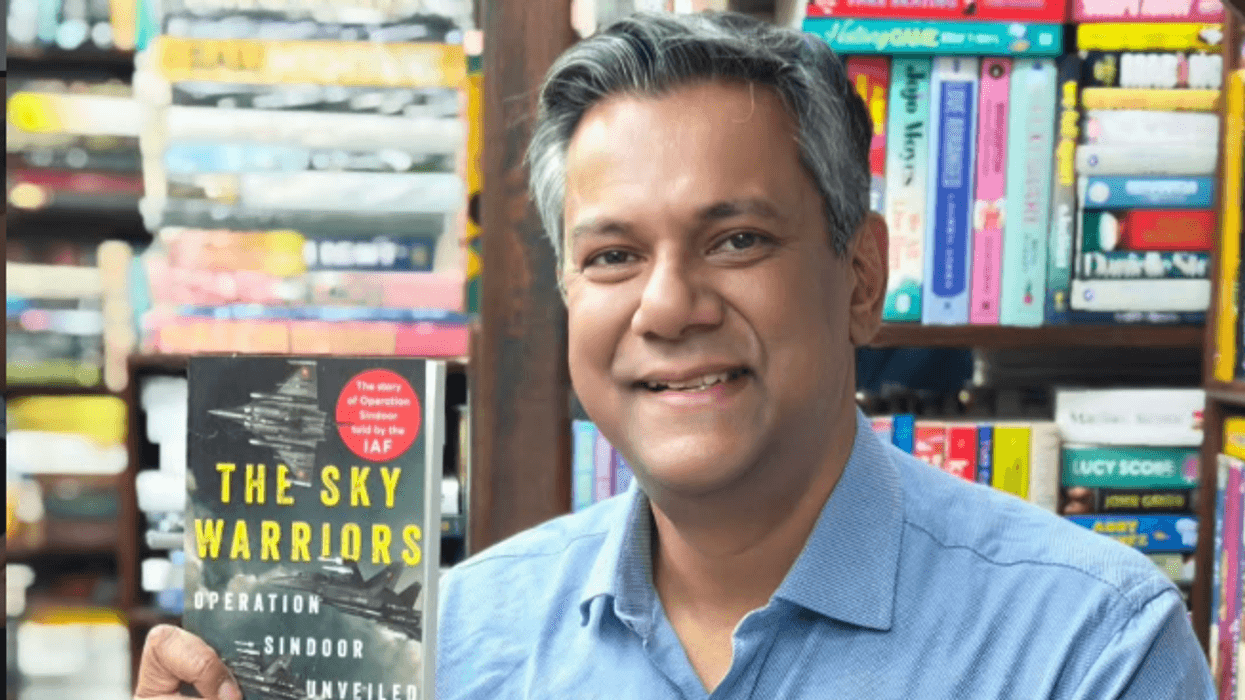
In another session, news anchor and author Vishnu Som will discuss his book on India’s Operation Sindoor, The Sky Warriors, with Amit Roy, editor at large at Eastern Eye.
Other prominent participants include political scientist Bruno Maçães, former diplomat Gopalkrishna Gandhi, historian Shruti Kapila, academic Sarah Churchwell, and writers Nikita Gill, Tishani Doshi and Jeet Thayil.
The festival closes on Sunday (7) evening with a separate event featuring historian William Dalrymple and journalist Anita Anand, co-hosts of the popular Empire podcast, in conversation about how the legacy of the British Empire continues to shape global politics, identity and ideas.



 Curator Emma Slocombe with ikat robes and arabachi coats in the Peter the Great Room in Blickling Hall Amit Roy
 View of the entrance to Blickling Hall on a rainy autumn dayAmit Roy
 Kente cloth from Ghana in the Long Gallery in Blickling Hall
 Decoration in the Great Hall at Blickling Hall Amit Roy
 Palampore fragment made in coastal south-east India in the Brown Room in Blickling Hall Amit Roy
 Bed valance dating from early 1700s in the Italian Print Room at Blickling Hall Amit Roy
 Indian inspired fabric draped on sofas in the South Drawing Room in Blickling Hall Amit Roy
 Indian inspired fabric draped on sofas in the South Drawing Room with Indian carpet in Blickling Hall Amit Roy
 Karun Thakar has picked out the geometric patterns in the bookcase and the Kente cloth in the Long Gallery in Blickling Hall Amit Roy
 Large tapestry depicting Peter the Great defeating the Swedish army at the Battle of Poltava in 1709 Amit Roy
 ikat robes and arabachi coats in the Peter the Great Room in Blickling Hall Amit Roy
 Baghs and kanthas made by women provide contrast to the men only portraits in the Great Hall at Blickling Hall Amit Roy
 Baghs and kanthas in the entrance Great Hall at Blickling Hall Amit Roy
 Baghs and Kanthas in the Great Hall in harmony with stained glass window at Blickling Hall Amit Roy
 Kimonos reflect Japanese influence in Upper Ante Room in Blickling Hall Amit Roy
 Kimono in Upper Ante Room in Blickling Hall
 A view of the Palace and fort at Agra shows romantic side of India Amit Roy
 Blickling Hall Amit Roy
 Table carpet, European 1670-1680 Amit Roy
 Unfinished 17th century Italian embroidery in the Print Room at Blickling Hall Amit Roy
 Picture of Kashmir shows a romantic view of India Amit Roy
 A panel of Ashburnham bed hangings made in Gujarat for sale in Europe in the Brown Room in Blickling Hall Amit Roy
 Colcha made in the 1600s by women in Bengal for the Portuguese market in the Long Gallery at Blickling Hall Amit Roy