
THE Serum Institute of India (SII) expects WHO emergency use authorization soon for the Oxford University/AstraZeneca coronavirus vaccine, which it is producing for mid and low income countries, its chief executive said.
The World Health Organization (WHO) listed Pfizer and BioNTech's Covid-19 shot for emergency use on December 31 as it sought to accelerate vaccination in the developing world, which is badly lagging western countries.
"The emergency use license from the WHO should be available and coming through in the next week or two, hopefully, because we have submitted everything," Adar Poonawalla said.
Poonawalla said SII, the world's biggest vaccine maker, was trying to begin supplies to the WHO-backed COVAX initiative by the end of January. It is selling each dose at $3 for low-income countries and at a "slightly higher" price for others.
Some 189 countries have joined the programme, which was established to ensure equitable distribution of vaccines.
From sending about 20 million doses for the initiative in February, SII will raise this to 50 million per month from around April, while simultaneously selling 30-40 million doses each month to India, Poonawalla added.
SII has already sold 11 million doses to the government, which is due to begin a mass vaccination campaign on Saturday(16).
Poonawalla said SII would start stockpiling "upwards of 40-50 million doses per month" of the Novavax coronavirus vaccine candidate from around April.
He said his family owned company, which was founded by his father Cyrus Poonawalla in 1966, is well placed to distribute 1 billion doses of vaccines this year, with COVAX having an option to buy 450 million each of the AstraZeneca and Novavax vaccines.
Apart from Brazil and Bangladesh, which are expected to soon get supplies of the AstraZeneca shot from SII, Poonawalla said the Pune-based firm has also been approached by Morocco, South Africa and Saudi Arabia.
As demand for vaccines booms, a so-called special purpose vehicle housing SII's pandemic-related products should now be valued at $12 billion to $13 billion, SII's CEO added.
"We are in a unique position to be able to make so many different vaccines at a huge volume and capacity. For an investor to come in at a $12-13 billion valuation, it will be a fantastic deal, leaving a lot of upside."



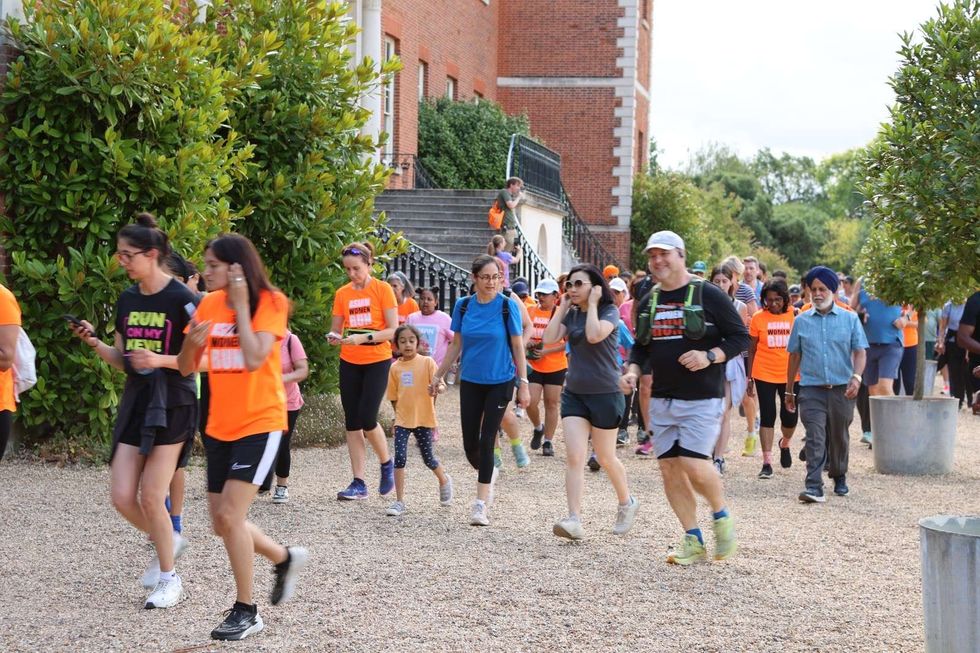 Participants set off on the 5K and 10K routesMinreet Kaur
