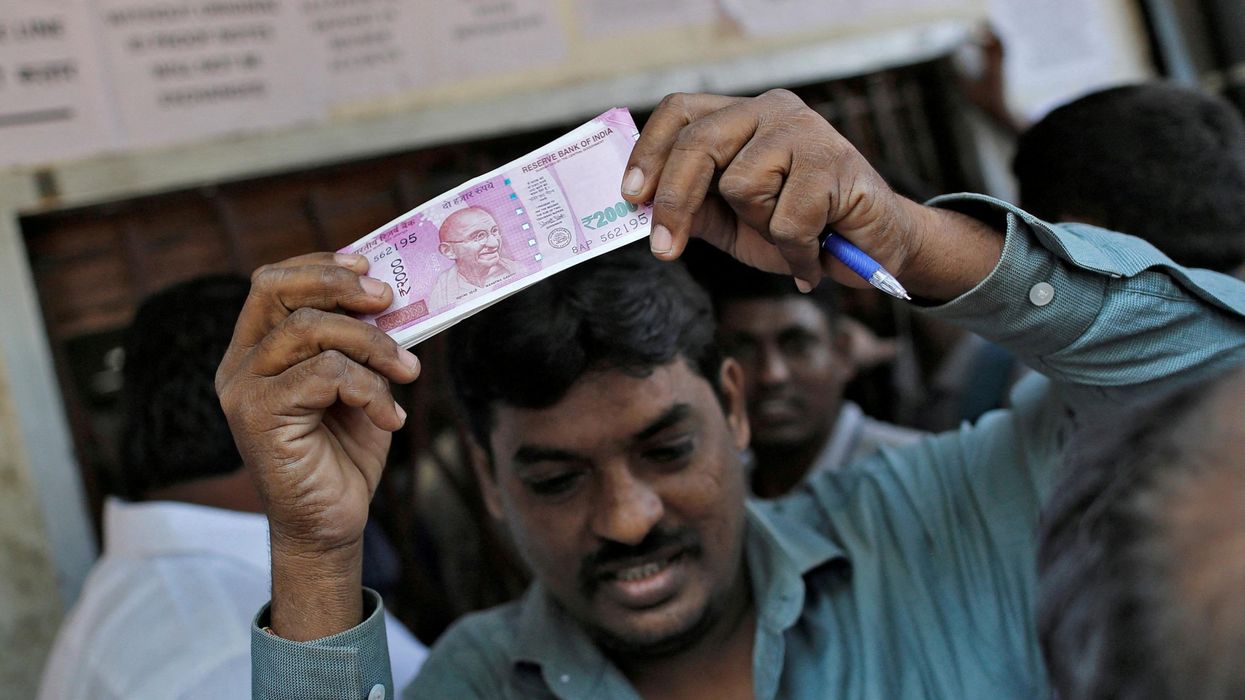

In anticipation of a series of significant state elections, India is preparing for its second currency note exchange programme within a span of fewer than seven years. This time, the focus is on withdrawing the 2,000 rupees note from circulation.
Unlike the disruptive 2016 demonetisation move, which abruptly invalidated 86% of the country's currency overnight and resulted in a severe economic slowdown, the withdrawal of the highest denomination note is expected to cause far lesser disruption to the economy.
"The impact on the economy will be very marginal," said Reserve Bank of India Governor Shaktikanta Das at a briefing on Monday (22). The 2000-rupee notes were not commonly used in any transactions, he said.
Also, according to sources, the 2000-rupee notes were rarely utilised in daily transactions.
As the currency note exchange programme is set to commence on Tuesday (23), there has been an increase in gold purchases as individuals seek alternative stores of value to replace the soon-to-be obsolete 2000 rupee note.
Moreover, banks are preparing for an influx of customers depositing these notes, as reported by multiple sources.
In anticipation of upcoming elections in various Indian states, such as Rajasthan, Madhya Pradesh, Chhattisgarh, and Telangana, as well as the general election scheduled for next year, the withdrawal of the note has been initiated.
It is common for cash usage to increase during the election period, as candidates often employ cash transactions to get around the spending limits set by India's Election Commission.
In a notable occurrence, gold traded at a premium in India on Monday (22), breaking an 11-week trend. Some individuals, holding 2,000-rupee notes, chose to invest in the yellow metal instead of depositing their funds in banks.
However, Ashok Jain, proprietor of Mumbai-based gold wholesaler Chenaji Narsingji noted that there was a significant absence of a gold-buying frenzy reminiscent of the 2016 demonetisation period.
Additionally, bankers foresee reduced pressure compared to 2016 demonetisation, with September 30 deadline for retiring 2,000-rupee notes.
India's largest lender State Bank of India will increase cash counters for senior citizens and disabled persons so that any "rush, panic and inconvenience is avoided", said a top official.
According to the official, the bank plans to utilise mobile vans and engage business partners to facilitate the collection of such notes.
The official preferred to remain anonymous as he was not authorised to provide statements to the media. Additionally, three other banks have confirmed implementing similar measures.
"We do not expect a rush at banks to exchange the notes," central bank chief Das said. "People don't have to go immediately as enough time has been given."
(Reuters)