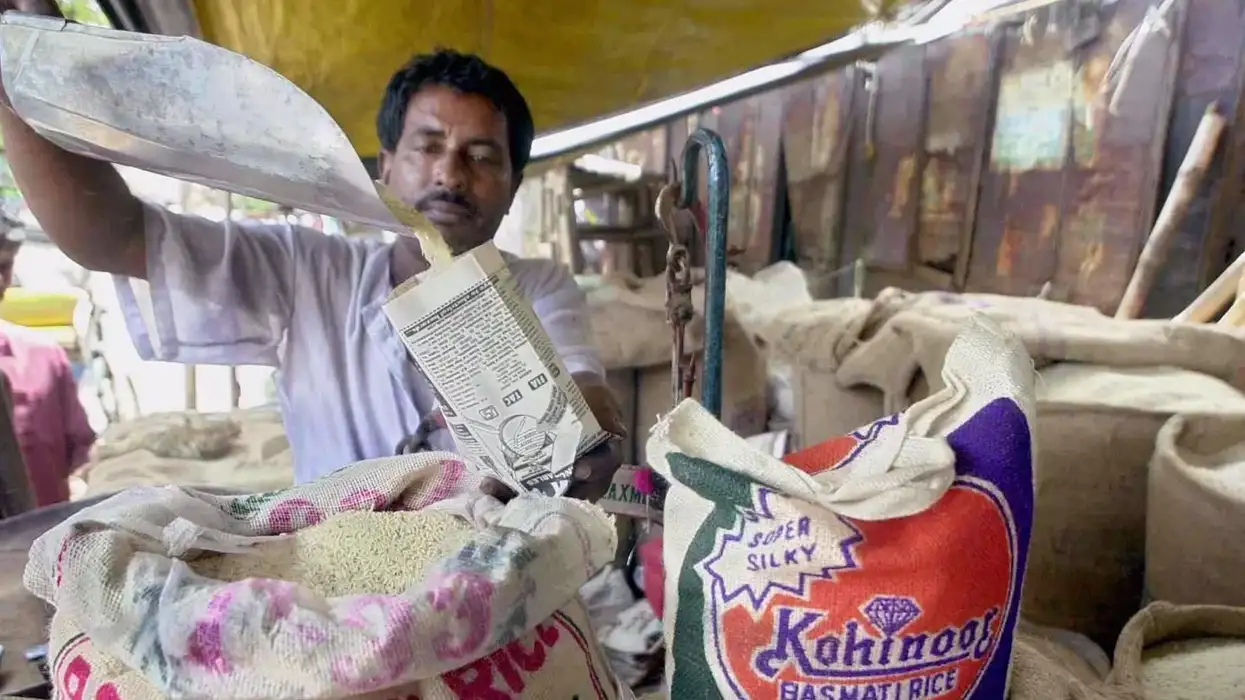

INDIA’S decision to maintain the current floor price for basmati rice exports will further hamper overseas sales of the premium variety and hit farm income, leaving growers saddled with large stocks of the new-season variety, farmers and millers said.
India and Pakistan are the only growers of basmati rice. New Delhi exports more than four million metric tons of basmati – the premium long-grain variety famed for its aroma – to countries such as Iran, Iraq, Yemen, Saudi Arabia, the United Arab Emirates and the United States.
New Delhi had set a floor price, or minimum export price (MEP), of $1,200 (£993) a ton in August. It was expected to cut this MEP, but the government last Saturday (14) said it would maintain the floor price until further notice.
India, which is the world’s biggest rice exporter, has also curbed exports of non-basmati rice varieties, in an attempt to keep a lid on domestic prices ahead of key state elections.
“We are staring at massive losses,” said Sukrampal Beniwal, who grows basmati varieties in the country’s north. “We have harvested our crop, but there are no buyers.”
Farmers plant summer-sown rice varieties in the rainy months of June and July and start harvesting their crops from October. As the new harvest trickles in, prices start to fall.
Millers, farmers and exporters had believed the government would lower the MEP, which they consider too steep, as the newseason crop comes to market.
“The decision to continue with the $1,200 MEP is a big blow to us,” said Vijay Setia, a leading exporter from the northern state of Haryana, one of India’s breadbaskets. He added that the government needed to cut it to $850-$900 (£696-£737) a ton with immediate effect.
Basmati rice farmers are struggling to sell their produce because millers and traders have stopped coming to dozens of wholesale markets to buy, Beniwal said.
Paddy prices of basmati varieties have fallen more than 20 per cent since the government imposed the MEP, traders said.
Basmati is not widely consumed in India and the government doesn’t buy the variety to build state reserves.
“Farmers find themselves in a frustrating predicament,” said a leading exporter who asked not to be named. “We are empowering Pakistan to seize control of the basmati rice market in the short term.”