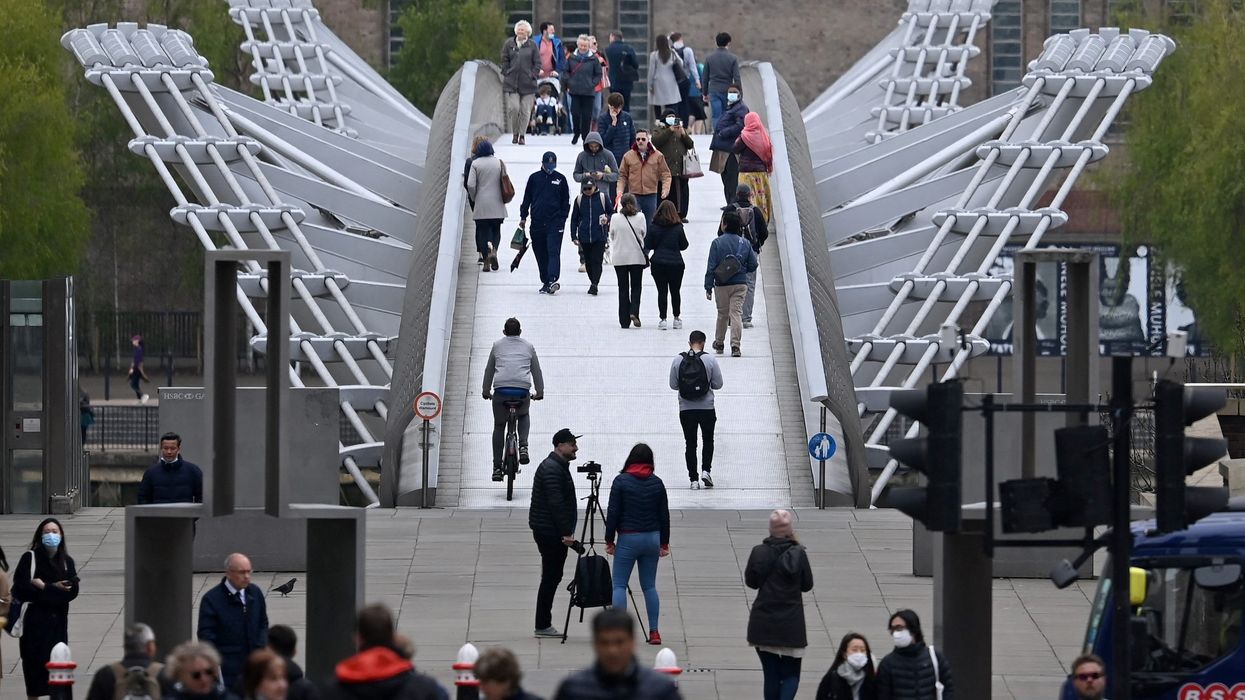

THE Covid-19 variant first identified in India may be spreading less quickly than first feared, a leading British epidemiologist said on Wednesday (19), but vaccines might be less effective at limiting its spread.
Prime minister Boris Johnson on Friday (14) warned that the emergence of the B.1.617.2 variant might derail his plans to lift England's lockdown fully on June 21 but said that it all depended on the degree to which it spread.
"There's ... a glimmer of hope from the recent data that, whilst this variant does still appear to have a significant growth advantage, the magnitude of that advantage seems to have dropped a little bit with the most recent data," Neil Ferguson, an epidemiologist at Imperial College London, told BBC radio, adding more data was needed.
Ferguson, a member of the government's Scientific Advisory Group for Emergencies (SAGE), said the initial rapid growth of B.1.617.2 had been among people who had travelled and who had a higher chance of living in multi-generational households or in deprived areas, and the ease of transmission might not be replicated in other settings.
Graham Medley, also a member of SAGE and a professor of disease modelling at the London School of Hygiene and Tropical Medicine, said that while the variant was growing quickly in some places, "we haven't yet seen it take off and grow rapidly everywhere else".
"One of the key things we'll be looking for in the coming weeks will be: how far does it spread outside of those areas," he told Reuters.
Ferguson added that though there was a "good deal of confidence" that vaccines will protect against severe disease from the variant, B.1.617.2 might also be able to spread more easily among vaccinated people.
"There's some hints in the data there's reduced vaccine efficacy against infection, against transmission," he said.





 Migrants try to board a dinghy to cross into the English Channel on June 30, 2026 in Wissant, France. (Photo by Carl Court/Getty Images)