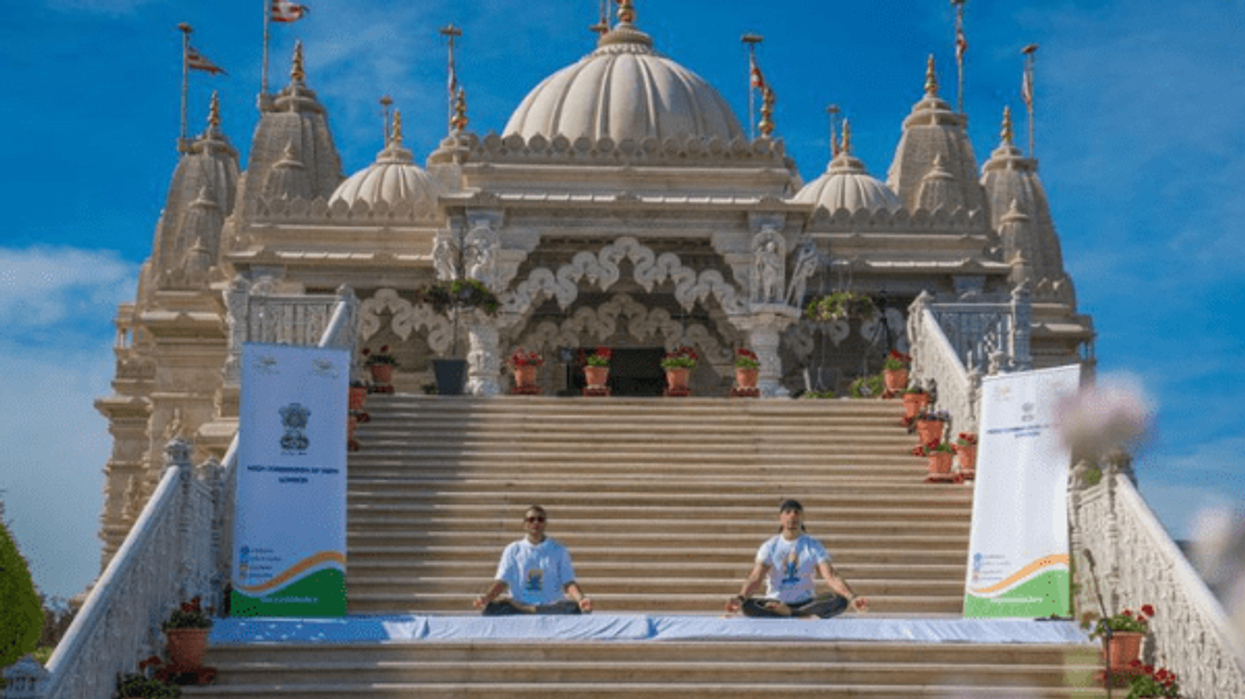

THE Indian High Commission in London on Tuesday (21) celebrated the eighth International Day of Yoga at BAPS Swaminarayan Temple in Neasden. Besides Indian high commissioner HE Gaitri Issar Kumar, Lord Rami Ranger and East Harrow member of parliament Bob Blackman addressed the gathering.
Yoga enthusiasts from all over London joined the celebrations.
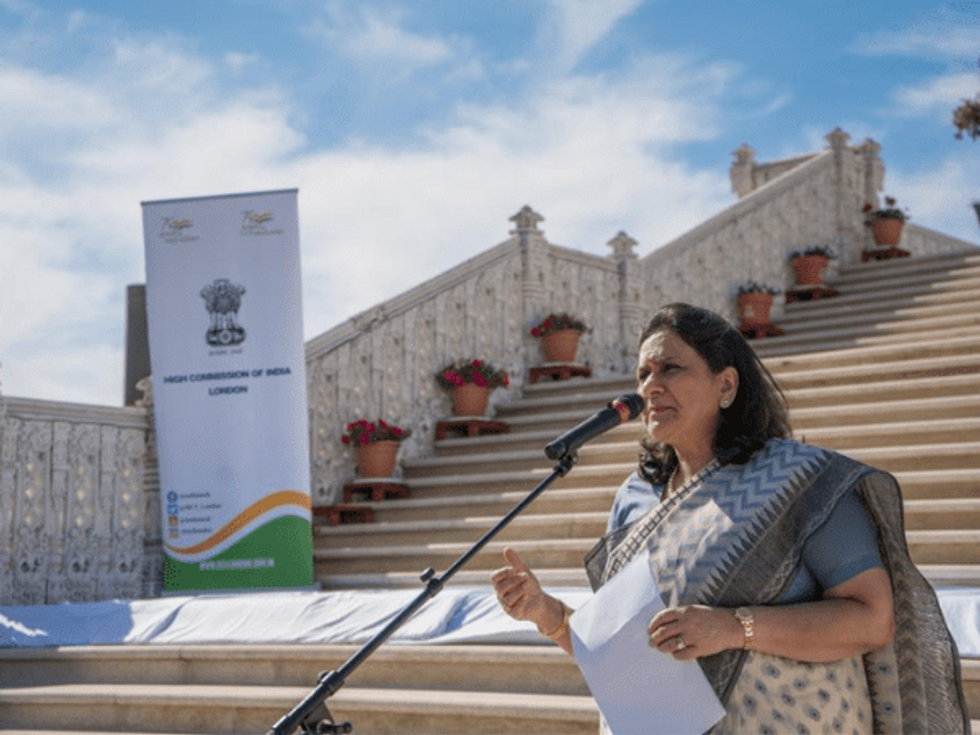 HE Gaitri Issar Kumar, the Indian high commissioner to UK, speaks during the International Yoga Day celebrations at BAPS Swaminarayan Temple in Neasden, London, on June 21, 2022. (Picture: Indian High Commission in London)
The high commissioner underlined the contribution of yoga towards well-being and encouraged the participants to make it a part of their daily regime. Lord Ranger called yoga India’s gift to the world while Blackman shared his positive experience with yoga.
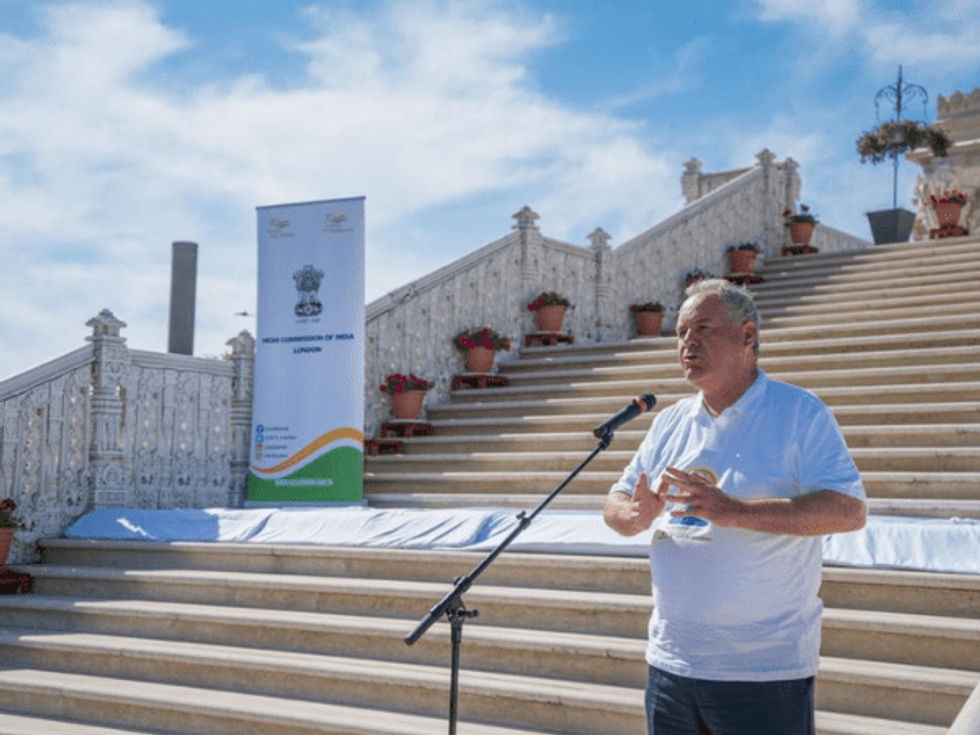 East Harrow member of parliament Bob Blackman speaks during the International Yoga Day celebrations at BAPS Swaminarayan Temple in Neasden, London, on June 21, 2022. (Picture: Indian High Commission in London)
The event continued with sessions on Common Yoga Protocol, balance postures performance by young World Yoga champion Master Ishwar and ‘pranayam’ (breathing exercises).
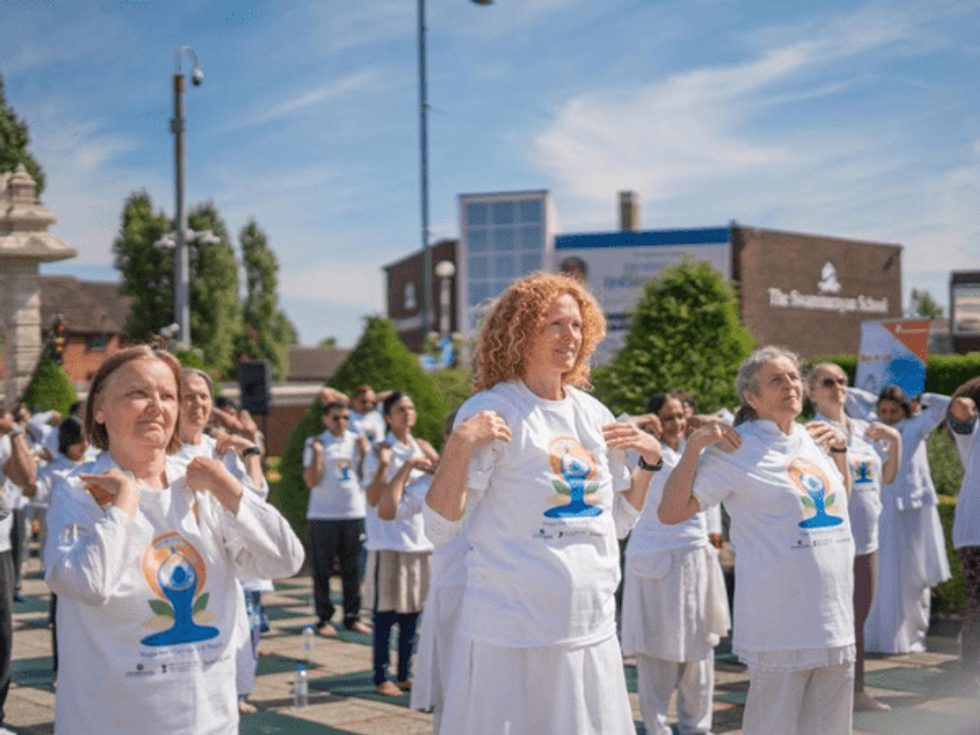 Yoga enthusiasts take part in International Yoga Day celebrations at BAPS Swaminarayan Temple in Neasden, London, on June 21, 2022. (Picture: Indian High Commission in London)
International Yoga Day celebrations were also hosted by Indian consulates in Scotland and Wales and local yoga organisations in Northern Ireland.
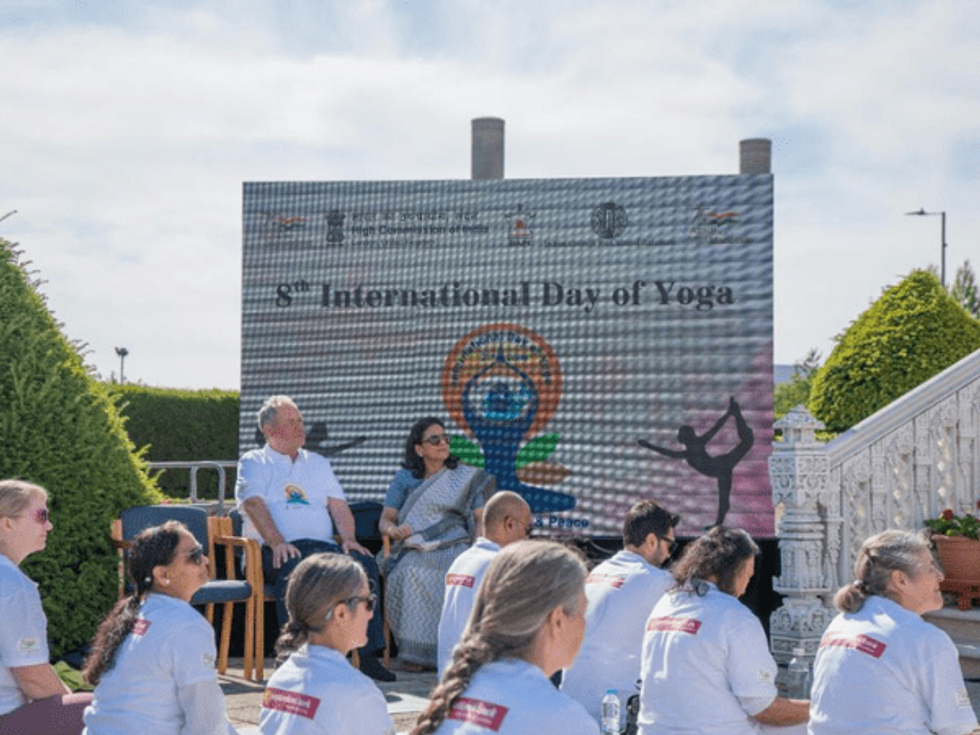 Indian high commissioner to UK HE Gaitri Issar Kumar and British parliamentarian Bob Blackman with participants at the International Yoga Day celebrations at BAPS Swaminarayan Temple in Neasden, London, on June 21, 2022. (Picture: Indian High Commission in London)
Earlier, in the run up to the International Day of Yoga 2022, The Indian High Commission and consulates in the UK organised yoga sessions at some iconic locations in London -- including Holland Park.
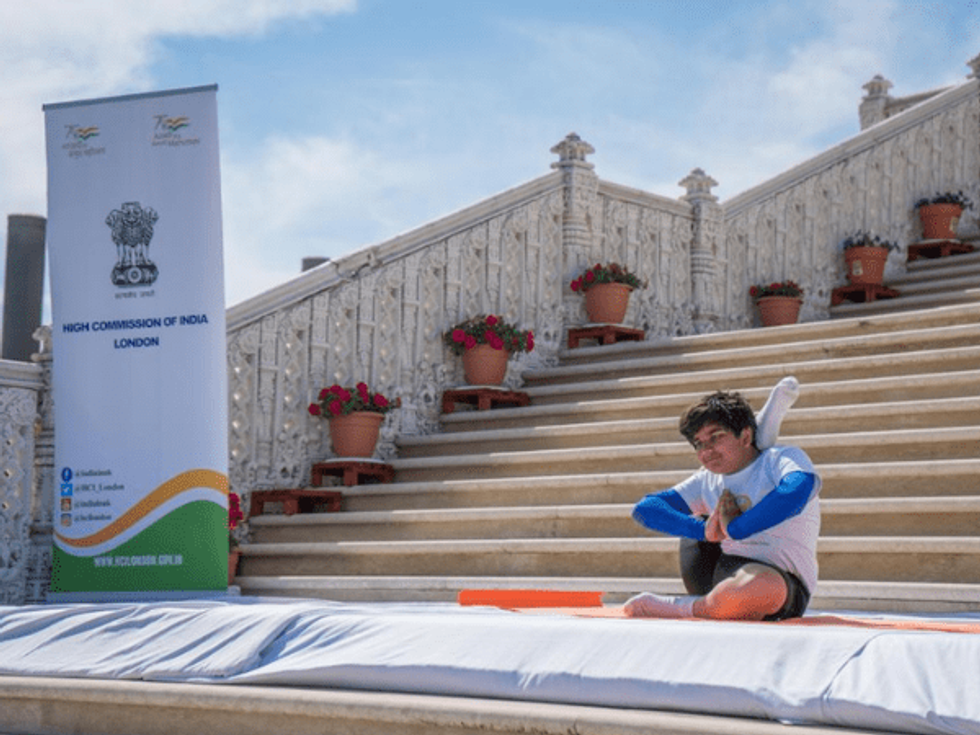 World Yoga champion Master Ishwar performs at the International Yoga Day celebrations at BAPS Swaminarayan Temple in Neasden, London, , on June 21, 2022. (Picture: Indian High Commission in London)
Also for the first time, the Yoga Day was hosted at a British Army establishment -- the Wellington Barracks in Central London -- where there was enthusiastic participation by people who also requested for more sessions.