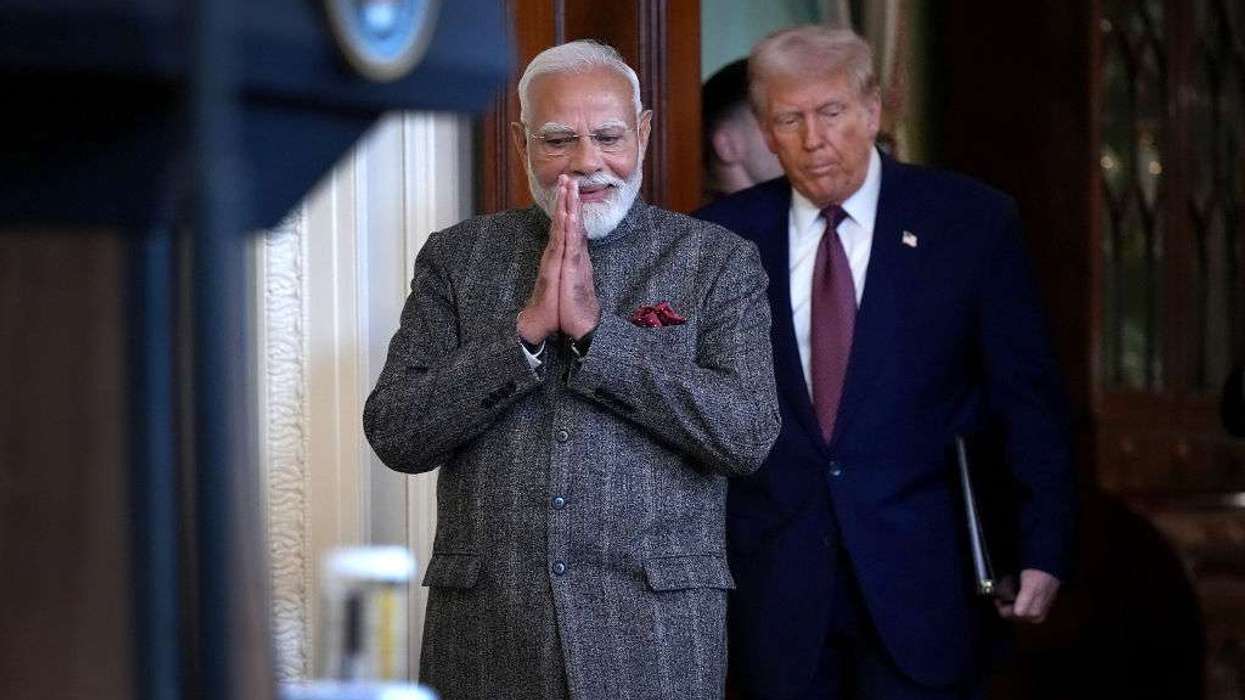

INDIA has delayed plans to send a trade delegation to Washington this week after the US Supreme Court struck down tariffs imposed by president Donald Trump, a source in its trade ministry told Reuters on Sunday.
The move follows Trump’s decision on Saturday to levy a temporary tariff of 15 per cent, the maximum allowed by law, on US imports from all countries after the court’s rejection.
"The decision to defer the visit was taken after discussions between officials of the two countries," said the source, who sought anonymity as the matter is a sensitive one. "No new date for the visit has been decided."
The source said the delay was mainly due to uncertainty over tariffs following Friday’s judgment.
The delegation had been scheduled to leave on Sunday for talks aimed at finalising an interim trade deal. Both countries had agreed on a framework under which Washington would cut punitive tariffs of 25 per cent on some Indian exports linked to New Delhi’s Russian oil purchases.
Under the framework, US tariffs on Indian goods were to be reduced to 18 per cent. India agreed to buy US items worth $500 billion over five years, including energy supplies, aircraft and parts, precious metals and technology products.
India’s opposition Congress party called for the interim pact to be put on hold, urging a renegotiation and questioning prime minister Narendra Modi’s decision to issue a joint statement before the court’s ruling.
On Saturday, the Indian trade ministry said it was studying the implications of the judgment and subsequent US announcements.
Last week, trade minister Piyush Goyal said the interim pact could take effect in April after outstanding issues were resolved during the delegation’s visit to Washington.
(With inputs from Reuters)