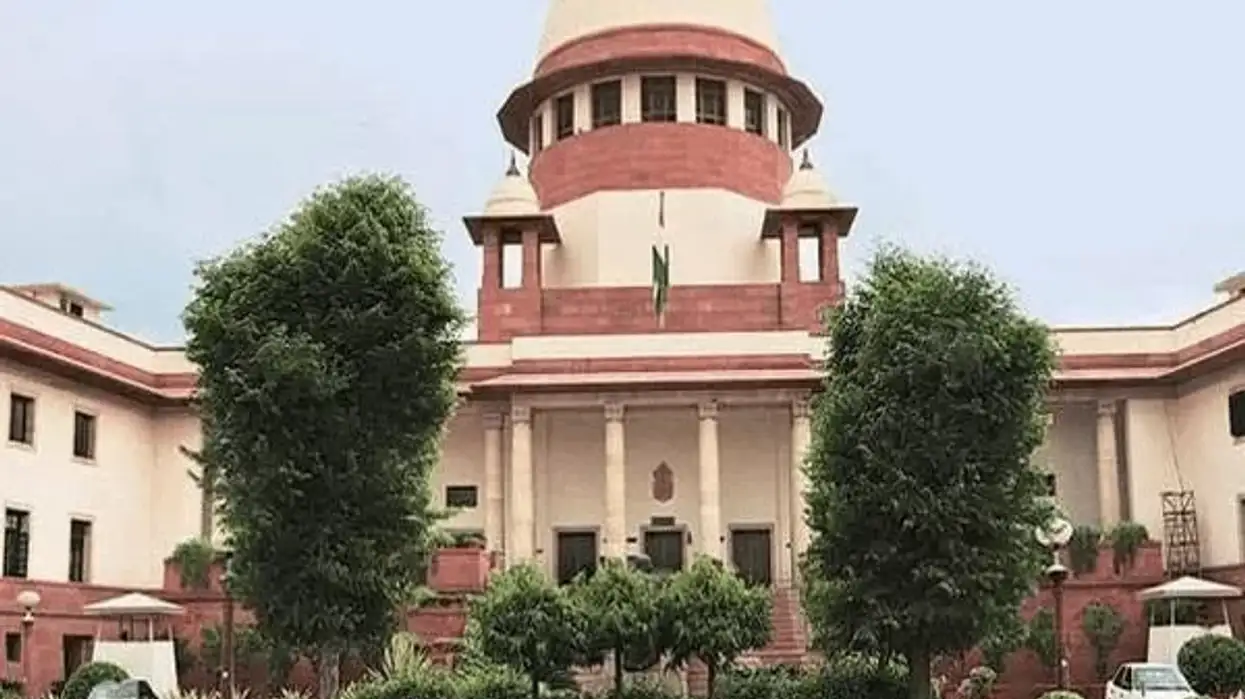

INDIA's government has insisted that marital rape should be treated more leniently than other rape offences in an ongoing Supreme Court case brought by campaigners seeking to outlaw it.
The penal code introduced in the 19th century during British colonial rule of India explicitly states that "sexual acts by a man with his own wife... is not rape".
Prime minister Narendra Modi's government enacted an overhauled code in July which retains that clause, despite the decade-long court challenge by activists seeking to make marital rape illegal.
India's home ministry filed an affidavit to the Supreme Court on Thursday (3) stating that while marital rape should result in "penal consequences", the legal system should treat it more leniently than rape committed outside of marriage.
"A husband certainly does not have any fundamental right to violate the consent of his wife," the affidavit said, according to The Indian Express newspaper.
"However, attracting the crime in the nature of 'rape' as recognised in India to the institution of marriage can be arguably considered to be excessively harsh."
India's current penal code mandates a minimum 10-year sentence for those convicted of rape.
The government's statement said that marital rape was adequately addressed in existing laws, including a 2005 law protecting women from domestic violence.
That law recognises sexual abuse as a form of domestic violence but does not prescribe any criminal penalties to perpetrators.
Another section of the penal code punishes broadly defined acts of "cruelty" by a husband against their wife with prison terms of up to three years.
Six per cent of Indian married women aged 18-49 have reported spousal sexual violence, according to the government's latest National Family Health Survey conducted from 2019 to 2021.
In the world's most populous country, that implies more than 10 million women have been victims of sexual violence at the hands of their husbands.
Nearly 18 per cent of married women also feel they cannot say no if their husbands want sex, according to the survey.
Divorce remains taboo across much of India with only one in every 100 marriages ending in dissolution, often owing to family and social pressure to sustain unhappy marriages.
Chronic backlogs in India's criminal justice system mean some cases take decades to reach a resolution, and the case pushing for the criminalisation of marital rape has made painfully slow progress.
It was referred to the Supreme Court after a two-judge bench in the Delhi High Court issued a split verdict in May 2022.
One judge in that case ruled that while "one may disapprove" of a husband forcibly having sex with his wife, that "cannot be equated with the act of ravishing by a stranger".
(AFP)