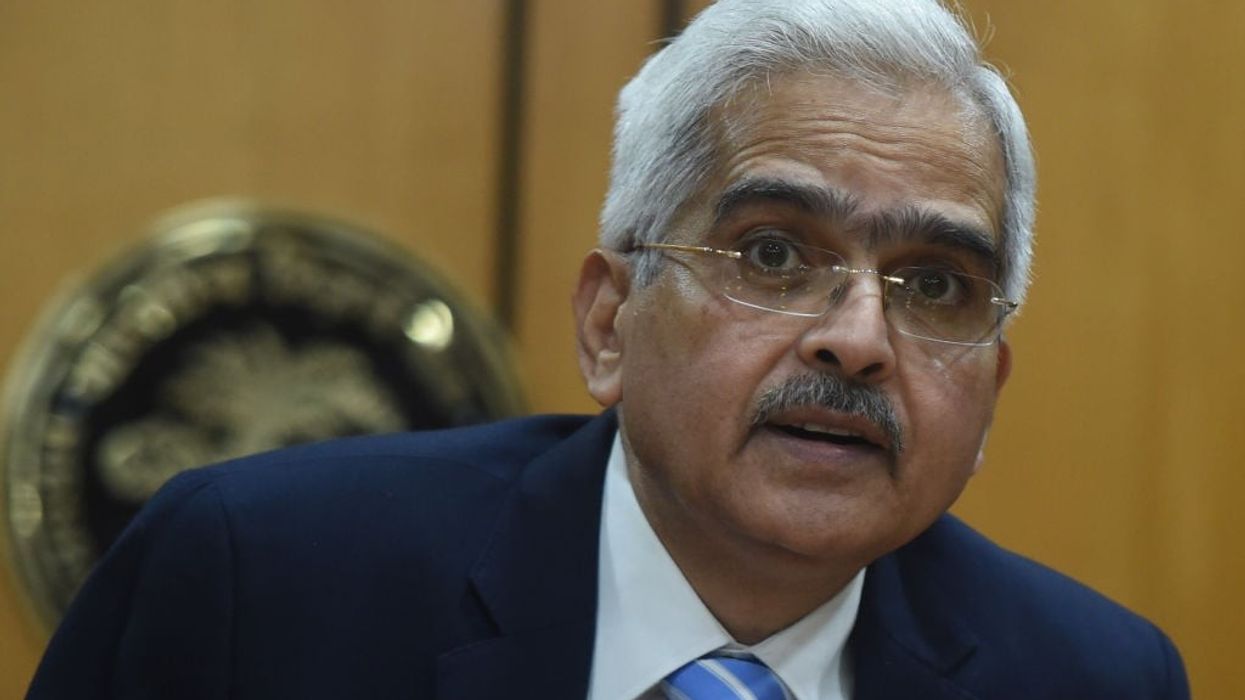
INDIA'S central bank on Thursday (8) kept interest rates on hold for its second-straight meeting, citing easing inflation pressures, but warned about an uncertain global outlook.
The benchmark repurchase rate was left at 6.50 per cent by the Reserve Bank of India (RBI), bank governor Shaktikanta Das announced in a webcast, in line with expectations.
"The Monetary Policy Committee decided to remain focused on withdrawal of accommodation to ensure that inflation progressively aligns with the target while supporting growth," Das said.
"Headline inflation still remains above the target, and being within the tolerance band is not enough. Our goal is to achieve the target of 4.0 per cent going forward."
Inflation hit a peak of 7.79 per cent in April last year, well above the RBI's target range of 2.0-6.0 per cent, before slowly easing to 4.7 percent in April.
India's economy expanded 6.1 per cent in January-March, the final quarter of the fiscal year, to take annual growth to 7.2 per cent.
The south Asian nation of 1.4 billion people, which recently overtook China to become the world's most-populous country, is one of the fastest-growing major economies.
Central banks around the world, including the RBI, have rapidly hiked borrowing costs to tame consumer prices made worse by Russia's invasion of Ukraine.
Despite easing inflation, Das cautioned that a key risk factor was the warming El Nino weather phenomenon, which could weaken the monsoon and lift crop prices, stoking inflation.
Agriculture is a key cornerstone of India's economy and the annual monsoon is crucial to its food output.
"Close and continued vigil on the evolving inflation outlook is absolutely necessary, especially as the monsoon outlook and the impact of El Nino remains uncertain," Das said.
"Geopolitical tensions, uncertainties around the monsoon and international commodity prices, especially sugar and rice and also crude oil, and the volatility in global financial markets pose upside risks to inflation."
Headline inflation was projected to hit 5.1 per cent in the 2023-24 financial year, he added.
(AFP)
India holds interest rates as inflation eases
The central bank cautions that a key risk factor is the warming El Nino weather phenomenon